

Maddy summaryHR 9104, the Access to Birth Control Act, requires pharmacies that normally stock contraception to provide birth control or related medications without delay if in stock, or immediately offer alternatives like referrals to other pharmacies or expedited orders if unavailable. It prohibits pharmacists from intimidating customers, misrepresenting availability, breaching confidentiality, or refusing to fill valid prescriptions for birth control. Pharmacies violating these rules face civil penalties up to $1,000 per day or private lawsuits. The law specifically applies to pharmacies that routinely carry contraception and excludes cases where a valid prescription is missing or payment cannot be made. It aims to address documented refusals to dispense birth control, particularly following the Dobbs decision.
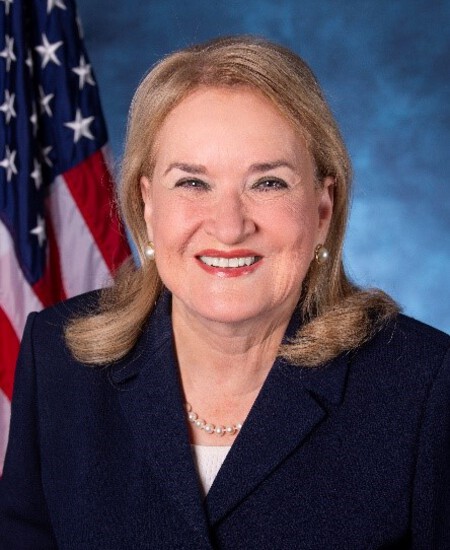
Rep. Sylvia R. Garcia
Sponsored bills
Maddy summaryHCONRES 119 is a non-binding congressional resolution expressing that people wrongfully or unjustly deported after establishing long-term ties in the U.S. (such as DACA recipients, veterans, or those with expunged convictions) deserve a fair process to return. It proposes creating a centralized unit within the Department of Homeland Security (DHS), modeled after DHS’s existing ImmVets program for veterans, to review applications for re-entry. The resolution does not change immigration law but urges DHS to establish this dedicated process to address systemic barriers like lengthy delays, complex procedures, and limited access to legal help. It specifically targets individuals separated from families after years in the U.S., including those deported due to errors, protests, or outdated convictions. The resolution emphasizes repairing past injustices without altering current legal frameworks.
Maddy summaryHR 8933 requires large public companies (with over 100 employees or $300 million+ in capital) to conduct racial equity audits every two years. These audits must assess company policies on diversity and disclose any historical ties to or profits from slavery, with findings reported publicly. Companies failing to comply face daily fines ($20,000/day), with 50% of fines funding Treasury's minority programs and 50% supporting HUD housing initiatives for low-income minority communities. The bill mandates transparency on historical inequities while directing penalties toward targeted community investments.
Maddy summaryHRES 1329 is a resolution formally acknowledging and apologizing for the U.S. government's historical discrimination against lesbian, gay, bisexual, and transgender (LGBT) individuals who served in the military, Foreign Service, and Federal civil service. It condemns past policies - including the 1949 Department of Defense decree banning "homosexual personnel" and the "Don't Ask, Don't Tell" policy (1993-2011) - that led to the discharge or termination of thousands of LGBT service members and employees. The resolution offers a formal apology on behalf of the United States to affected individuals and their families, reaffirming the government's commitment to equal treatment without authorizing legal claims or providing benefits. This is a symbolic act of acknowledgment, not a policy change or financial remedy.
Maddy summaryHRES 1331 is a non-binding House resolution supporting Immigrant Heritage Month by recognizing immigrants' economic, cultural, and military contributions to the United States. It cites data showing immigrants contributed $1.9 trillion to the economy in 2021, made up 20% of entrepreneurs, and serve in critical roles like healthcare and agriculture. The resolution calls on elected officials, educators, and the executive branch to counter anti-immigrant rhetoric, educate the public about immigrant contributions, and protect immigrant communities. It does not create new legal obligations but aims to raise awareness and promote inclusion.
Maddy summaryHRES 1332 is a symbolic resolution recognizing June as LGBTQIA+ Pride Month. It encourages the celebration of Pride Month to honor the historical struggles and achievements of LGBTQIA+ people in the United States, while acknowledging the ongoing challenges they face. This resolution does not create new laws or policies, but serves as a formal recognition of LGBTQIA+ rights as human rights and highlights their integral role in American history. The resolution was introduced by multiple members of Congress and passed by the House of Representatives.
Maddy summaryThis resolution condemns Uganda's Anti-Homosexuality Act, which criminalizes consensual same-sex relationships with penalties including life imprisonment and the death penalty for certain acts. It directly affects LGBTQI+ Ugandans, who face increased violence, evictions, job loss, and barriers to healthcare due to the law's enforcement. The resolution calls on Uganda to repeal the law and supports maintaining U.S. sanctions like visa restrictions for officials involved in human rights abuses and reduced aid. It reflects U.S. government opposition to the law, which has been linked to severe human rights violations against marginalized communities.
Maddy summaryThe SAFES Act creates a federal tax credit for individuals who purchase gun safes, allowing them to deduct 90% of the cost, up to $500 per person or $1,000 for joint returns. For purchases made before 2030, any qualifying gun safe qualifies; after 2029, only safes meeting standards set by the Secretary of Health and Human Services (HHS) will be eligible, based on an HHS report required within five years of enactment. The bill prohibits requiring taxpayers to disclose firearm ownership details to claim the credit. This policy directly affects individual firearm owners seeking to reduce tax liability through safe storage purchases.
Maddy summaryThis bill creates a federal framework for "extreme risk protection orders" (ERPOs) that temporarily remove firearms from individuals who pose a risk of harming themselves or others. Family members or law enforcement officers can petition a federal court for a temporary order (up to 14 days) based on probable cause, followed by a hearing within 72 hours to determine if a longer-term order (up to 180 days) is warranted. The bill requires clear and convincing evidence of risk at the hearing and mandates respondents to surrender firearms to law enforcement within 48 hours. It also includes provisions for reporting, training law enforcement on ERPOs, and a federal grant program to support state ERPO implementation, without preempting state laws.
Maddy summaryThis resolution expresses the U.S. House of Representatives' support for designating June 28, 2024, as "Stonewall Day" to commemorate the anniversary of the 1969 Stonewall Uprising in New York City, a pivotal event in LGBTQ+ rights history. It recognizes the significance of the uprising in sparking the modern LGBTQ+ civil rights movement and acknowledges the upcoming opening of the Stonewall National Monument Visitor Center on Christopher Street. The resolution does not create new laws or policies but formally supports the commemorative designation and the Visitor Center's role in honoring this history. It directly affects no individuals or groups, as it is a symbolic gesture of recognition. The resolution was introduced by multiple House members and referred to the Judiciary Committee.