

Maddy summaryThe Youth Homelessness Guaranteed Income Pilot Program Act of 2024 would establish a 36-month pilot program providing monthly cash payments to up to 105,000 homeless youth and young adults aged 18-30. Participants would receive payments of at least $1,400 per month (or the adjusted fair market rent for a 2-bedroom home in their area) along with housing navigation services, financial coaching, and workforce development support. The program would prioritize individuals from historically marginalized communities and include a study to evaluate how direct cash payments affect housing stability, economic outcomes, and health for participants. The bill aims to address systemic barriers to stable housing faced by homeless youth, particularly those from Black, Indigenous, and other communities of color.
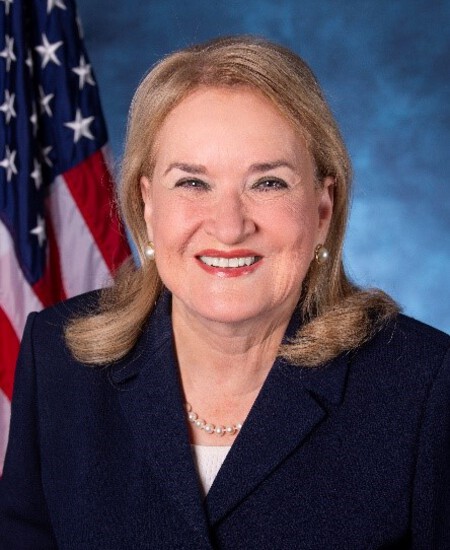
Rep. Sylvia R. Garcia
Sponsored bills
Maddy summaryThe Community Housing Act of 2024 significantly increases federal investment in affordable housing through major funding boosts, including $44.5 billion for the Housing Trust Fund and $1.5 billion for the Capital Magnet Fund over the next decade. It repeals the Faircloth amendment, which had limited public housing construction since 1992, allowing public housing authorities to build new units without the previous cap. The bill establishes a permanent emergency rental assistance program providing $3 billion annually through 2029 to help low-income households with rent payments and creates the Unlocking Possibilities program to fund local efforts to streamline housing regulations and reduce zoning barriers. These provisions directly affect low- and moderate-income households, community land trusts, and rural communities facing housing insecurity and affordability challenges.
Maddy summaryThis bill updates the Supplemental Security Income (SSI) program to better support low-income elderly, blind, and disabled individuals. It raises key financial thresholds: the resource limit for single individuals increases from $2,250 to $20,000 (adjusted annually for inflation), and the general income exclusion rises from $240 to $1,797 per month. The bill also removes a penalty that reduced benefits for married couples, excludes retirement accounts and tribal general welfare payments from resource calculations, and eliminates outdated requirements like dedicated accounts for past-due benefits. These changes directly affect SSI recipients by making it easier to qualify and maintain benefits without losing support due to minor income or resource fluctuations.
Maddy summaryThe Marriage Equality for Disabled Adults Act removes a rule requiring disabled adult children to remain unmarried to receive Social Security benefits. It ensures married disabled adult children, or their spouses, can maintain eligibility for Social Security Disability Insurance and Medicaid without losing benefits due to marriage. The bill changes how income and resources are counted, so a spouse's income and resources are no longer deemed against the disabled adult child for benefit calculations. It also requires states to preserve Medicaid eligibility for these individuals at the same level as if they were unmarried.
Maddy summaryThe MORE Act (HR 5601) would federally decriminalize cannabis by removing it from the Schedule I list of controlled substances under the Controlled Substances Act. It requires federal courts to expunge non-violent cannabis convictions and associated arrests, with a focus on addressing racial disparities in cannabis enforcement. The bill creates an Opportunity Trust Fund that would allocate 50% of funds to criminal justice programs, 20% to small business assistance for minority cannabis entrepreneurs, and 20% to community reinvestment grants for individuals impacted by the War on Drugs. It also prohibits federal agencies from denying benefits or security clearances based on cannabis use or past cannabis convictions, and establishes a Cannabis Justice Office to administer these programs.
Maddy summaryThe WISE Act of 2023 aims to remove barriers for immigrant survivors of domestic violence, sexual assault, human trafficking, and other crimes who are eligible for protections under the Violence Against Women Act (VAWA) and Trafficking Victims Protection Act (TVPA). Key provisions include reforming U visa eligibility to include civil violations related to abuse, eliminating annual U visa caps, and automatically granting work authorization to applicants within 180 days of filing. The bill also prohibits detention of these survivors while their applications are pending and expands protections for battered spouses, children, and abused derivative aliens seeking immigration relief. This directly affects non-citizen victims of violence who are navigating complex immigration processes to remain safely in the United States.
Maddy summaryHR 5008, the HEAL for Immigrant Families Act of 2023, would remove immigration status as a barrier to health insurance coverage for immigrants in the United States. The bill would make all lawfully present immigrants, including those with Deferred Action for Childhood Arrivals (DACA) status, eligible for Medicaid, CHIP, and Affordable Care Act health insurance subsidies. It would eliminate state-level restrictions on Medicaid eligibility for immigrants and allow individuals with federally authorized presence to access premium tax credits and cost-sharing reductions. This legislation aims to address health coverage disparities that disproportionately affect immigrant communities, particularly Black, Indigenous, Latinx, and other communities of color.
Maddy summaryThe Social Security 2100 Act would significantly enhance Social Security benefits for millions of Americans by increasing monthly payments for retirees, disabled workers, widows/widowers, and children. Key provisions include raising the minimum benefit for long-term low earners, improving cost-of-living adjustments using a more accurate index, eliminating the 5-month waiting period for disability benefits, and extending child benefits to age 26. The bill also changes how Social Security taxes are calculated by applying them to income above $400,000 and establishes a unified Social Security Trust Fund to manage program finances. Most provisions would apply to benefits payable from 2025 through 2034, affecting all current and future Social Security beneficiaries.
Maddy summaryThe PrEP Access and Coverage Act of 2023 requires private health insurance plans, Medicare, Medicaid, and other public health programs to cover pre-exposure prophylaxis (PrEP) for HIV prevention without cost-sharing, including the medication, related lab tests, and follow-up care. The bill also prohibits life, disability, and long-term care insurance companies from denying coverage or charging higher premiums to people taking PrEP. It establishes public education campaigns to increase awareness of PrEP and PEP (post-exposure prophylaxis) and creates funding for state and community programs to expand access to HIV prevention services, particularly for populations disproportionately affected by HIV including Black, Hispanic/Latinx, and transgender individuals. The legislation specifically addresses current disparities in PrEP access, as data shows only 11% of Black/African American and 21% of Hispanic/Latinx individuals eligible for PrEP received prescriptions in 2022 compared to 82% of White individuals. Coverage requirements for most plans will take effect on January 1, 2025.
Maddy summaryThis bill, the Public Servants Protection and Fairness Act of 2023, amends Social Security to better protect public servants who work in jobs not covered by Social Security (such as certain government positions). It creates a new formula for calculating retirement benefits that combines both covered and noncovered earnings, ensuring public servants receive the higher of two benefit calculations. The bill also provides an additional $150 monthly payment for certain public servants whose benefits were previously reduced by the windfall elimination provision. It improves Social Security account statements to clearly show noncovered earnings and requires a study of how state retirement plans handle these benefits. These changes will apply to benefits starting in 2025.