

Maddy summaryThe 9/11 Immigrant Worker Freedom Act creates a pathway for certain immigrants who worked or volunteered in the immediate aftermath of the September 11, 2001, attacks to adjust to lawful permanent resident status. It covers individuals who provided rescue, recovery, or cleanup services at the World Trade Center site (lower Manhattan, Staten Island, or barge piers), the Pentagon, or the Shanksville, Pennsylvania, crash site for specified hours during defined periods, as well as vehicle-maintenance workers exposed to debris. Key provisions include work authorization during the application process, fee waivers for low-income applicants (at or below 250% of the federal poverty level), and strict confidentiality to prevent immigration enforcement actions based on application information. Approved status does not reduce the overall number of available immigrant visas.
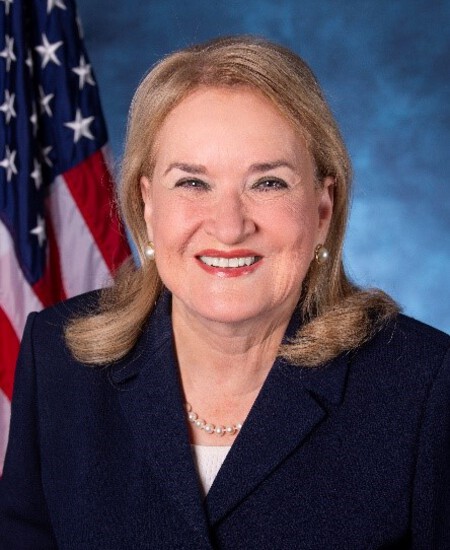
Rep. Sylvia R. Garcia
Sponsored bills
Maddy summaryThe LINE Act (HR 5319) prohibits the Centers for Medicare and Medicaid Services (CMS) and the Department of Health and Human Services (HHS) from sharing Medicaid health data with U.S. Immigration and Customs Enforcement (ICE). Specifically, it blocks the disclosure of individually identifiable health information from Medicaid enrollment records (under Title XIX of the Social Security Act) to ICE for immigration enforcement purposes. This directly affects Medicaid enrollees, particularly those who may be immigrants, by preventing their health data from being used in immigration proceedings. The law creates a clear barrier between Medicaid health records and immigration enforcement efforts.
Maddy summaryHR 5340 prohibits the U.S. Department of Housing and Urban Development (HUD) and public housing agencies from sharing tenant records with immigration authorities for immigration enforcement purposes. It directly affects all HUD housing program participants (including renters and applicants, regardless of immigration status) by requiring HUD to obtain written consent or a language-proficient request from the individual before disclosing their records. Key provisions include banning disclosure without consent, preventing HUD from forcing public housing agencies to share records, and mandating a 90-day compliance report to Congress detailing record security and past sharing practices. The bill aims to protect housing privacy by ensuring immigration enforcement cannot access sensitive tenant information held by HUD without explicit individual authorization.
Maddy summaryHRES 684 is a non-binding House resolution designating September 9, 2025, as "National Firearm Suicide Prevention Day." It aims to raise public awareness about firearm suicide statistics (including that firearms were used in 55% of U.S. suicides in 2023) and promote safe firearm storage as a key suicide prevention strategy. The resolution encourages health professionals to discuss safe storage with patients and supports existing awareness efforts led by organizations like Brady and End Family Fire. It directly affects the public and healthcare providers by emphasizing evidence-based prevention practices, not by creating new laws.
Maddy summaryThis bill requires most health insurance plans to cover HIV prevention services - including PrEP and PEP drugs, related lab tests, counseling, and monitoring - without cost-sharing (like copays or deductibles) or prior approval. It applies to private insurance, Medicare, Medicaid/CHIP, and federal employee health plans, directly affecting people who use HIV prevention medications. Key provisions mandate 100% coverage for FDA-approved HIV prevention drugs, eliminate cost-sharing for these services, and prohibit insurers from requiring preauthorization for them. The bill defines covered services to include all necessary components of HIV prevention care as outlined in current public health guidelines.
Maddy summaryHR 5126, the HIV Prevention Now Act, appropriates $2.165 billion for the CDC's National Center for HIV, Viral Hepatitis, STD, and Tuberculosis Prevention for fiscal year 2026. This funding is in addition to existing CDC appropriations and must be used exclusively by that specific center for its programs, with no transfer to other entities. The bill directly affects the CDC's public health operations by providing dedicated resources for prevention and treatment programs targeting HIV, viral hepatitis, STDs, and tuberculosis. It does not create new policies or alter eligibility but ensures sustained funding for existing prevention efforts at the federal level.
Maddy summaryThe SUN Act (HR 4998) requires the President to submit a detailed report to Congress within 15 days whenever National Guard members are deployed domestically for non-disaster purposes under specific laws. The report must include the legal basis for the deployment, evidence of reduced violence, input from local law enforcement, total costs, and a certification that the deployment won’t interfere with disaster response capabilities. It applies to all domestic uses of the National Guard except for responses to natural disasters under the Stafford Act. The bill aims to enhance congressional oversight of military deployments on U.S. soil.
Maddy summaryThis bill (HJRES 115) terminates a presidential emergency declaration made on August 11, 2025, which claimed a "crime emergency" in Washington, D.C. It directly affects the District of Columbia by ending federal restrictions that prevented D.C. from using $1 billion in locally-raised funds for public safety, law enforcement, fire services, and schools. The resolution cites that the emergency declaration was legally flawed - section 740 of the DC Home Rule Act does not permit federalizing the Metropolitan Police Department - and notes that D.C. violent crime has reached a 30-year low. The bill formally ends the emergency under the DC Home Rule Act, restoring D.C.'s authority over its own budget and public safety resources.
Maddy summaryHRES 649 is a symbolic resolution expressing congressional support for designating August 17-23, 2025, as "Warehouse Worker Recognition Week." It directly acknowledges warehouse workers in the logistics industry - over 1.8 million employees who support supply chains, transport goods, and work in challenging conditions like extreme heat. The resolution urges increased public awareness of their contributions, recognizes them as frontline workers, and commits to reducing workplace injuries. It does not create new laws or funding but formally endorses a national observance to celebrate their role in the economy.
Maddy summaryHR 4966 prohibits grocery stores from selling items at "grossly excessive prices," defined as 120% or more above the average market price over the previous six months (with exceptions for unavoidable cost increases like supply chain issues). It bans using facial recognition or personal data to set different prices for individual customers (e.g., adjusting prices based on shopping history) and requires clear signage if facial recognition is used. Stores over 10,000 square feet must replace electronic shelf labels with physical price tags. The Federal Trade Commission enforces these rules, allowing consumers to seek $3,000 per violation or actual damages, with penalties for willful violations.