

School Social Workers Improving Student Success Act This bill provides certain resources to increase the number of social workers in elementary and secondary schools. Specifically, the bill directs the Department of Education to award grants to high-need local educational agencies to retain or hire school social workers. The bill also establishes a national technical assistance center for school social work to, among other duties, develop strategies for improving the effectiveness of the school social work workforce.
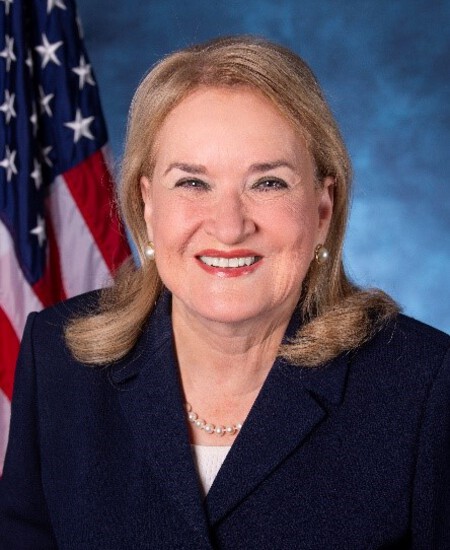
Rep. Sylvia R. Garcia
Sponsored bills
Maddy summaryThe DISCLOSE Act of 2026 aims to increase transparency in election spending and prevent foreign influence. It expands the ban on foreign money to cover federal, state, and local elections, including ballot initiatives and judicial nominations, and criminalizes using corporations to conceal these funds. The bill mandates that organizations spending over $10,000 on campaign-related activities, such as independent expenditures or judicial nomination advocacy, disclose their beneficial owners and top donors. Additionally, it establishes new "Stand By Every Ad" disclaimers for political communications, requiring the highest-ranking official to approve the message and, for certain ads, list their top funders. These provisions directly affect non-candidate organizations, individuals involved in political and judicial nomination spending, and foreign nationals.
Maddy summaryThe Stop Militarizing Law Enforcement Act reforms the Department of Defense's 1033 program, which transfers surplus military equipment to federal, state, and local law enforcement agencies. The bill prohibits the transfer of specific military-grade items, including controlled firearms (like automatic weapons), ammunition, grenades, mine-resistant ambush-protected vehicles, and silencers. For any permitted transfers, non-federal agencies must notify their local community, get approval from their local governing body, and certify the equipment's necessity for specific public safety or emergency purposes. The bill also mandates increased accountability for all transferred property, prohibits agencies from taking ownership, and requires the return of equipment if an agency is involved in widespread civil liberties abuses using that property.
Maddy summaryThis resolution (HRES 1088) is a non-binding House of Representatives measure recognizing the importance of Black history museums and cultural institutions. It formally acknowledges their role in preserving Black American history and contributions, particularly in relation to the 2026 100th anniversary of Black History Month and the U.S. 250th anniversary. The resolution urges the House to affirm that Black history is foundational to American history and calls for federal agencies to support these institutions through funding and partnerships. It also encourages the public to visit these museums, support them financially, and engage with their educational resources. The resolution does not create new laws or allocate funding, but serves as a symbolic endorsement of these institutions' cultural and historical significance.
Maddy summaryHR 7728, the Connect the Grid Act, requires Texas' ERCOT grid to connect with neighboring power systems by repealing its special exemptions from federal grid regulations. It mandates minimum power flow capacity between ERCOT and other grids (SPP, MISO, and the Western Interconnection) ranging from 2.5 to 12.6 gigawatts, with specific deadlines for new transmission projects by 2037. The bill directs grid operators to prioritize using existing infrastructure, degraded land sites, renewable energy access, and community engagement - including environmental justice and Tribal communities - in planning new transmission. It also increases federal funding for transmission projects and requires a study on benefits of connecting with Mexico’s grid.
Maddy summaryHR 7740, the African American History Act of 2026, authorizes $4 million annually for the National Museum of African American History and Culture to develop educational resources and support teaching about African American history. The bill directs the museum to create digital and print materials, provide teacher training, and expand access to curriculum resources for K-12 and college classrooms. It requires annual reports to Congress on fund usage and expires in 2030. This program directly affects educators and students by enhancing classroom materials and professional development on African American history.
Maddy summaryHRES 1080 is a symbolic resolution recognizing and celebrating Black History Month 2026, focusing on its theme "A Century of Black History Commemorations." It highlights historical figures and events central to Black history, including Carter G. Woodson’s founding of Negro History Week (the precursor to Black History Month), Juneteenth, and key moments like the 1865 Charleston commemoration. The resolution emphasizes how Black history commemorations counter historical erasure and affirm Black contributions to U.S. history, referencing figures like Mary McLeod Bethune and W.E.B. Du Bois. As a ceremonial resolution, it has no binding effect but aims to raise awareness of Black achievements through official recognition.
Maddy summaryThis bill requires states to create and maintain searchable online directories of career and technical education programs. Each directory must list programs by school district, industry focus, and credentials earned, using open, standardized data formats that work together. States must update the directories annually and include details like course sequences, work-based learning opportunities, and evidence linking programs to local job market needs. These directories directly affect state education agencies and school districts operating career training programs under the Perkins Act.
Maddy summaryThis bill establishes two new offices within the Supreme Court: an Office of Ethics Counsel and an Office of Investigative Counsel, both authorized by the Chief Justice. The Ethics Counsel office would provide guidance to justices and their spouses on judicial ethics matters including financial disclosures, gift acceptance, political activity, and conflicts of interest, while the Investigative Counsel office would review and investigate ethics complaints filed by congressional leaders against justices. Both offices would be staffed by experienced attorneys with competitive salaries, and the Investigative Counsel would have subpoena power to compel testimony and evidence during investigations. The bill also requires annual reports on ethics advice given and mandates that investigation findings be submitted to the Chief Justice and made available to congressional committees.
End Veteran Homelessness Act of 2025 This bill requires the Department of Veterans Affairs (VA) to furnish case management to certain veterans who are eligible for the HUD-Veterans Affairs Supportive Housing (HUD-VASH) program administered by the Department of Housing and Urban Development (HUD) and the VA. Specifically, the VA must furnish case management to veterans who are eligible for HUD-VASH that the VA determines require case management. The VA must prioritize vulnerable homeless veterans in assigning case managers and providing services. The VA must take certain actions if a veteran refuses case management. HUD or a public housing authority may not revoke assistance solely on the basis that a veteran has refused case management. Additionally, a veteran may not be evicted or penalized by the owner of a property solely on the basis that they have refused case management or cannot be provided case management for health and safety reasons. The Government Accountability Office must report to Congress on veterans who are served by the HUD-VASH program, case managers and case management services provided under the program, and metrics about housing stability for veterans participating in federal housing assistance programs. The bill also provides statutory authority to expand eligibility for the HUD-VASH program to any veteran who is homeless, at risk of homelessness, or receiving assistance under another housing assistance program if the VA determines a voucher under HUD-VASH is more appropriate. (Currently, assistance is statutorily limited to certain veterans who have chronic mental illness or substance use disorders.)