Original National Domestic Violence Awareness Month Resolution of 2021 This resolution supports the goals and ideals of National Domestic Violence Awareness Month. Further, it expresses the sense of the House of Representatives that Congress should continue to raise awareness of and support programs to end domestic violence.
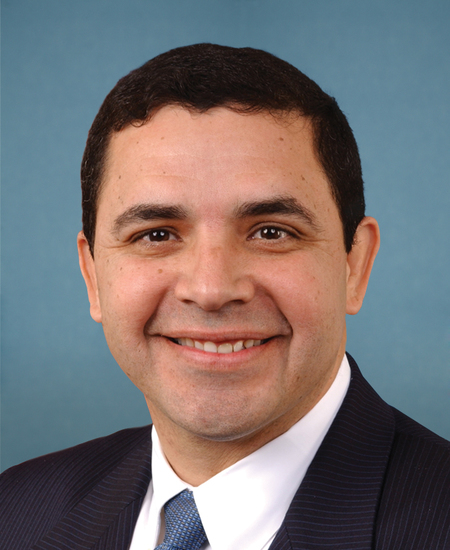
Rep. Henry Cuellar
Sponsored bills
State, Local, Tribal, and Territorial Fiscal Recovery, Infrastructure, and Disaster Relief Flexibility Act This bill allows states, tribes, territories, and localities to use certain COVID-19 relief funds for new categories of spending, including for natural disasters and infrastructure projects. It also makes changes to expenditure deadlines and other aspects of this funding. Specifically, recipients may use funds for emergency relief from natural disasters and associated negative economic impacts of natural disasters. In addition, recipients may use a portion of their COVID-19 relief funds for designated infrastructure projects, such as nationally significant freight and highway projects. Furthermore, the bill allows recipients to expend COVID-19 relief funds on these types of infrastructure projects until September 30, 2026. Under current law, recipients must expend the funds by December 31, 2024. Other changes in the bill include (1) modifying eligibility and allocation requirements for funding set aside for counties and Indian tribes that are near public lands, (2) allowing Indian tribes an additional year to expend their COVID-19 relief funds, and (3) establishing a process for government entities to decline COVID-19 relief funds and requiring any declined funds to be used to reduce the federal deficit.
CBP Donations Acceptance Program Reauthorization Act This bill extends through December 31, 2026, the authority of U.S. Customs and Border Protection (CBP) to enter into an agreement with any entity to accept donations of real and personal property for certain activities at ports of entry. Further, the bill allows CBP to accept donations at leased land ports of entry.
College Student Hunger Act of 20 21 This bill expands the eligibility of students at institutions of higher education to participate in the Supplemental Nutrition Assistance Program (SNAP). SNAP eligibility for students is expanded to include certain low-income students who (1) are employed a minimum of 10 hours per week (currently 20 hours) during the regular school year, (2) are eligible for a federal Pell Grant, (3) have an expected family contribution equal to zero, or (4) are independent. Additionally, the bill directs the Department of Education to provide notification to certain students regarding their eligibility for SNAP benefits, the Inspector General of the Department of Agriculture (USDA) to conduct an audit of the operations of the Food and Nutrition Service to examine the procedures and outreach practices used by the service to provide to states information about the eligibility of students at institutions of higher education for participation in the program, USDA to update its state outreach plan guidance, and USDA to implement projects to decrease student hunger at institutions of higher education and to reduce barriers to college students fully utilizing SNAP benefits at these institutions.
This concurrent resolution recognizes the disparity between wages paid to Latina women, and its impact on women, families, and the nation and reaffirms Congress' commitment to supporting equal pay and to narrowing the gender wage gap.
This resolution recognizes the ultimate sacrifice of the unknown soldiers interred at Arlington National Cemetery and expresses gratitude and appreciation of all the members of the Armed Forces who have served during wars and peacetime. Additionally, the resolution commends all members of the 3d Infantry Regiment, specifically those who guard the Tomb of the Unknown Solider.
United States Cadet Nurse Corps Service Recognition Act of 2021 This bill recognizes service as a member of the U.S. Cadet Nurse Corps between July 1, 1943, and December 31, 1948, as active duty service. The active duty designation entitles qualifying individuals to certain benefits afforded to veterans, such as burial benefits (not including interment or inurnment at Arlington National Cemetery) and honorary veteran status. Under the bill, the Department of Defense (DOD) must issue individuals who served in the corps during the specified period a discharge from their service under honorable conditions if such a discharge is warranted based on the duration and nature of the service. Such individuals are not entitled to Department of Veterans Affairs benefits aside from those related to burials and memorials. The bill also authorizes DOD to produce a service medal or other commendation, memorial plaque, or grave marker to honor the individuals.
Bipartisan Border Solutions Act of 2021 This bill establishes regional processing centers for conducting immigration-related activities and addresses other related issues. The Department of Homeland Security (DHS) shall establish at least four regional processing centers along the southern border in high-traffic Border Patrol sectors. These centers shall conduct processing activities such as criminal history checks, medical screenings, asylum interviews and credible fear determinations, and short-term detention of individuals. The bill imposes various requirements, such as requiring the centers to (1) allow nongovernmental entities access to detained individuals to provide humanitarian or legal assistance, and (2) provide detained aliens access to legal counsel for certain asylum proceedings. The bill also requires DHS and the Department of Justice (DOJ) to develop pilot programs to improve asylum decisions, credible fear determinations, access to counsel, and case management of aliens awaiting asylum hearings or decisions. DOJ shall, to the greatest extent practicable, prioritize removal cases involving aliens apprehended while entering the United States during an irregular migration influx. Before placing an unaccompanied alien child with an individual, the Department of Health and Human Services must conduct a criminal background check of each adult member of that individual's household. An alien child may not be placed in a household where an individual has been convicted of certain crimes, including offenses involving sex or domestic violence. The bill also makes it a crime to make a materially false statement or knowingly use a false document to obtain custody of an unaccompanied alien child.

Jaime Zapata and Victor Avila Federal Law Enforcement Protection Act This bill explicitly grants extraterritorial jurisdiction over criminal conduct involving the killing (or attempted killing) of a federal officer or employee. The United States may prosecute such conduct that occurs outside the United States.
COVID-19 Border Protection (CBP) Act This bill requires the Department of Homeland Security (DHS) to devise and implement a strategy to ensure that no alien with COVID-19 (i.e., coronavirus disease 2019) in DHS or Department of Health and Human Services custody may be released into the community during a public health emergency related to COVID-19. Funds previously provided to the Department of State for supporting international efforts to help migrants and refugees respond to COVID-19 shall be transferred to DHS to implement this strategy.