

Maddy summaryHR 866, the Equal COLA Act, changes how cost-of-living adjustments (COLAs) are calculated for federal retirees under the Federal Employees Retirement System (FERS). It requires that each year's COLA be based on the exact percent change in the price index from the previous year's base quarter, rounded to the nearest 0.1%, effective December 1. This applies to all FERS annuities starting before, on, or after the bill's enactment date, ensuring a standardized calculation method for retirees' annual adjustments.
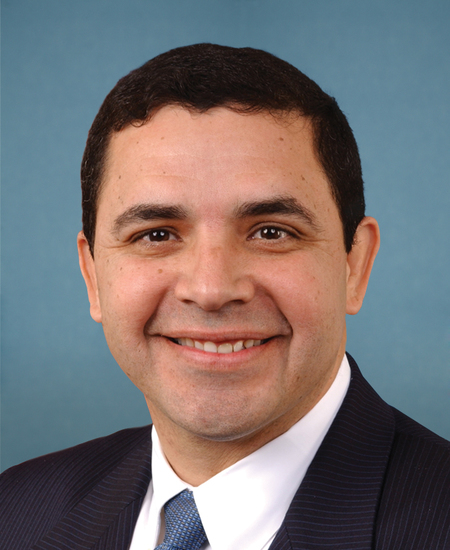
Rep. Henry Cuellar
Sponsored bills
Maddy summaryThis bill amends federal law to include Transportation Security Administration (TSA) officers who die while performing official duties protecting transportation systems as eligible for public safety officers' death benefits. It specifically adds TSA employees working to "ensure freedom of movement for people and commerce" to the list of covered personnel under the Omnibus Crime Control and Safe Streets Act. The change applies to deaths occurring on or after October 31, 2013, directly affecting TSA officers and their families by expanding access to death benefits previously available only to other public safety personnel.
Maddy summaryHR 882, the American Teacher Act, requires states to ensure full-time teachers in public elementary and secondary schools earn at least $60,000 annually (adjusted for inflation), with part-time teachers receiving proportional pay. It provides federal grants to states to fund these salary increases, mandating sustainability plans beyond the 4-year grant period and prioritizing schools in high-poverty areas. The bill also includes cost-of-living adjustments tied to the Consumer Price Index and funds a national campaign to promote teaching as a career. It explicitly states grant funds must supplement existing education budgets without reducing current teacher pay or state loan forgiveness programs.
Maddy summaryHCONRES 13 is a concurrent resolution expressing Congress's support for maintaining the current policy that prohibits imposing new fees on local radio stations for playing music. It states that Congress should not impose any performance fee, tax, royalty, or charge on local radio stations for broadcasting sound recordings over the air, or on businesses like bars and restaurants that play music publicly. The resolution argues that such fees would harm local radio stations - critical sources for emergency information and community programming - and jeopardize the economic model that has supported both radio and the music industry for decades. This resolution does not create new law but formally opposes potential legislative changes to the existing fee structure.
Freight Rail Assistance and Investment to Launch Coronavirus-Era Activity and Recovery Act of 2023 or the Freight RAILCAR Act of 2023 This bill provides a new tax credit through 2025 for 10% of freight railcar fleet modernization expenses (i.e., railcar replacement and modernization expenses for meeting fuel efficiency and performance standards). The bill provides that no more than 2,000 freight railcars per taxpayer may be taken into account for purposes of determining the credit in a taxable year. The Department of the Treasury must report to Congress on the credit to provide information on the number of times the credit was claimed and the number of railcars scrapped or built as a result of the credit.
This resolution states that the House of Representatives (1) rejects hate, discrimination, and antisemitism; (2) stands united with the Jewish people against rising antisemitism; and (3) condemns antisemitic tropes such as claims of dual loyalty.
Repatriate Our Patriots Act This bill protects certain veterans of the Armed Forces from removal from the United States and provides such veterans with an expedited procedure for naturalization. The bill applies to special veterans , defined as persons who served in the active Armed Forces who were (1) honorably discharged or released; (2) not convicted of various crimes, including voluntary manslaughter, murder, rape, or terrorism; and (3) not a child abuser or pedophile. Special veterans may not be removed from the United States, and the Department of Homeland Security (DHS) must cancel any pending removal proceedings or orders against any such veterans. DHS must also establish a program to permit such veterans who were already removed from the United States to return to as lawful permanent residents. Special veterans shall be naturalized upon filing an application, paying the relevant fees, and taking an oath of allegiance. DHS must take steps to ensure such naturalization applications are pending for no longer than 90 days.
Maddy summaryThis bill updates securities regulations to include rural-area small businesses in existing capital access provisions. Specifically, it amends the Securities Exchange Act of 1934 to add "rural-area small businesses" as a qualifying category alongside women-owned small businesses in two key sections. The change directly affects rural small businesses seeking capital by expanding their eligibility for certain regulatory exemptions. This is a procedural adjustment to current law, not a new funding program.
ATF Accountability Act of 2023 This bill establishes a federal statutory process for licensed gun dealers, importers, or manufacturers to appeal a ruling or determination by the Bureau of Alcohol, Tobacco, Firearms and Explosives.
Maddy summaryThe Preventing Child Sex Abuse Act of 2023 amends federal law to close legal loopholes in prosecuting child sexual abuse cases. It revises the standard for travel-related abuse from requiring a "motivating purpose" to demanding "intent" to engage in sexual conduct during travel, and creates a new federal crime for individuals (like charity employees) who commit abuse through organizational affiliations affecting interstate or foreign commerce. The bill also clarifies that sexual activity for prosecution purposes includes non-physical acts, such as using webcams or online platforms to exploit minors. These changes ensure perpetrators using travel or charitable work as cover can be prosecuted under federal law, addressing gaps highlighted by cases like Larry Nassar's.