Protection of Women and Girls in Sports Act of 2021 This bill makes it a violation of federal law for a recipient of federal funds who operates, sponsors, or facilitates athletic programs or activities to permit a person whose sex is male to participate in an athletic program or activity that is designated for women or girls. The bill specifies that sex shall be recognized based solely on a person's reproductive biology and genetics at birth.
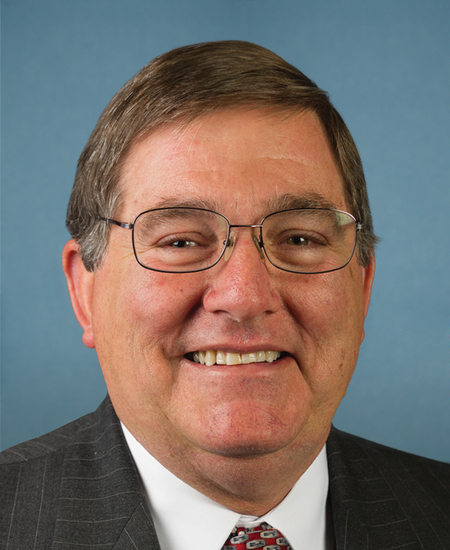
Rep. Michael C. Burgess
Sponsored bills
This bill requires the President to immediately resume issuing oil and gas leases on federal lands and offshore submerged lands in the Outer Continental Shelf as specified under the bill. In addition, the bill prohibits the President from delaying such leases, including delaying related permits, approvals, or authorizations.
New Era of Preventing End-Stage Kidney Disease Act This bill addresses rare kidney diseases through research, training for health professionals, and other means. It also modifies requirements for Medicare drug plan formularies that include drugs for rare diseases or conditions. The Department of Health and Human Services (HHS) must convene a conference focused on diagnosis and treatment of rare kidney diseases; study risk factors, access to care (including to genetic and genomic testing), and other matters related to rare kidney diseases; and establish grants for supporting kidney disease education and referrals in communities of color. HHS may award grants to educate and train health professionals about kidney disease and nephrology. Additionally, health professional schools that receive certain HHS funding for educating underrepresented minority individuals must support postgraduate nephrology training. The National Institutes of Health (NIH) must report on diversity in its kidney disease research. The NIH may also (1) support research on rare kidney diseases that, among other requirements, includes persons of color in study populations; and (2) establish regional centers of excellence for rare kidney diseases. The Centers for Medicare & Medicaid Services must evaluate methods for (1) treating rare kidney diseases, with a focus on delaying dialysis and transplant; and (2) raising awareness about rare kidney diseases, including in communities of color. Furthermore, if a Medicare drug plan formulary includes a drug to treat a rare disease or condition, at least two members of the committee that develops or reviews the formulary must have expertise in the field of medicine related to that drug.
Postal Service Reform Act of 202 2 This bill addresses the finances and operations of the U.S. Postal Service (USPS). The bill requires the Office of Personnel Management (OPM) to establish the Postal Service Health Benefits Program within the Federal Employees Health Benefits Program under which OPM may contract with carriers to offer health benefits plans for USPS employees and retirees. The bill provides for coordinated enrollment of retirees under this program and Medicare. The bill repeals the requirement that the USPS annually prepay future retirement health benefits. Additionally, the USPS may establish a program to enter into agreements with an agency of any state government, local government, or tribal government, and with other government agencies, to provide certain nonpostal products and services that reasonably contribute to the costs of the USPS and meet other specified criteria. The USPS must develop and maintain a publicly available dashboard to track service performance and must report regularly on its operations and financial condition. The Postal Regulatory Commission must annually submit to the USPS a budget of its expenses. It must also conduct a study to identify the causes and effects of postal inefficiencies relating to flats (e.g., large envelopes). The USPS Office of Inspector General shall perform oversight of the Postal Regulatory Commission.

This bill permanently allows state Medicaid programs to receive federal payment for substance-use disorder services that are provided at institutions for mental diseases (IMDs) for individuals aged 21 to 64. The bill also extends the maximum length of stay over a 12-month period from 30 days to 45 days. In addition, the bill provides statutory authority for a 2018 letter from the Centers for Medicare & Medicaid Services that provided for Medicaid demonstration programs for IMD mental health services for adults and children; the bill similarly increases the average length of stay under such programs to 45 days.
Response from Executive Agencies to Congress on Time Act or the REACT Act This bill requires federal agencies to provide certain information at the request of additional congressional committees and specifies that agencies must respond to such requests within 45 days. Under current law, agencies must supply information requested by the Committee on Government Operations of the House of Representatives (or any seven of its members) or the Committee on Government Affairs of the Senate (or any five of its members), provided that the requested information relates to matters within the committees' respective jurisdictions. This bill also requires agencies to supply information requested by authorizing committees or permanent select committees.
Pregnant Students' Rights Act This bill requires a public institution of higher education (IHE) that participates in federal student-aid programs to provide information to admitted and enrolled students on the rights and resources for students who are pregnant or may become pregnant. These rights and resources must exclude abortion services. Additionally, the IHE must establish a protocol to meet with students who believe they were discriminated against based on pregnancy. The IHE must also provide pregnancy-related questions to enrolled students and annually submit compiled responses to the Department of Education.
This resolution honors the life and legacy of the late Representative Don Young and directs the Sergeant at Arms to designate a Don Young Reserved Seat on the floor of the chamber of the House of Representatives.
This bill bars the use of any of the unobligated COVID-19 relief funds made available to the Department of the Interior until Interior reinstates the telework policies, practices, and levels of telework as in effect at Interior on December 31, 2019. No later than 30 days after the enactment of this bill, Interior shall submit to Congress a plan for opening the offices of Interior for in-office work in a manner consistent with the policies, practices, and levels of telework as in effect on December 31, 2019.
Freedom from Russian Energy Enterprise and Domestic Oil Maximization Act or the FREEDOM Act This bill directs the President to prohibit imports of crude oil, petroleum, petroleum products, and liquified natural gas from Russia. It also (1) authorizes the construction and operation of the TransCanada Keystone Pipeline to import oil from Canada into the United States, and (2) nullifies the Executive Order titled Tackling the Climate Crisis at Home and Abroad and signed January 27, 2021.