

Improving Seniors' Timely Access to Care Act of 2022 This bill establishes several requirements and standards relating to prior authorization processes under Medicare Advantage (MA) plans. Specifically, MA plans must (1) establish an electronic prior authorization program that meets specified standards, including the ability to provide real-time decisions in response to requests for items and services that are routinely approved; (2) annually publish specified prior authorization information, including the percentage of requests approved and the average response time; and (3) meet other standards, as set by the Centers for Medicare & Medicaid Services, relating to the quality and timeliness of prior authorization determinations.
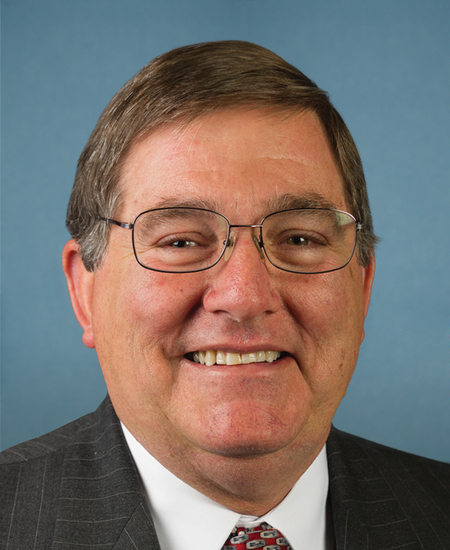
Rep. Michael C. Burgess
Sponsored bills
This resolution expresses support for the goals and ideals of Sickle Cell Disease Awareness Month and encourages the President to support access to innovative therapies for the disease. Sickle cell disease is an inherited blood disorder than can lead to pain, anemia, infections, and stroke.
Debt Cancellation Accountability Act of 2022 This bill prohibits the Department of Education from providing class-based loan forgiveness unless funds have been specifically requested and appropriated for this purpose. Class-based loan forgiveness refers to the cancellation, waiver, assumption, discharge, reduction, or other forgiveness of any obligation due on Federal Family Education Loans, Federal Direct Loans, or Federal Perkins Loans (1) on a class-wide basis and for a class of two or more loan borrowers, and (2) that totals more than $1 million. The prohibition does not apply to targeted loan forgiveness programs established under the Higher Education Act of 1965 and in effect before the enactment of this bill if the loan forgiveness is granted for a single borrower on a case-by-case basis.
National World War II Memorial Commemorative Coin Act This bill directs the Department of the Treasury to mint and issue up to 50,000 $5 coins, 400,000 $1 silver coins, and 750,000 half-dollar clad coins in commemoration of the National World War II Memorial in the District of Columbia. The design of the coins shall be emblematic of the memorial and the service and sacrifice of American soldiers and civilians during World War II. All surcharges received from the sale of such coins shall be paid to the Friends of the National World War II Memorial to support the National Park Service in maintaining and repairing the memorial, and for educational and commemorative programs.
Foreign Medical School Accountability Fairness Act of 2022 This bill revises the institutional eligibility criteria for a foreign graduate medical school to participate in federal student-aid programs. Specifically, the bill requires all foreign graduate medical schools to meet the same minimum requirements to participate in the programs.
Restore Protections for Dialysis Patients Act This bill specifies that private health insurers may not limit, restrict, or condition benefits for renal dialysis services for individuals with end-stage renal disease as compared to other types of benefits for other medical conditions under Medicare secondary payer rules.
Emergency Care Improvement Act This bill permanently allows for coverage under Medicare and Medicaid of services that are provided by freestanding emergency centers. The bill takes effect January 1, 2023, or the first day after the end of the COVID-19 public health emergency, whichever is first.
Preserving Access to Home Health Act of 2022 This bill restricts the Centers for Medicare & Medicaid Services (CMS) from decreasing payments for Medicare home health services based on certain adjustments until 2026. Current law requires the CMS to make certain permanent and temporary payment adjustments under the Medicare prospective payment system for home health services based on behavioral assumptions for 2020 through 2026. The bill restricts the CMS from making adjustments that decrease payments until 2026; the CMS must also ensure that any such necessary decreases are made before 2032.
Energy Sector Innovation Credit Act of 2021 This bill adds new tax credits for investment in qualified emerging technology energy property and for the production of electricity from emerging energy technology. The bill defines qualified emerging energy property as property that is constructed, reconstructed, erected, or acquired by the taxpayer and is (1) a facility for the production of electricity from emerging energy technology, (2) carbon capture equipment, or (3) energy storage technology. The bill also adds a new tax credit for the production of electricity from clean hydrogen. The bill defines clean hydrogen as hydrogen that is produced through a production method for which the rate of the greenhouse gas emission is greater than zero and not greater that 2,500g CO2-e per kilogram of hydrogen produced, or is equal to or less than zero.
Securing and Enabling Commerce Using Remote and Electronic Notarization Act of 2022 or the SECURE Notarization Act of 2022 This bill allows a notary public commissioned under state law to remotely notarize electronic records and perform notarizations for remotely located individuals. The bill provides technical requirements for such notarizations, including the creation and retention of video and audio recordings and the use of communication technologies (i.e., video chat). Additionally, the bill requires U.S. courts and states to recognize notarizations—including remote notarizations of electronic records and notarizations of remotely-located individuals—that occur in or affect interstate commerce and are performed by a notary public commissioned under the laws of other states. The bill also allows a notary public to remotely notarize electronic records involving an individual located outside of the United States, subject to certain requirements.