Sunshine Act of 2022 This bill specifies that manufacturers of drugs, devices, biologics, or medical supplies covered by Medicare, Medicaid or the Children's Health Insurance Program (CHIP) are not required to report peer-reviewed journals, journal reprints, journal supplements, medical conference reports, or medical textbooks that are provided to health care practitioners or teaching hospitals.
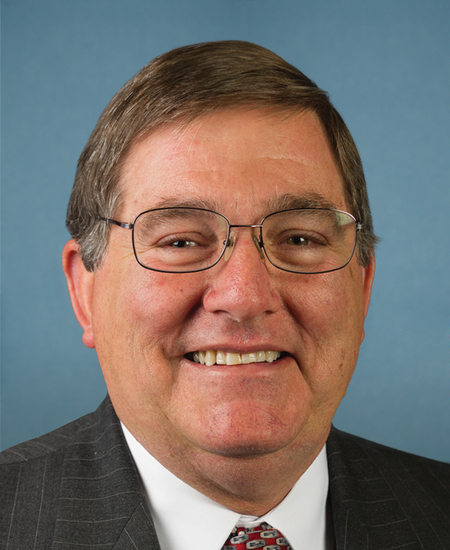
Rep. Michael C. Burgess
Sponsored bills
Declaring War on the Cartels Act of 2022 This bill enhances the term of federal imprisonment for members of certain transnational criminal cartels (i.e., Mexican cartels) who are repeat offenders. It also establishes penalties for U.S. banks and foreign governments that support or otherwise have dealings with these cartels. Specifically, cartel members are subject to an additional 10 to 20 years imprisonment if they are convicted of certain federal crimes (e.g., crimes of violence, fraud, or sexual exploitation) and have been previously convicted of similar crimes (including at the state or local level) within the last five years. Any U.S. national who is convicted as an accessory to such crimes is also subject to up to 15 years of additional imprisonment. The bill also prohibits cartel members from using U.S. banks to conduct business and subjects any related assets to federal seizure. Banks that intentionally do business with cartel members are subject to civil penalties. Additionally, the bill (1) bars noncitizen cartel members and their immediate family from admission into the United States, (2) authorizes sanctions against foreign governments and persons (individuals or entities) that support cartel activity, and (3) requires certain federal agencies to work with foreign governments on combatting cartels. The bill applies to members of the following cartels: The Sinaloa Cartel, The Jalisco New Generation Cartel, The Beltran-Leyva Cartel, The Gulf Cartel, The Los Zetas Cartel, The Tijuana Cartel, and The La Familia Michoacána/Knights Templar Cartel.

Integrity, Notification, and Fairness in Online Retail Marketplaces for Consumers Act or the INFORM Consumers Act This bill requires online marketplaces (e.g., Amazon) to collect and verify certain contact and financial information from third-party sellers whose transactions and related revenues exceed specified thresholds. Subject to certain exceptions, online marketplaces must clearly and conspicuously disclose the contact information of certain high-volume third-party sellers to consumers and must also provide consumers with methods to report suspicious activity on the marketplace. The bill provides the Federal Trade Commission and state attorneys general with the authority to enforce these requirements.
Lymphedema Treatment Act This bill provides for Medicare coverage of lymphedema compression treatment items. Specifically, the bill provides for coverage of standard and custom fitted gradient compression garments and other approved items that are prescribed by a physician or other specified health care professional to treat lymphedema.
Continuity for Operators with Necessary Training Required for ATC Contract Towers Act of 2021 or the CONTRACT Act of 2021 This bill exempts certain air traffic controllers from a required reduction in their retirement annuity payment on account of earnings from certain work performed while entitled to such annuity. Under current law, retired Federal Aviation Administration air traffic controllers receive an annuity payment during the period between the mandatory retirement age of 56 and the Social Security minimum age of 62. Such annuity payment is required to be reduced by a certain percentage of any excess earnings during this period. The bill exempts from such reduction in annuity payments an air traffic controller who participates in the Air Traffic Control Contract Program (a public-private partnership for air traffic control services) following mandatory retirement.
Pre-Approval Information Exchange Act of 2022 This bill specifies that product information that is exchanged between drug manufacturers and certain health care entities (e.g., formulary committees) about drug products before regulatory approval is not considered to be misbranding if it relates to the product's investigational use and meets other specified criteria. The Government Accountability Office must study the use and effects of such information.
This joint resolution nullifies the interim final rule submitted by the Department of Justice and the Department of Homeland Security and published on March 29, 2022, concerning procedures for the consideration of asylum claims and other related issues. (Among other changes, the interim final rule requires an asylum seeker subject to expedited removal to be screened by an asylum officer for a credible fear of persecution or torture, rather than a credible fear of persecution, reasonable possibility of persecution, or reasonable possibility of torture.)
This resolution condemns recent attacks on pro-life facilities, groups, and churches and calls on the current presidential administration to use appropriate law enforcement authorities to support their safety.
This resolution urges the Biden Administration to expeditiously restore the Migrant Protection Protocols, a policy requiring many asylum seekers arriving at the southern border to wait in Mexico while their cases are being adjudicated. It also urges the Administration to use certain public health powers, commonly referred to as Title 42 authority, to promptly expel migrants.
This resolution directs the Department of Homeland Security and the Department of Health and Human Services to provide to the House of Representatives certain information and documents about the treatment of unaccompanied alien children, including information about the health and welfare of such children in the care or custody of U.S. Customs and Border Protection or the Office of Refugee Resettlement. The resolution also requests such information and documents from the President.