

Maddy summaryHR 5, the Parents Bill of Rights Act, would require public schools receiving federal funding to provide parents with greater access to educational information. The bill mandates that schools post curricula online or widely distribute it to parents, include school budgets in report cards, and provide specific information about school activities including violent incidents and plans to eliminate gifted programs. It also guarantees parents the right to meet with teachers twice a year, review library materials, and address school boards. These requirements would apply to all local educational agencies and schools covered by the Elementary and Secondary Education Act. The bill amends existing education laws to strengthen parental transparency and involvement in their children's education.
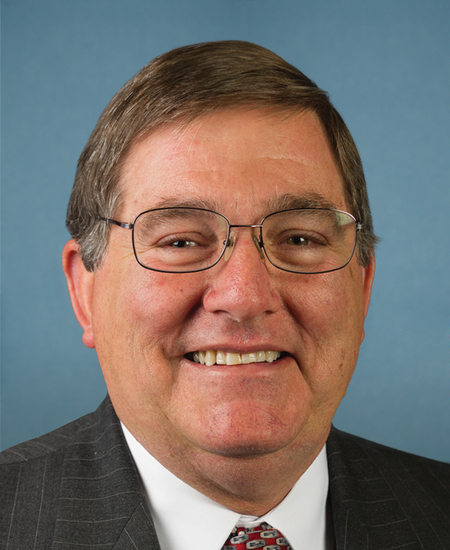
Rep. Michael C. Burgess
Sponsored bills
Maddy summaryThis bill makes the Federal Energy Regulatory Commission (FERC) the sole lead agency for environmental reviews (NEPA) required for natural gas pipeline approvals. It requires other federal, state, and tribal agencies to coordinate with FERC early in the process, adhere to a strict 90-day deadline for decisions, and avoid duplicating environmental reviews. Pipeline developers benefit from a more predictable timeline, while the public gains access to online tracking of each agency's progress on permits. The bill also mandates FERC to consult with transportation security officials on pipeline safety measures during reviews.
Maddy summaryHR 1058 streamlines approval for new cross-border energy infrastructure projects in the U.S., directly affecting energy companies seeking to build oil/gas pipelines or electricity transmission lines across U.S. borders with Canada or Mexico. It replaces Presidential permits with a new "certificate of crossing" process managed by FERC (for pipelines) or the Department of Energy (for electricity), requiring decisions within 120 days unless the project lacks public interest. The bill also mandates that natural gas import/export applications be approved within 30 days and repeals a requirement for Federal Power Act approval for electricity projects. Existing facilities and projects with pending permits as of the bill's enactment are exempt from these new rules.
Maddy summaryHRES 214 is a symbolic resolution designating March as "Deep Vein Thrombosis and Pulmonary Embolism Awareness Month" to raise public awareness about these preventable conditions. It highlights that DVT/PE causes an estimated 100,000 U.S. deaths annually - more than HIV, breast cancer, or car accidents - and contributes to $10 billion in yearly medical costs. The resolution does not create new laws or allocate funds but formally supports awareness efforts through congressional recognition. It aims to educate the public about risk factors like immobility, surgery, cancer, and postpartum periods, where DVT/PE is particularly dangerous. This resolution directly affects public health awareness efforts, not specific individuals or policies.
Maddy summaryThis bill authorizes a Congressional Gold Medal to honor the "Hello Girls" - female telephone operators who served in the Army Signal Corps during World War I. They provided critical battlefield communications in France (connecting 26 million calls), wore military uniforms, and faced combat risks, but were denied veteran benefits for 60 years due to being classified as civilian contractors. The medal recognizes their pioneering service, devotion, and the decades-long struggle to gain military recognition. The award follows similar recognition for other WWII women veterans and aims to correct the historical injustice they faced.
Maddy summaryThis bill requires the U.S. State Department to officially designate four specific Mexican drug cartels (Gulf Cartel, Cartel Del Noreste, Cartel de Sinaloa, and Cartel de Jalisco Nueva Generacion) as foreign terrorist organizations under existing law. It mandates a 30-day report explaining why these groups meet the legal criteria for such designation, including justification if they don't. The report must be submitted to specified congressional committees and may lead to additional cartels being designated based on the findings. The bill also clarifies that this designation won't affect asylum eligibility for individuals fleeing these groups.
Protecting an Alien child's Reasonable Expectation of No Trafficking Act of 2023 or the PARENT Act of 2023 This bill establishes that no later than 72 hours after determining that a child in federal custody is an unaccompanied alien minor, custody of that child may only be transferred to the child's verified parent or legal guardian or to the Department of Health and Human Services (HHS). Currently, HHS may release such children to sponsors, who are not required to be a parent or legal guardian but must pass a background check.
Compensation for the Victims of State Misrepresentations to the World Health Organization Act of 2023 This bill revises an exception to the jurisdictional immunity of a foreign state to allow an action seeking money damages against a foreign state for personal injury, death, or other damage resulting from certain misrepresentations related to infectious disease made by the state to the World Health Organization.
Maddy summaryThis bill prohibits the Department of Defense from using funds to pay for or reimburse abortion services, except when the pregnancy endangers the mother's life, results from rape, or results from incest. It directly affects military personnel, civilian DOD employees, and contractors receiving medical care at military facilities by restricting funding for abortion-related expenses. Key provisions include amending federal law to ban reimbursement for travel or licensing costs related to abortion services and repealing a 2022 DOD memo that expanded access to such care. The bill explicitly blocks all funding for abortion services beyond the existing exceptions, with no new exceptions added. It does not change abortion access for civilians outside the military healthcare system.
Maddy summaryHRES 166 is a procedural resolution that sets rules for debating two separate legislative measures. It schedules consideration of H.R. 347, which would require the White House to provide inflation estimates for major executive orders, and H.J. Res. 30, which seeks congressional approval to reject a Department of Labor rule on retirement plan investment standards. The resolution establishes time limits for debate, amendment procedures, and voting rules for both measures. It does not change policy itself but governs how Congress will review these proposals.