

Maddy summaryThis bill directs the Secretary of State to actively use U.S. diplomatic resources, including the voice and influence of U.S. diplomats and officials at the International Boundary and Water Commission, to advance efforts ensuring Mexico complies with the 1944 water treaty. It requires U.S. officials to work toward establishing reliable water delivery agreements under the treaty for the Colorado, Tijuana, and Rio Grande rivers. The key mechanism is mandating diplomatic engagement to address Mexico's compliance with treaty obligations, aiming to secure predictable water flows for U.S. users. The bill affects U.S. diplomatic operations and water management coordination with Mexico, focusing on treaty implementation rather than new water infrastructure.
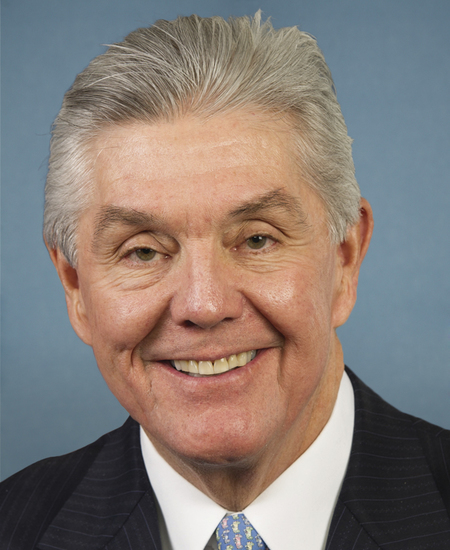
Rep. Roger Williams
Sponsored bills
Maddy summaryHR 7450, the Protecting Privacy in Purchases Act, prohibits payment card networks and covered entities (like payment processors) from requiring or assigning merchant category codes that specifically identify firearms retailers as different from general stores or sporting goods retailers. This directly affects firearms retailers and payment networks by preventing them from using business classification codes that could flag firearm sales. The bill establishes an enforcement process where the Attorney General investigates complaints, issues remediation notices, and can seek court injunctions for non-compliance, while preempting state or local laws on this issue. It does not create private lawsuits for individuals.
Maddy summaryHR 7129, the "Put America on Commission Act of 2024," creates an Office of Whistleblower Awards within the Small Business Administration (SBA) to incentivize reporting of fraud in pandemic relief loans. It directly affects whistleblowers who provide original information about financial misconduct by SBA loan recipients and the recipients themselves who face penalties. The bill establishes a Whistleblower Award Fund, paying 10% (U.S. entities) or 15% (foreign entities) of recovered funds from convictions or settlements related to "COVID loan actions" (defined as fraud cases under CARES Act provisions). It includes anti-retaliation protections for whistleblowers and requires annual reports to Congress on award distributions. The program sunset provisions end its authority once all related cases are resolved.
Maddy summaryHR 7049 repeals a Veterans Affairs directive requiring COVID-19 vaccinations for Veterans Health Administration (VHA) health care personnel. This bill directly affects VA medical staff by removing a specific policy implemented in 2022. The key provision mandates the Secretary of Veterans Affairs to formally cancel the directive (VHA Directive 1193.01) and prohibits issuing any substantially similar future rule. The bill focuses solely on reversing an existing administrative requirement, with no new benefits or obligations added.
Maddy summaryHR 7402, the Operation Lone Star Reimbursement Act, requires the federal government to reimburse the State of Texas for border security costs incurred between 2020 and 2024. The bill directly affects Texas, which spent over $800 million (2020-2021), $2.9 billion (2022-2023), and plans $4.6 billion (2024-2025) to address human trafficking, drug proliferation, and other border security threats. Key provisions mandate Texas to submit a detailed expense report to the Homeland Security and Treasury Secretaries, triggering a federal payment within 60 days for all documented costs. The legislation specifies no eligibility limits, requiring full reimbursement of the state’s documented border security expenditures.
Maddy summaryHR 7176, the "Unlocking our Domestic LNG Potential Act of 2024," streamlines approval processes for U.S. liquefied natural gas (LNG) export terminals. It grants the Federal Energy Regulatory Commission (FERC) exclusive authority to approve or deny LNG export facility projects, requiring FERC to deem such exports "consistent with the public interest" unless specific legal exceptions apply. The bill explicitly preserves the President’s authority to block LNG exports under sanctions laws targeting countries designated as state sponsors of terrorism. This directly affects LNG companies seeking export permits and FERC’s regulatory role, without altering existing environmental or safety regulations.
Maddy summaryHR 7273 cancels unspent funds from two federal programs supporting electric vehicle charging infrastructure. It rescinds unused balances from the National Electric Vehicle Infrastructure Formula Program (under the Infrastructure Investment and Jobs Act) and another highway grant program, redirecting them to the U.S. Treasury for deficit reduction. This bill does not affect current grants or future funding for EV projects; it only redirects unobligated money already allocated but not yet spent. The policy change is purely financial, with no new requirements or impacts on states, businesses, or consumers.
Maddy summaryThis bill restricts how credit reporting companies share homebuyers' credit reports during mortgage applications. It prevents companies from sending these reports to third parties (like marketers) just because a lender requested them for a mortgage. Only specific entities can receive the reports: the mortgage lender who originated the loan, the company servicing the loan, or the bank holding the homebuyer's account. This directly protects homebuyers' privacy by limiting unauthorized sharing of their financial data.
This resolution expresses the sense of the House of Representatives that former President Trump did not engage in insurrection or rebellion against, nor give aid or comfort to the enemies of, the United States.
Maddy summaryHJRES 107 is a congressional resolution seeking to block a Federal Communications Commission (FCC) rule published on January 22, 2024 (89 Fed. Reg. 4128). The resolution aims to disapprove the FCC's rule implementing digital discrimination protections under the Infrastructure Investment and Jobs Act, which would have required internet providers to prevent discriminatory practices. If passed, this resolution would nullify the FCC rule, preventing it from taking effect under the Congressional Review Act (Chapter 8 of Title 5, U.S. Code). The bill directly affects the FCC's regulatory authority over digital discrimination enforcement in broadband services.