

Maddy summaryHR 5596, the FARMS Act, freezes the current wage rate for H-2B visa workers for two years after enactment. It directly affects H-2B nonimmigrant workers and their employers by preventing increases to the required wage rate during this period. The bill allows the Secretary of Labor to retain the existing wage rate if they determine a valid calculation method for the new rate is unavailable. This provides temporary stability to employers hiring H-2B workers without requiring immediate changes to wage payments.
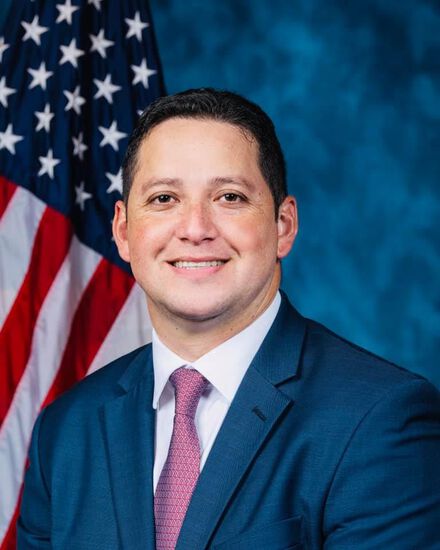
Rep. Tony Gonzales
Sponsored bills
Maddy summaryHR 4057, the CBP Canine Home Kenneling Pilot Act, creates a two-year pilot program to test housing U.S. Customs and Border Protection (CBP) canine teams at their handlers' homes instead of centralized kennels. The program requires at least 10 ports of entry (including urban and rural locations) to participate voluntarily, with handlers responsible for the dogs' daily care, exercise, and medical needs. CBP must provide training for handlers and report to Congress on findings, including cost-benefit analysis, performance, and health impacts compared to current centralized kenneling. The bill directly affects CBP canine handlers and their working dogs, aiming to assess if home housing improves welfare or operational outcomes before deciding on permanent adoption.
Maddy summaryThe SAVES Act (HR 2605) creates a 5-year pilot program where the Department of Veterans Affairs (VA) awards competitive grants to nonprofit organizations to provide service dogs to veterans with specific disabilities. It directly affects veterans with covered conditions like blindness, mobility impairments, PTSD, traumatic brain injury, or other disabilities deemed appropriate for service dog assistance by the VA. Key provisions include: grants capped at $2 million per nonprofit (with $10 million annually authorized), no fees charged to veterans, VA-provided lifetime veterinary insurance for the dogs, and requirements for nonprofits to train veterans and maintain humane animal standards. The program aims to expand access to service dogs as a support tool for veterans managing qualifying disabilities.
Maddy summaryHRES 719 is a House resolution honoring Charles "Charlie" James Kirk, the founder of Turning Point USA who was assassinated on September 10, 2025. The resolution condemns his assassination and all political violence, extends condolences to his family, and calls on Americans to reject violence while promoting civil discourse. It specifically recognizes Kirk's legacy as a defender of constitutional principles and his role in inspiring youth through free speech and faith-based civic engagement. As a commemorative resolution, it does not enact policy changes but formally expresses the House's stance on honoring his life and legacy.
Maddy summaryHRES 742 is a ceremonial resolution recognizing the 250th anniversary of the U.S. Navy's founding on October 13, 1775, when the Continental Congress established the first U.S. naval force. It formally acknowledges the Navy's historical role in protecting American interests and its current global presence (over 290 ships, 3,700 aircraft, and 500,000 personnel). The resolution expresses appreciation for Navy personnel past and present and reaffirms congressional support for the Navy as a key element of national defense and global stability. As a commemorative resolution, it has no policy or funding impact - it serves only to honor the Navy's legacy.
Maddy summaryThe FORTIFY Act expands a federal grant program to help schools improve security by allowing funds to cover hiring school resource officers (SROs), purchasing their firearms and protective gear, and buying vehicles like golf carts for SROs. It directly affects schools and local governments applying for these grants under the Safe Streets Act. The bill also requires the Attorney General to provide technical assistance to rural and underserved areas to improve their access to these grants. This changes the program's eligible uses without altering overall funding levels.
Maddy summaryThis bill ensures continued pay for specific Department of Homeland Security (DHS) personnel and Coast Guard members during government shutdowns in fiscal years 2026-2027. It directly affects DHS law enforcement officers (including those in job series like 0083, 1801, and 1811), DHS administrative and payroll staff, and Coast Guard personnel. The bill authorizes emergency funding from the Treasury to cover their pay and allowances when regular appropriations are not in place. This funding expires on January 1, 2027, or earlier if Congress passes a new appropriations bill covering these costs.
Maddy summaryHR 5401, the Pay Our Troops Act of 2026, ensures military personnel, civilian Defense workers, and supporting contractors receive pay during government funding gaps in fiscal year 2026. It appropriates emergency funds for active-duty service members, reserves, and their supporting personnel (including Coast Guard staff under DHS) if regular appropriations aren't enacted by the end of the fiscal year. The bill provides necessary pay and allowances during any period when full-year funding is unavailable, covering both active service and support roles. Funding expires when regular appropriations are passed, a funding resolution is enacted, or January 1, 2027, whichever comes first. This is a procedural measure to prevent pay delays for military and support staff during fiscal year 2026 funding lapses.
Maddy summaryHRES 695 is a commemorative resolution honoring Charlie Kirk, a conservative speaker and Turning Point USA leader, following his assassination on September 10, 2025, in Orem, Utah. The resolution condemns the attack, offers condolences to his family, and recognizes first responders. It reaffirms the First Amendment right to peaceful assembly and emphasizes that violence cannot silence democratic participation. This non-binding resolution does not create new laws or policies but serves as a symbolic tribute to Kirk's memory and the principles of democratic engagement.
Maddy summaryHR 5272, the *Protect Elections from Deceptive AI Act*, prohibits the intentional distribution of AI-generated audio or video that falsely represents a federal candidate’s appearance, speech, or conduct in a way that would mislead voters during an election. It directly affects candidates for federal office, political committees, and entities distributing such content with the intent to influence elections or solicit funds. The bill includes key exceptions for news organizations (with clear authenticity disclosures), publications (with explicit statements), and satire. Victims can seek court injunctions or damages for violations, with the burden of proof requiring "clear and convincing evidence." This law aims to prevent AI-generated disinformation from distorting election outcomes.