

Maddy summaryHR 6727 establishes the United States Foundation for International Conservation, a nonprofit organization that will provide grants to support long-term management of protected and conserved areas in eligible countries. The Foundation requires a 2:1 cost match from other sources, demands host country and community consent through binding agreements, and prioritizes areas with high biodiversity or species of significant importance. It will be governed by a Board of Directors including government officials and private sector experts, operate for 10 years with $1 million authorized for 2024 and $100 million annually from 2025-2035, and must follow international conservation standards while prohibiting funding for countries supporting terrorism or violating human rights.
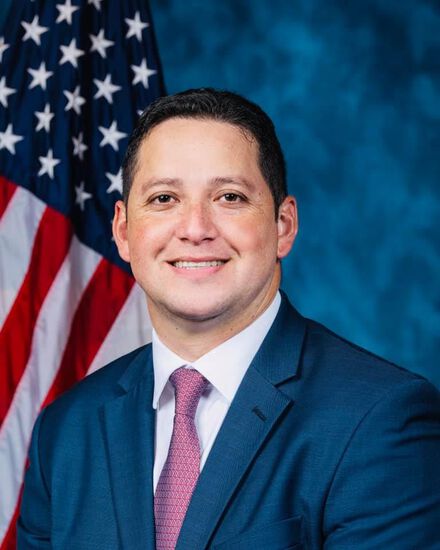
Rep. Tony Gonzales
Sponsored bills
Maddy summaryThis bill prohibits the U.S. State Department from acquiring, leasing, or authorizing construction on overseas diplomatic facilities (like embassies and consulates) where the People’s Republic of China or its entities have ownership control (defined as 25% or more). It applies to all new building acquisitions, leases, and construction contracts after the law’s enactment. The law defines "covered construction" to include all building work, repairs, and essential systems like electrical or plumbing. Violations require the Secretary of State to notify relevant congressional committees within seven days.
Maddy summaryThis concurrent resolution expresses Congress's support for U.S. military actions to protect maritime security in the Red Sea and Gulf of Aden. It urges the President to take necessary steps to restore deterrence against Houthi attacks, consult Congress before authorizing military responses, and provide timely reports on incidents involving U.S. forces. The resolution also supports designating the Iran-backed Houthi group as a terrorist organization and emphasizes protecting freedom of navigation through international cooperation. It directly affects U.S. military operations and diplomatic coordination in the region, aiming to safeguard global trade routes that handle nearly 15% of the world's maritime traffic.
Maddy summaryHRES 1064 is a resolution passed by the U.S. House of Representatives recognizing that Texas operates its own electricity grid through the Electric Reliability Council of Texas (ERCOT), which serves over 26 million Texans and manages 52,700 miles of transmission lines. The resolution explicitly condemns any congressional or federal government action attempting to "federalize" Texas' electricity markets, which operate under the Texas Public Utility Commission and state legislature. It emphasizes that ERCOT is not subject to federal jurisdiction and rejects efforts to force connections to neighboring grids, as seen in previous legislative proposals. This resolution does not change laws but formally states the House's position supporting Texas' control over its energy system.
Maddy summaryThis bill directs the Secretary of State to actively use U.S. diplomatic resources, including the voice and influence of U.S. diplomats and officials at the International Boundary and Water Commission, to advance efforts ensuring Mexico complies with the 1944 water treaty. It requires U.S. officials to work toward establishing reliable water delivery agreements under the treaty for the Colorado, Tijuana, and Rio Grande rivers. The key mechanism is mandating diplomatic engagement to address Mexico's compliance with treaty obligations, aiming to secure predictable water flows for U.S. users. The bill affects U.S. diplomatic operations and water management coordination with Mexico, focusing on treaty implementation rather than new water infrastructure.
Maddy summaryHR 7450, the Protecting Privacy in Purchases Act, prohibits payment card networks and covered entities (like payment processors) from requiring or assigning merchant category codes that specifically identify firearms retailers as different from general stores or sporting goods retailers. This directly affects firearms retailers and payment networks by preventing them from using business classification codes that could flag firearm sales. The bill establishes an enforcement process where the Attorney General investigates complaints, issues remediation notices, and can seek court injunctions for non-compliance, while preempting state or local laws on this issue. It does not create private lawsuits for individuals.
Maddy summaryThis bill requires federal reimbursement to states for incarcerating individuals whose immigration status cannot be verified (termed "alien with unknown status"), provided they are already in custody for qualifying crimes (felonies or two misdemeanors). The federal government would pay states the average cost of incarceration for these individuals, with $950 million allocated annually for fiscal years 2025-2029. Funds must be used solely for correctional purposes, and states must submit requests within a specified timeframe for reimbursement. It defines "incarceration" as holding such individuals in correctional facilities or county jails.
Maddy summaryThis bill requires the Secretary of Homeland Security, working with the Education Secretary and other agencies, to create a federal strategy for securing K-12 schools against terrorism threats within 180 days of enactment. The strategy must detail existing federal programs and funding for school security, identify specific vulnerabilities in school safety, outline actions to address those gaps, and recommend any needed new authorities. It applies directly to federal agencies coordinating school security efforts but does not mandate specific security measures for schools themselves. The strategy must be updated every seven years, with the requirement ending seven years after the bill's enactment.
Maddy summaryHR 7374 designates the United States Postal Service facility at 500 Sergeant Gonzales Drive in Fort Davis, Texas, as the "Sergeant Manuel Sillas Gonzales Post Office." This bill directly affects the specific postal facility by changing its official name to honor Sergeant Manuel Sillas Gonzales. The key mechanism requires all federal references in laws, documents, or records to use the new name moving forward. As a naming bill, it makes no substantive policy changes beyond the official designation.
Maddy summaryHR 2426, the Find and Protect Foster Youth Act, requires the federal government to evaluate state and tribal child welfare systems' protocols for identifying and responding to children missing from foster care. It mandates the Secretary to identify obstacles in these systems, share best practices, and provide technical assistance to states and tribes on tracking missing youth and improving services. The bill also specifically requires improved screening for sex trafficking risk when children return to foster care after running away, including new tools for caseworkers to assess trafficking risk and document appropriate services. These changes directly affect foster youth, particularly those missing or at risk of exploitation, and the states and tribes managing foster care systems. The law authorizes funding through fiscal year 2027 to support these efforts.