

Maddy summaryHR 8753 requires the U.S. Postal Service to assign a single, unique ZIP Code to 31 specific communities across 10 states, including Eastvale, CA, and The Villages, FL, within 270 days of the bill's enactment. This change directly affects residents and businesses in these communities by standardizing mail delivery addresses. The key mechanism mandates the USPS to establish one distinct ZIP Code per listed community, replacing any existing multi-part or shared codes. This is a procedural adjustment to improve mail sorting efficiency, not a substantive policy change.
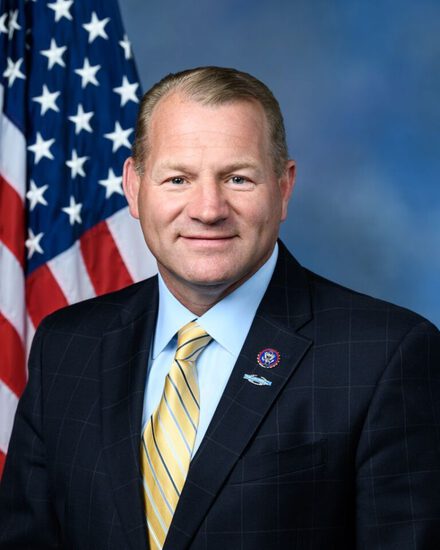
Rep. Troy E. Nehls
Sponsored bills
Maddy summaryThe Mining Schools Act of 2024 establishes a federal grant program to strengthen domestic mining education by funding eligible schools. It defines eligible "mining schools" as accredited mining/engineering programs at higher education institutions or specific geology/engineering departments at 4-year public universities in states with significant mining-related economic activity. The Department of Energy will award up to 10 competitive annual grants for recruiting students and enhancing programs focused on critical minerals, environmental reclamation, sustainable extraction, and domestic mineral production. An advisory board of industry and academic experts will help select grantees and ensure funds are used as intended. The program is authorized to receive $10 million yearly from 2024 through 2031.
Maddy summaryThis bill requires Amtrak's Board of Directors to follow stricter public meeting rules and improve transparency. It mandates that closed board meetings (only for discussion, not voting) must be followed by public disclosure of attendees and topics within two business days, unless tied to an ongoing decision. Additionally, Amtrak's Board Chair must provide Congress with an annual briefing detailing all voted-on matters and pending votes before each fiscal year. The bill directly affects Amtrak's governance, aiming to increase accountability to passengers and taxpayers through clearer meeting practices and reporting.
Maddy summaryThe Good Samaritan Remediation of Abandoned Hardrock Mines Act of 2024 establishes a limited pilot program allowing non-responsible parties (called "Good Samaritans") to remediate pollution at abandoned hardrock mine sites. The bill creates a permit process requiring applicants to demonstrate they're not liable for the pollution, can safely complete the remediation, and will protect the environment. The Environmental Protection Agency would issue up to 15 permits for these projects, providing liability protection for permitted activities while requiring public notice and environmental review. The pilot program would expire after 7 years, with the EPA required to report on its effectiveness to Congress.
Maddy summaryHR 7438 directs the U.S. Treasury to mint commemorative coins for the 2026 FIFA World Cup, including 100,000 $5 gold coins, 500,000 $1 silver coins, and 750,000 half-dollar coins. The coins will be sold to the public at face value plus surcharges ($35, $10, and $5 per coin, respectively), with all surcharge revenue paid to FWC2026 US, Inc. for U.S. soccer programs. These funds must support soccer initiatives, particularly in underserved communities and youth development, as specified in the bill. The coins are legal tender but will only be issued during 2026, with no net cost to the U.S. government.
Maddy summaryThe Colorado Energy Prosperity Act of 2024 prohibits the U.S. Secretary of the Interior from finalizing, implementing, administering, or enforcing a specific draft resource management plan and environmental impact statement for federal lands in the Colorado River Valley and Grand Junction areas. This bill directly affects federal land management decisions by blocking the implementation of a plan published in the Federal Register (August 4, 2023) that was intended to guide resource use. The key provision is a clear, direct prohibition on the Secretary taking any action to advance this draft document. The bill does not create new regulations or alter existing laws but stops a specific federal environmental review process.
Maddy summaryThe SHIELD Act of 2024 makes it a federal crime to knowingly distribute non-consensual intimate images of adults (e.g., photos showing genitals, pubic area, or female nipples without privacy expectations) or nude images of minors with intent to harm, abuse, or degrade. It directly affects individuals whose intimate images are shared without consent and those distributing such content, including social media platforms under specific conditions. Key provisions criminalize distribution causing psychological, financial, or reputational harm, with penalties up to 3 years in prison for minor-related cases and 2 years for adult cases, plus asset forfeiture. Exceptions cover law enforcement, legal reporting, medical/educational use, and platforms that don’t actively promote such content.
Maddy summaryThe STAND Act would temporarily halt federal funding for non-defense foreign aid (including bilateral, multilateral, and humanitarian assistance) by the State Department and USAID for 60 days after a natural disaster is declared under the Stafford Act. This means no such aid spending could occur during that period, directly affecting how these agencies allocate taxpayer funds in disaster response. The freeze could only be lifted if Congress passes a joint resolution that the President signs into law. The bill focuses on pausing foreign aid to prioritize domestic disaster relief efforts in the immediate aftermath of events.
Maddy summaryHR 915 requires businesses that contract with motor carriers (like shippers, brokers, or freight forwarders) to verify three safety and compliance details before shipping goods: 1) the carrier's valid registration, 2) minimum required insurance coverage, and 3) that the carrier is not disqualified for safety reasons by the Federal Motor Carrier Safety Administration (FMCSA) or a state. This verification must occur 45 days before shipment. The bill creates a temporary standard that expires when new FMCSA regulations are issued within 18 months of enactment. It does not change carrier safety rules but sets a new requirement for businesses selecting carriers.
Maddy summaryThe Working Dog Commemorative Coin Act (HR 807) directs the U.S. Treasury to mint three types of commemorative coins honoring working dogs' service: $5 gold coins, $1 silver coins, and half-dollar coins with specific weight and composition requirements. Each coin will carry a surcharge ($35 for $5 coins, $10 for $1 coins, $5 for half-dollars) that will be paid directly to America's VetDogs to support their programs providing service dogs for veterans, the disabled, and others. The coins will be issued in 2027 with designs reflecting working dogs' roles in military, detection, therapy, and assistance work. The legislation specifies that all surcharge revenue must fund America's VetDogs' operations without creating new government programs. This is a commemorative measure focused on honoring working dogs' contributions through coin sales, with all surcharge funds going to a specific nonprofit organization.