

Ensuring Women's Right to Reproductive Freedom Act This bill prohibits anyone acting under state law from interfering with a person's ability to access out-of-state abortion services. ( Abortion services includes the use of any drugs that are approved to terminate pregnancies and any health care services related to an abortion, whether or not provided at the same time or on the same day.) Specifically, the bill prohibits any person acting under state law from preventing, restricting, impeding, or retaliating against health care providers who provide legal abortion services to out-of-state residents, any person or entity who helps health care providers to provide such services, any person who travels to another state to obtain such services, any person or entity who helps another person travel to another state to obtain such services, or the movement in interstate commerce of drugs that are approved to terminate pregnancies. The Department of Justice may enforce this bill through civil actions; the bill also establishes a private right of action for violations.
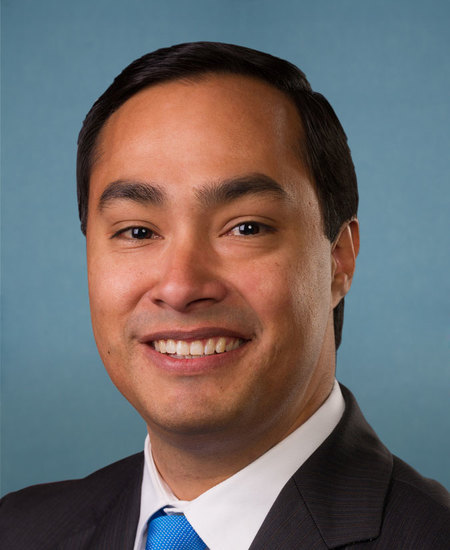
Rep. Joaquin Castro
Sponsored bills
This resolution calls on the government of Rwanda to immediately release Paul Rusesabagina on humanitarian grounds and permit him to return safely to the United States. The resolution calls on the government of Rwanda to ensure Paul Rusesabagina receives access to appropriate, qualified medical professionals and all medical care necessary to guarantee his physical integrity and psychological well-being. The resolution also urges the U.S. government in all interactions with the government of Rwanda to raise the case of Paul Rusesabagina and to press for his immediate release on humanitarian grounds. Finally, the resolution expresses support to the family of Paul Rusesabagina and their commitment to bringing him home.
This resolution condemns the terrorist attacks and violence carried out by ISIS-Mozambique in the Cabo Delgado Province and urges the government of Mozambique to take actions to counter violent extremism and protect its citizens.
Multilateral Leadership Act This bill prohibits the President from exercising authorities under the International Emergency Economic Powers Act to regulate or prohibit financial transactions of United Nations programs, funds, agencies, or entities, or to block the property of persons working for the United Nations and its related organizations.
Upholding Human Rights Abroad Act This bill prohibits, with some exceptions, the Department of Defense (DOD) from providing certain support to forces (e.g., foreign forces or irregular forces) engaged in U.S. special operations if DOD has credible information that the force in question has committed a gross violation of human rights.
Health Equity and Accountability Act of 2022 This bill directs the Department of Health and Human Services (HHS) and others to undertake efforts to reduce health disparities. For example, the bill (1) requires more detailed reporting of demographic and health disparities data, including related to public health emergencies; (2) directs certain components of HHS to support health workforce diversity; and (3) increases access to culturally and linguistically appropriate health care. The bill also modifies eligibility and other requirements for Medicare, Medicaid, private health insurance, nutrition assistance, and other programs to reduce health disparities among vulnerable populations. The bill includes specific provisions with respect to noncitizens; maternal, infant, and child health; mental and behavioral health; specified conditions that disproportionately affect racial and ethnic minority groups, such as certain cancers, HIV/AIDS, kidney disease, and diabetes; investments in communities facing health and other inequities; and nondiscrimination in the provision of services in federally supported health programs. Additionally, the bill (1) revises health information technology programs to address health disparities, and (2) supports health impact assessments and other efforts pertaining to environmental justice and social determinants of health (i.e., nonmedical factors that influence health outcomes, such as income and educational attainment). The bill also requires various studies and reports on issues related to health care and health disparities, including a report by the Government Accountability Office on health workforce diversity.
My Body, My Data Act of 2022 This bill establishes protections, subject to certain limits, for personal reproductive or sexual health information. This includes information relating to past, present, or future surgeries or procedures, such as the termination of a pregnancy. Specifically, commercial entities, including individuals, nonprofits, and common carriers, may not collect, retain, use, or disclose personal reproductive or sexual health information except (1) with the express written consent of the individual to whom such information relates, or (2) as is strictly necessary to provide a requested product or service. Commercial entities also must provide individuals with access to, and a reasonable mechanism to delete, any of their reproductive or sexual health information upon request. Further, commercial entities must maintain and publish a privacy policy describing their practices with respect to such information. The bill's provisions do not apply to entities that are subject to certain existing health-related privacy regulations, such as the privacy regulations issued under the Health Insurance Portability and Accountability Act of 1996. Additionally, the provisions do not apply to the disclosure of personal reproductive or sexual health information for the publication of newsworthy information of legitimate public concern. The bill provides for enforcement by the Federal Trade Commission and by private civil actions.
This resolution celebrates the 50th anniversary of the Federal Pell Grant program and expresses support for the designation of National Federal Pell Grant Day.
Sergeant First Class Heath Robinson Honoring our Promise to Address Comprehensive Toxics Act of 2022 or the Honoring our PACT Act of 2022 This bill addresses health care, presumption of service-connection, research, resources, and other matters related to veterans who were exposed to toxic substances during military service. TITLE I--EXPANSION OF HEALTH CARE ELIGIBILITY Conceding Our Veterans' Exposure Now and Necessitating Training Act of 2022 or the COVENANT Act of 2022 Subtitle A--Toxic-Exposed Veterans (Sec. 103) This section provides eligibility for Department of Veterans Affairs (VA) medical care, including mental health services and counseling, to veterans who (1) participated in a toxic exposure risk activity (e.g., a qualifying activity that requires a corresponding entry in an exposure tracking record system, such as the Individual Longitudinal Exposure Record); (2) served in specified locations on specified dates; or (3) deployed in support of a specified contingency operation. (Sec. 104) The VA must complete an assessment to determine (1) the personnel and material resources necessary to implement the expanded provision of care to the veterans specified in Section 103 of this bill (e.g., veterans who participated in a toxic exposure risk activity), and (2) the total number of veterans who served in specified locations on specified dates and receive hospital care or medical services from the VA, disaggregated by priority group. Subtitle B--Certain Veterans Of Combat Service And Other Matters (Sec. 111) This section extends the eligibility period for VA hospital care, medical services, and nursing home care for combat veterans who served after September 11, 2001, and are toxic-exposed veterans, including those who did not enroll to receive VA care during the eligibility period. TITLE II--TOXIC EXPOSURE PRESUMPTION PROCESS Toxic Exposure in the American Military Act of 2022 or the TEAM Act of 2022 (Sec. 202) This section prescribes the procedures for establishing or removing presumptions of service-connection based on toxic exposure, including by providing for public notice and comment periods and the establishment of a working group to advise and make recommendations regarding toxic exposures during military service. (Sec. 203) The VA must conduct outreach to certain claimants when a law establishes or modifies a presumption of service-connection. Specifically, the VA must identify and conduct outreach for all claims for compensation for a service-connected disability that (1) were submitted to the VA, (2) were evaluated and denied before the new law went into effect, and (3) might have been evaluated differently if the modification had been applicable to the claim. (Sec. 204) The VA must conduct outreach to certain claimants when a law establishes or modifies a presumption of service-connection in relation to dependency and indemnity compensation. Specifically, the VA must identify and conduct outreach for all claims for dependency and indemnity compensation related to service-connected conditions that (1) were submitted to the VA, (2) were evaluated and denied before the new law went into effect, and (3) might have been evaluated differently if the modification had been applicable to the claim. TITLE III--IMPROVING THE ESTABLISHMENT OF SERVICE CONNECTION PROCESS FOR TOXIC-EXPOSED VETERANS Veterans Burn Pits Exposure Recognition Act of 2022 (Sec. 302) This section establishes a presumption that veterans were exposed to certain substances, chemicals, and airborne hazards during military service in specified locations in specified time frames (e.g., on or after August 2, 1990, in Bahrain). (Sec. 303) The VA must provide a veteran with a medical examination regarding the nexus between a disability and toxic exposure risk activity if a veteran submits a disability compensation claim for a service-connected disability with insufficient evidence. TITLE IV--PRESUMPTIONS OF SERVICE CONNECTION Mark Takai Atomic Veterans Healthcare Parity Act of 2022 (Sec. 401) This section includes veterans who participated in the cleanup of Enewetak Atoll in the Marshall Islands between January 1, 1977, and December 31, 1980, as radiation-exposed veterans for purposes of the VA presumption of service-connection for specified cancers. Palomares or Thule Veterans Act of 2022 (Sec. 402) This section includes veterans who participated in the cleanup of radioactive materials at Palomares, Spain, or in the response effort following the on-board fire and crash of a U.S. Air Force B-52 bomber in the vicinity of Thule Air Force Base, Greenland, as radiation-exposed veterans for purposes of the presumption of service-connection for specified cancers. Veterans Agent Orange Exposure Equity Act of 2022 (Sec. 403) This section expands the presumption of service-connection for diseases associated with exposure to certain herbicide agents for veterans who served in Vietnam between January 9, 1962, and May 7, 1975. Specifically, the bill expands the presumption to cover veterans who served during specified time frames in Thailand at any U.S. or Royal Thai bases, Laos, Cambodia, Guam or American Samoa or the waters thereof, or on Johnson Atoll. Under the bill, such veterans are eligible for VA hospital care, medical services, and nursing home care. Fair Care for Vietnam Veterans Act of 2022 (Sec. 404) This section provides a presumption of service-connection for hypertension and monoclonal gammopathy of undetermined significance (MGUS) for veterans who performed service specified in Section 403 of this bill (e.g., in Thailand). (Sec. 405) This section addresses disability compensation and care issues for Persian Gulf War veterans, including by expanding who qualifies as a Persian Gulf Veteran. Presumptive Benefits for War Fighters Exposed to Burn Pits and Other Toxins Act of 2022 (Sec. 406) This section establishes a presumption of service-connection for specified diseases associated with exposure to specified substances, chemicals, or airborne hazards becoming manifest in veterans who served in specified locations during specified times (e.g., Iraq on or after August 2, 1990). TITLE V--RESEARCH MATTERS (Sec. 501) The VA must collaborate with various entities, such as the Department of Defense (DOD), to establish the Toxic Exposure Research Working Group to (1) identify collaborative research activities and resources and conduct such research related to health consequences of toxic exposure during military service, and (2) develop a five-year strategic plan for collaborative research activities. (Sec. 502) The VA must continually analyze all clinical data obtained in connection with its provision of hospital care, medical services, and nursing home care for toxic-exposed veterans that is likely to be scientifically useful in determining the association between a veteran's medical condition and a toxic exposure. (Sec. 503) The VA must conduct an updated analysis of total and respiratory disease mortality in veterans who served in specified locations at specified times, such as in Kuwait on or after August 2, 1990. (Sec. 504) The VA must conduct an epidemiological study on the health trends of veterans who served in the Armed Forces after September 11, 2001. (Sec. 505) The VA must study the incidence of cancer in veterans to determine trends in the rates of incidence of cancer in veterans. (Sec. 506) The VA must enter into an agreement with the National Academies of Sciences, Engineering, and Medicine (NASEM) to study the health trends of veterans who, during active service, participated in activities relating to the Manhattan Project or resided near specified locations proximate to waste arising from activities in connection with the Manhattan Project. (Sec. 507) The VA must enter an agreement with NASEM to study possible relationships between toxic exposures experienced during service in the Armed Forces and mental health conditions. (Sec. 508) The Government Accountability Office must study the state of access and barriers to benefits and services furnished by the Veterans Benefits Administration (VBA) and the Veterans Health Administration (VHA) to veterans in territories and Freely Associated States of the United States. (Sec. 509) The VA must establish and maintain a publicly accessible website to serve as a clearinghouse for the publication of all toxic exposure research carried out or funded by the executive branch of the federal government. (Sec. 510) The VA must report to Congress on the health effects of jet fuels used by the Armed Forces. TITLE VI--IMPROVEMENT OF RESOURCES AND TRAINING REGARDING TOXIC-EXPOSED VETERANS Fairly Assessing Service-related Toxic Exposure Residuals Presumptions Act of 2022 or the FASTER Presumption Act of 2022 (Sec. 602) The VA must publish a list of its resources for toxic-exposed veterans and veterans who report toxic exposure, families and caregivers of such veterans, and survivors of such veterans who are receiving death benefits. The VA must also develop an informative outreach program for veterans on illnesses that may be related to toxic exposures. (Sec. 603) The VA must incorporate a screening to help determine potential toxic exposures during active military service as part of the health care screening furnished to veterans enrolled in the VA health care system. (Sec. 604) The VA must provide its health care personnel with education and training to identify, treat, and assess the impact on veterans of illnesses related to toxic exposures. Additionally, the VA must incorporate an annual training program for processors of claims for disability benefits relating to service-connected disabilities based on toxic exposures. TITLE VII--RESOURCING (Sec. 701) The VA is authorized to use funds appropriated to the Cost of War Toxic Exposures Fund to continue the modernization, development, and expansion of capabilities and capacity of information technology systems and infrastructure of the VBA to support expected increased claims processing for newly eligible veterans. The VA must submit a plan to Congress for the modernization of the information technology systems of the VBA. (Sec. 702) This section authorizes the VA to carry out various medical facility leases at specified amounts in FY2023 (e.g., an outpatient clinic in Allentown, Pennsylvania). (Sec. 703) This section prohibits funds from being appropriated, obligated, or expended for any major VA medical facility lease unless the congressional veterans affairs committees each adopt a resolution approving the lease. Additionally, this section (1) modifies the requirements for the prospectus that must be submitted regarding a request for funding a major medical facility lease, and (2) authorizes the VA to carry out interim leasing actions as it considers necessary for approved major medical facility leases and replacement leases that do not require approval. (Sec. 704) The VA may enter into a lease with an academic affiliate or other specified entity to acquire space for the purpose of providing health care resources to veterans. (Sec. 705) This section modifies the enhanced-use lease authority of the VA, including by permanently authorizing such authority and extending the maximum term of such leases from 75 to 99 years. This section also provides appropriations for entering into enhanced-used leases and authorizes the VA to deposit unutilized funds received under an enhanced-use lease in the Medical Facilities or the Construction, Minor Projects accounts. (Sec. 706) This section prescribes the authority for joint leasing actions between DOD and the VA. (Sec. 707) This section provides specified appropriations for major medical facility leases through FY2031. TITLE VIII--RECORDS AND OTHER MATTERS (Sec. 801) The VA must conduct an epidemiological study on the health trends of veterans who served at Fort McClellan at any time between January 1, 1935, and May 20, 1999. (Sec. 802) DOD must brief Congress on the quality of its databases that provide the information presented in the Individual Longitudinal Exposure Record and the usefulness of the record in supporting members of the Armed Forces and veterans in receiving health care and benefits. (Sec. 803) The VA must provide a means for veterans to update their records as necessary to reflect exposures to occupational or environmental hazards in the Individual Longitudinal Exposure Record. Camp Lejeune Justice Act of 2022 (Sec. 804) This section provides a federal cause of action for individuals who resided, worked, or were otherwise exposed (including in utero) for not less than 30 days to water at Camp Lejeune, North Carolina, between August 1, 1953, and December 31, 1987. (Sec. 805) This section establishes the Cost of War Toxic Exposures Fund in the Treasury to be administered by the VA to invest in the delivery of veterans' health care and benefits associated with exposures to environmental hazards during military services and medical and other research relating to exposure to environmental hazards. (Sec. 806) This section provides appropriations to the Cost of War Toxic Exposures Fund to remain available through FY2024. The VA must submit a plan for expending such amounts. (Sec. 807) This section authorizes the VA to provide notice related to claims in an electronic format upon the election of the claimant, including for decisions by the Board of Veterans' Appeals. (Sec. 808) The VA must annually submit a report related to veterans who submit a disability claim for a service-connected disability and were deployed at specified locations at specified times. Additionally, the VA must ensure that VA medical professionals inform a veteran of the Airborne Hazards and Open Burn Pit Registry if a veteran seeks treatment at a VA medical facility for issues related to, or ancillary to, the exposure to toxic airborne chemicals and fumes caused by open burn pits. TITLE IX--IMPROVEMENT OF WORKFORCE OF DEPARTMENT OF VETERANS AFFAIRS (Sec. 901) The VA must develop and implement a national rural recruitment and hiring plan for the VHA to, among other purposes, recruit health care professionals for rural and highly rural community-based outpatient clinics and medical centers. (Sec. 902) The VA may buy out a non-VA service contract of certain health care professionals to whom the VA has offered employment in exchange for the individual agreeing to be employed at a rural or highly rural facility for at least four years. (Sec. 903) The VA must establish qualifications for each of its human resources positions and establish standardized performance metrics for such positions. The VA must also establish or enhance its systems to monitor human resources actions that occur at local, regional, and national levels to improve performance of those actions. The VA must also submit a plan to Congress for the recruitment and retention of human resources employees within the VA. (Sec. 904) This section increases the pay cap for certain employees of the VHA. (Sec. 905) This section expands employment opportunities for housekeeping aides by removing the requirement that competition for VA housekeeping aide positions is restricted to preference eligibles. (Sec. 906) This section modifies the authority of the VA related to hours, conditions and employment, and pay for certain employees of the VHA, specifically certain appointees and Senior Executive Service positions. Additionally, the section authorizes the VA to establish an awards program for certain appointed personnel, such as physicians. (Sec. 907) The VA is authorized to waive any annual premium or aggregate limitation on pay for an employee of the VHA during the calendar year in which the official duty station of the employee is closed or the office, facility, activity, or organization of the employee is realigned. Similarly, the VA may waive any annual premium or aggregate limitation on pay for an employee whose primary duties include providing expanded care for veterans exposed to open burn pits. (Sec. 908) This section eliminates the limitation on aggregate amounts for awards and bonuses for employees of the VA. (Sec. 909) Among other elements, this section provides additional authority for the VA to provide recruitment and relocation bonuses, retention bonuses, merit awards, incentives for critical skills, and student loan repayments. The section increases the cap on the number of college graduates and post-secondary students the VA may hire through an expedited process. The VA may authorize the fixing of the rate of pay for critical positions in the VA, with some limitations. Additionally, the VA may establish a rate for special pay and may waive the limitation on certain payments, such as bonuses.
Lavender Offense Victim Exoneration Act of 2022 or the LOVE Act of 2022 This bill offers a formal apology from Congress for encouraging policies at the Department of State, such as the Lavender Scare, which resulted in the wrongful termination of at least 1,000 people for alleged homosexuality, and addresses related issues. The State Department must (1) review all employee terminations that occurred as a consequence of the Lavender Scare to identify those who were wrongfully terminated, and (2) issue a public report on the findings. The State Department must establish an independent Reconciliation Board to contact any employee (or a family member of a deceased employee) wrongfully terminated during the Lavender Scare and offer to change the employee's record to reflect this finding. The board must accept and review petitions from former employees who believe they were terminated due to sexual orientation. The State Department must establish a board of senior-level officials to address issues that lesbian, gay, bisexual, transgender, queer, and intersex (LGBTQI) Foreign Service employees and their families face. The board must report on improving State Department policies to prevent discrimination based on sexual orientation, gender identity, or sex characteristics. The State Department must report on (1) countries that do not issue spousal visas for Foreign Service employee spouses due to sexual orientation, gender identity, or sex characteristics; and (2) recommendations for State Department responses, such as eliminating visa reciprocity for such countries.