

Maddy summaryHR 4015 updates the U.S. strategy for engagement with Caribbean nations by adding specific policy goals to the existing 2016 Act. It directs the U.S. government to reduce illicit firearm trafficking to the region, combat lottery scams targeting Americans, and support Caribbean security forces. The bill also requires enhanced cooperation on energy security (promoting renewable power), climate resilience, public health infrastructure, food security, and expanding internet access - especially for marginalized communities. The updated strategy must involve agencies like Defense, Justice, and Treasury, and will guide U.S. efforts to strengthen partnerships across these areas. This affects Caribbean nations partnering with the U.S. on security, climate, health, and economic initiatives.
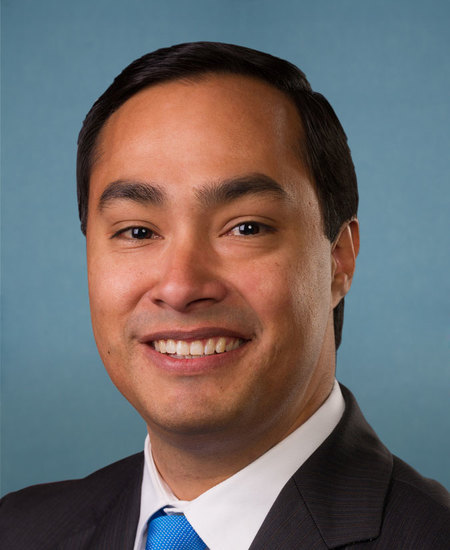
Rep. Joaquin Castro
Sponsored bills
Maddy summaryThis bill requires the Department of Veterans Affairs (VA) to improve how it processes PTSD disability claims. It mandates annual training for VA claims processors on PTSD stressor development and verification, standardizes training across regional offices, and establishes annual processes to analyze processing errors and study PTSD claim trends. The VA must also update procedural guidance yearly to provide better resources for processing claims involving service-connected PTSD. These changes directly affect VA claims processors and aim to make the claims process more accurate and efficient for veterans seeking PTSD disability benefits.
This resolution recognizes the long-standing United States-Chile partnership. It also (1) reaffirms the importance of expanded bilateral economic ties for advancing the prosperity of both countries, and (2) urges the Senate to provide its advice and consent to ratification of the bilateral tax treaty with Chile.
Maddy summaryHR 3985 establishes a new Office within the U.S. Department of State to monitor and combat Islamophobia abroad. The bill requires the State Department to appoint a Special Envoy who will coordinate efforts to track Islamophobic incidents globally and mandate specific reporting in three key State Department documents. These reports must detail physical violence against Muslims or Muslim institutions, hate propaganda in media, government responses, religious freedom protections, and anti-bias education efforts in foreign countries. The provisions apply to annual human rights, foreign assistance, and religious freedom reports, requiring detailed descriptions of Islamophobia occurrences and governmental actions. The new reporting requirements become effective 180 days after the bill's enactment.
Maddy summaryThis bill requires federal agencies collecting demographic survey data to begin including questions on sexual orientation, gender identity, and variations in sex characteristics (intersex traits) within 360 days of enactment. Agencies must review existing surveys to identify gaps, develop privacy-protective methods for collecting this data (including anonymization and data destruction protocols), and incorporate it into relevant reports within three years. The law applies to all federal surveys that collect standard demographic data (like race, ethnicity, and age), such as the census or health surveys, but does not compel individuals to disclose their status. It emphasizes maintaining confidentiality, allows limited agency waivers if standards can't be met, and mandates a congressional report on implementation within two years.
Maddy summaryHR 3850, the Pride In Mental Health Act of 2023, establishes a federal grant program to improve mental health and substance abuse services for LGBTQ+ youth (including nonbinary, intersex, and Two Spirit individuals). The bill directs the Health and Human Services Secretary to fund eligible organizations to provide trauma-informed care, cultural competency training for caregivers, school bullying prevention guidelines, and family support resources. It explicitly prohibits grant funds from being used for conversion therapy or advertising related to such therapy. The bill also requires data collection on LGBTQ+ youth mental health and a federal survey to measure psychological distress.
Maddy summaryThe LISTOS Act (HR 3806) requires major online platforms with at least 10 million monthly U.S. users to ensure consistent content moderation across languages where they monetize. It mandates annual public reports on staffing, language proficiency, automated systems, and moderation outcomes for each supported language. Platforms must also make reporting tools and policies accessible in all languages they support. The Federal Trade Commission will enforce these requirements, with states able to bring enforcement actions as well.
Maddy summaryThe American Family Act establishes a monthly child tax credit of $250 per month for each child under age 6 and $300 per month for each child aged 6-18, with income limits of $150,000 for joint filers and $112,500 for other filers. The credit is refundable, meaning it can be paid even if the taxpayer owes no income tax, and will be adjusted annually for inflation. The bill includes detailed rules for determining eligibility, including requirements that the child resides with the taxpayer for more than half the month and provisions to prevent fraud through recapture of improperly received payments. The credit will be paid monthly in advance rather than as a single annual payment, with specific mechanisms for calculating and distributing the payments.
Maddy summaryHR 698, the Assault Weapons Ban of 2023, prohibits the sale, manufacture, transfer, and possession of specific firearms and ammunition devices commonly referred to as "assault weapons" and "large capacity magazines" in interstate commerce. The bill defines "semiautomatic assault weapons" to include rifles like AR-15s and AK-47s, as well as firearms with specific features such as folding stocks, pistol grips, threaded barrels, and detachable magazines holding more than 15 rounds. It exempts law enforcement, military, antique firearms, and weapons already lawfully owned before the law's enactment (known as "grandfathered" weapons). The bill also requires new identification markings on these weapons and large capacity magazines, and adds background check requirements for transfers of grandfathered weapons.
Maddy summaryThis bill removes a barrier for college students seeking food assistance by amending the SNAP program rules. It directly affects students enrolled at least half-time in recognized colleges or training programs, who were previously automatically ineligible unless they met separate requirements. The key change eliminates the prior restriction (in section 6(e)) that barred most higher education students from SNAP, allowing them to qualify under the new provision in section 3(m)(5)(F). The changes take effect January 2, 2024.