

Maddy summaryHRES 753 is a non-binding resolution commemorating the fifth anniversary of Jamal Khashoggi's murder in 2018 and calling for accountability from the Saudi government. It urges Saudi Arabia to ensure accountability for those responsible for his killing, release wrongfully detained individuals (including human rights defenders), lift travel bans on dissidents, and respect freedoms of assembly, association, and press. The resolution acknowledges U.S. sanctions under the Global Magnitsky Act targeting 17 Saudi officials linked to Khashoggi's murder. As a symbolic congressional statement, it does not impose new legal obligations but expresses support for accountability and human rights.
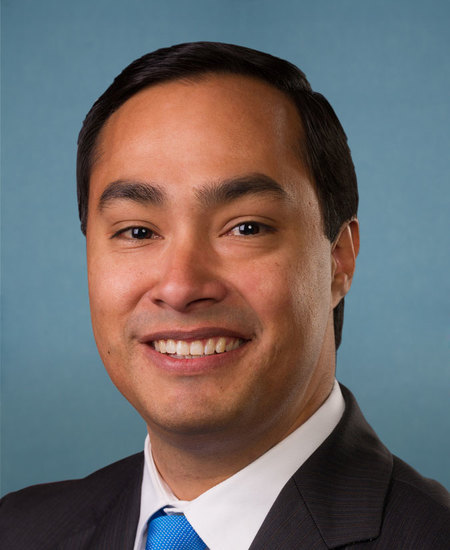
Rep. Joaquin Castro
Sponsored bills
Maddy summaryHR 5847, the International Children with Disabilities Protection Act of 2023, establishes a U.S. government program to support global efforts keeping children with disabilities in families rather than residential institutions. The bill authorizes $2 million in 2024 (rising to $10 million annually by 2029) for grants to organizations led by people with disabilities and family members, prioritizing countries with large populations of children in institutions. Key mechanisms include funding local advocacy groups (requiring 75% of funds to go to disability organizations), building leadership capacity through training and study tours, and creating accessible online programs for policymakers. The program directly affects children with disabilities, their families, and disability rights organizations worldwide by promoting family inclusion and reducing institutionalization, with mandatory annual reports to Congress on implementation.
Maddy summaryHR 5833, the Protection of Saudi Dissidents Act of 2023, restricts U.S. military sales to Saudi Arabia’s intelligence, security, and law enforcement agencies for three years. It prohibits defense exports during 120-day periods unless the President certifies Saudi Arabia has not engaged in forced repatriation, intimidation, or killing of dissidents abroad, unjust imprisonment of U.S. residents, or torture. The bill also mandates reports on Saudi harassment of dissidents in the U.S., including whether Saudi diplomats used diplomatic facilities to monitor or harm Saudi nationals living in America, and requires an intelligence report on whether U.S. agencies fulfilled their duty to warn Jamal Khashoggi about threats before his 2018 murder. These provisions sunset after three years, with limited exceptions for defense against external threats or U.S. personnel security.
Maddy summaryHRES 733 is a non-binding resolution expressing concern about the rising number of book bans in U.S. schools and libraries. It cites data showing nearly 3,400 book removals affecting 1,557 titles from July 2022-June 2023, with disproportionate targeting of books featuring LGBTQ+ themes (36%) and racial justice content (37%). The resolution urges school districts to follow established best practices for handling book challenges and reaffirms the importance of protecting students' access to diverse materials. It does not create new laws but calls for local governments to support free expression as protected by the First Amendment.
Maddy summaryThis bill amends the Higher Education Act to require all U.S. colleges and universities receiving federal financial aid to create detailed anti-harassment policies covering physical, online, and institution-sponsored settings. It mandates policies prohibiting harassment based on race, sex (including sexual orientation and gender identity), disability, religion, and other protected characteristics, including harassment via institutional email, computers, or electronic messaging. The bill also establishes a $50 million annual grant program to fund colleges developing prevention programs, victim support services, and training for students and staff on recognizing and addressing harassment. These policies and grants must comply with existing civil rights laws like Title IX but add specific requirements for reporting and prevention.
Maddy summaryHRES 714 is a formal recognition resolution celebrating Hispanic Restaurant Week (September 22-October 3, 2023) and acknowledging the economic contributions of Hispanic restaurant owners and employees to the U.S. restaurant industry. It highlights statistics showing Hispanic individuals own a significant share of restaurants and workforce participation in the sector, but does not create new policies, funding, or regulations. This resolution is purely ceremonial, expressing congressional appreciation without any legislative impact.
Maddy summaryThe Reuniting Families Act reduces family-based visa backlogs by reclassifying spouses, permanent partners, and minor children of legal permanent residents as immediate relatives, allowing them to be processed more quickly. The bill recaptures unused visa numbers from previous years, increasing the total number of available family-based visas without changing the overall annual caps. It expands rights for permanent partners (not just married spouses) and provides relief for orphans, widows, and widowers with pending applications. The legislation also prohibits removal of aliens with pending applications and prioritizes family reunification in refugee resettlement processes.
Maddy summaryThe Better CARE for Animals Act of 2023 amends the Animal Welfare Act to strengthen enforcement of animal welfare standards. It gives the Attorney General authority to bring civil cases for violations, including seeking penalties up to $10,000 per day per violation and injunctions to remove or relocate animals. The bill also requires the Secretary of Agriculture and Attorney General to coordinate through a new Memorandum of Understanding, focusing on repeat violators. These changes directly affect dealers, exhibitors, and enforcement agencies by expanding civil enforcement tools and clarifying jurisdiction over rule violations.
Maddy summaryThe John R. Lewis Voting Rights Advancement Act of 2023 would strengthen the Voting Rights Act of 1965 by updating the criteria for which states and localities must obtain federal preclearance before changing voting practices. It would establish new standards for proving vote dilution and vote denial by requiring courts to consider historical discrimination, racial polarization in voting, and whether voting practices disproportionately burden minority voters. The bill would also require states and localities to provide public notice of voting changes and share demographic data about polling locations. These changes would primarily affect jurisdictions with a history of voting rights violations, aiming to prevent discriminatory voting practices before they take effect.
Maddy summaryHR 5521 authorizes the President to posthumously award the Medal of Honor to Marcelino Serna, a World War I Army private who volunteered for service despite being a Mexican immigrant and not yet a U.S. citizen. The bill specifically overrides standard time limits for awarding military honors to recognize Serna's acts of valor - detailed in his Distinguished Service Cross citation - where he singlehandedly fought and captured enemy forces in France. This would formally honor Serna, who received multiple foreign and state decorations (including Texas' Lone Star Medal of Valor in 2016) but was reportedly overlooked for the Medal of Honor due to limited English proficiency. The award would be granted to Serna's descendants and serve as public recognition of his service, consistent with similar honors given to contemporaries.