

Maddy summaryHR 6319 (the 911 SAVES Act of 2023) requires the Office of Management and Budget to reclassify public safety telecommunicators as "Protective Service Occupations" within 30 days of enactment. This change corrects their current misclassification in the federal Standard Occupational Classification (SOC) system, which is used for statistical data on jobs. The bill directly affects how these professionals - critical in emergency calls involving missing children, active threats, and officer safety - are officially categorized in government workforce data. It does not create new benefits or funding but aims to better recognize their lifesaving role through accurate federal job classification.
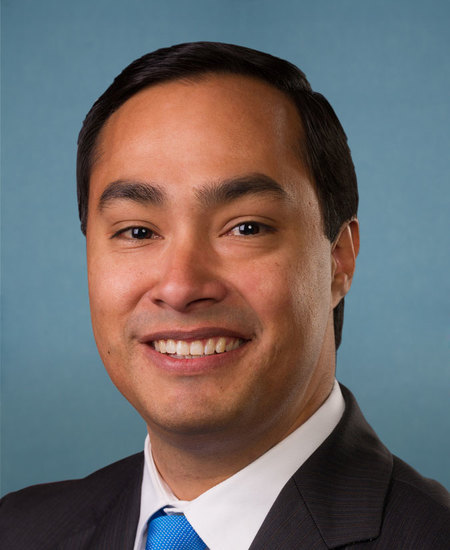
Rep. Joaquin Castro
Sponsored bills
Maddy summaryThis bill directs the U.S. government to immediately restore funding to the United Nations Relief and Works Agency for Palestine Refugees (UNRWA), reversing a temporary funding pause. It repeals two appropriations acts that halted payments and requires the Secretary of State to resume UNRWA funding under existing authorities. The legislation specifically aims to support UNRWA’s critical humanitarian work - providing shelter, education, healthcare, and aid to Palestinian refugees across Gaza, the West Bank, Syria, Lebanon, and Jordan - during an acute famine risk in Gaza. It also mandates quarterly reports to Congress on UNRWA’s implementation of reforms from an independent review, ensuring accountability for its humanitarian mission.
Maddy summaryThe Strengthening Science Through Diplomacy Act (HR 9619) would authorize the U.S. President to extend existing legal protections - such as immunity from certain lawsuits - to CERN, the European Organization for Nuclear Research. This would allow CERN to operate in the U.S. with the same legal safeguards typically granted to international scientific organizations the U.S. collaborates with through treaties. The bill does not involve funding changes or new programs but adjusts the legal framework to formally include CERN under current international organization immunity provisions.
Maddy summaryHRES 1437 is a ceremonial resolution designating the week beginning September 9, 2024, as "National Hispanic-Serving Institutions Week." It recognizes Hispanic-serving institutions (HSIs) - colleges and universities with at least 25% Hispanic enrollment - and their role in educating low-income students, advancing economic mobility, and serving 31.7% of all undergraduate students. The resolution calls for the public and organizations to observe this week with ceremonies and activities during Hispanic Heritage Month. It does not create new laws, allocate funding, or change existing policies - it is purely a symbolic gesture of recognition.
Maddy summaryHRES 1056 is a non-binding House resolution recognizing recent trilateral cooperation among the United States, Japan, and South Korea. It formally acknowledges specific collaborative efforts, including resumed summitry, joint military exercises, shared missile warning systems, economic partnerships, and coordinated responses to regional challenges like North Korea and crises in Sudan and Israel. The resolution does not create new policies or funding but expresses congressional support for strengthening this alliance framework. It highlights the importance of continued cooperation across diplomatic, security, and economic domains to promote stability in the Western Pacific. The resolution was introduced by multiple House members and referred to the Foreign Affairs Committee.
Maddy summaryThis resolution (HRES 1406) commemorates the 175th anniversary of formal diplomatic relations between the United States and Guatemala, established on January 31, 2024. It honors the contributions of Guatemalan-Americans to U.S. society, recognizes Ambassador Francisco Villagrán de León’s service, and acknowledges ongoing U.S.-Guatemala cooperation on trade, migration, anti-corruption efforts, and shared democratic values. The resolution includes non-binding statements urging Guatemala to address corruption, support indigenous communities, protect activists, and continue recognizing Taiwan, while calling on the U.S. to counter Chinese economic coercion against Guatemala. As a commemorative resolution, it does not create new laws or obligations but formally acknowledges historical and current bilateral ties.
Maddy summaryHR 9274, the SHAWL Act, establishes two new Smithsonian museums: the National Museum of the American Latino and the American Women’s History Museum. It authorizes both museums to be located within the National Mall’s "Reserve" area, overriding prior restrictions, and requires federal agencies managing potential sites to transfer jurisdiction to the Smithsonian after notifying congressional committees. The bill mandates that both museums accurately represent diverse cultures, histories, and viewpoints within Latino and women’s communities through exhibits and programs, requiring input from a broad range of community experts. It also requires the Smithsonian to submit biennial reports to Congress detailing compliance with these representation requirements.
Maddy summaryThe Active Shooter Alert Act of 2024 establishes a national coordination system for active shooter alerts by designating a Department of Justice Coordinator. The Coordinator will work with federal agencies (FEMA, FCC, Transportation) and state/local governments to develop voluntary best practices for alert systems, including geotargeted notifications, multilingual messaging, and training for transportation authorities. The bill requires annual reports to Congress on state adoption of protocols and mandates a Comptroller General study on state response times to active shooter alerts, funded by $2 million for the Department of Justice. It does not mandate state adoption but encourages coordination to improve alert effectiveness.
Maddy summaryThe NO BAN Act (HR 9244) prohibits U.S. immigration authorities from denying visas or entry based on national origin, religion, or sex. It amends immigration law to explicitly ban such discrimination in visa decisions and tightens restrictions on the president’s power to suspend entry of certain groups under Section 212(f). The bill requires specific evidence, narrow tailoring, time limits, and congressional notification for any entry restriction, while mandating public reports on visa denials and waivers. It directly affects nonimmigrant visa applicants (e.g., students, workers) and federal agencies administering immigration policy.
Maddy summaryHRES 1394 is a non-binding resolution celebrating the U.S.-India partnership based on shared democratic values, religious pluralism, and human rights, while highlighting the contributions of the Indian diaspora in the United States. It specifically recognizes the 50th anniversary of BAPS Swaminarayan Sanstha's community work, including its spiritual centers (mandirs) and volunteer efforts across the country. The resolution does not create legal obligations but formally acknowledges these ties and achievements.