

Teleabortion Prevention Act of 2023 This bill restricts the use of telehealth for chemical abortions (also known as medication abortions). Specifically, it requires a provider who dispenses or prescribes medication for a chemical abortion to physically examine the patient, be physically present at the location of the chemical abortion, and schedule a follow-up visit for the patient. The bill provides an exception for a chemical abortion that is necessary to save the life of a mother whose life is endangered by a physical disorder, illness, injury, or condition. The bill establishes criminal penalties—a fine, a prison term of up to two years, or both—for a provider who does not comply with the requirements. A patient who undergoes a chemical abortion may not be prosecuted.
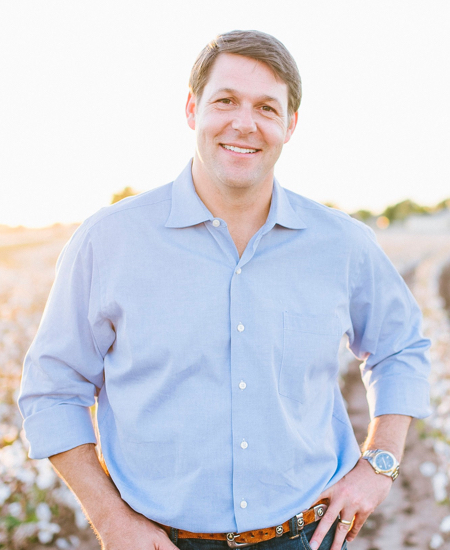
Rep. Jodey C. Arrington
Sponsored bills
Maddy summaryHR 128, the Defund Planned Parenthood Act of 2023, blocks federal funding to Planned Parenthood Federation of America and its affiliates for one year unless they certify they will not perform or fund abortions (except in cases of rape, incest, or life-threatening conditions for the patient). This directly affects Planned Parenthood clinics and their federal funding streams. The bill redirects $235 million to community health centers under the Public Health Service Act to continue providing women’s health services like contraception, cancer screenings, and prenatal care. It requires repayment of funds if Planned Parenthood violates the certification and explicitly states the law won’t reduce overall federal funding for women’s health services.
Maddy summaryThe Marginal Well Protection Act amends the Clean Air Act to exempt small oil and gas wells from a methane emissions and waste reduction program. Specifically, it excludes facilities producing less than 15 barrels of oil per day and less than 90 thousand cubic feet of natural gas per day from the program's requirements. This directly affects small-scale producers operating "marginal wells" by removing them from the program's scope. The bill does not create new requirements but adjusts the definition of "applicable facility" to exclude these smallest operations.
Maddy summaryHJRES 8 proposes a constitutional amendment to permanently set the Supreme Court's size at nine justices. The bill would require any future changes to the Court's composition to follow this specific number, locking in the current structure. It does not alter the existing Court size (which has been nine since 1869) but aims to prevent future adjustments through legislative action. The amendment must be ratified by three-fourths of state legislatures within seven years to take effect. This is a procedural proposal focused on constitutional structure, not a direct policy affecting citizens or programs.
Maddy summaryThis bill establishes nationwide recognition for valid concealed carry permits. It allows permit holders from any state to carry concealed handguns in states that either issue such permits or don't ban concealed carry, provided they carry a photo ID and their valid permit. Key provisions include making presentation of a valid permit and ID prima facie evidence of compliance, shifting the burden of proof to prosecutors if challenged, and requiring courts to award attorney fees to successful defendants. It does not override state laws prohibiting concealed carry on private property or government lands, nor does it affect restrictions on federal lands like national parks.
David Dorn Act of 2023 This bill increases criminal penalties for rioting and related offenses (e.g., inciting a riot). Specifically, the bill increases the maximum prison term from 5 to 10 years. Additionally, if a fine is imposed for an offense, the bill sets a minimum fine amount of $1,000.
Patrick Underwood Federal Law Enforcement Protection Act of 2023 This bill revises the federal criminal statute that prohibits assaulting, resisting, or impeding certain federal officers or employees. Among other changes, the bill increases the applicable penalties for such offenses.
Maddy summaryThis bill amends the federal tax code to create a "safe harbor" for certain Texas school trust funds. It specifies that these state-created funds - which hold nonfinancial assets (like land or buildings) and are used solely to support public schools or essential government functions - will not be classified as "investment property" under tax law. The provision applies to funds already meeting strict criteria as of 1986, ensuring their tax-exempt status remains intact. It directly affects existing Texas perpetual trust funds that support public elementary and secondary schools. The bill does not address new construction costs or funding mechanisms, but rather clarifies the tax treatment of pre-existing school funding structures.
This act designates the facility of the United States Postal Service located at 651 Business Interstate Highway 35 North Suite 420 in New Braunfels, Texas, as the Bob Krueger Post Office.
This act designates the facility of the United States Postal Service located at 4110 Bluebonnet Drive in Stafford, Texas, as the Leonard Scarcella Post Office Building.