

Guarantee Oversight and Litigation on Doping Act or the GOLD Act This bill expands federal enforcement for criminal offenses related to international doping fraud conspiracies. Specifically, the bill makes the offenses predicate offenses (i.e., underlying offenses) for prosecutions under the federal money laundering statute and the federal racketeering statute.
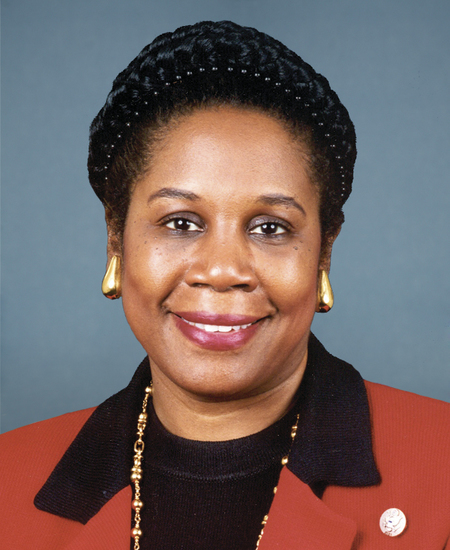
Rep. Sheila Jackson Lee
Sponsored bills
Hold Accountable and Lend Transparency on Campus Sexual Violence Act of 2021 or the HALT Campus Sexual Violence Act of 2021 This bill addresses dating violence, domestic violence, sexual assault, or stalking incidents on college campuses, including by expanding requirements governing the disclosure of such incidents and efforts to prevent them. Specifically, the bill requires the Department of Education (ED) to make available an online survey tool regarding student experiences with domestic violence, dating violence, sexual assault, harassment, and stalking. ED must publish a biennial report that includes campus-level data for each institution of higher education (IHE). The bill permits ED to impose civil penalties on IHEs that have violated a law under the jurisdiction of its Office for Civil Rights. In addition, the bill directs ED, the Department of Health and Human Services, and the Department of Justice to create a task force on sex-based harassment and violence in education.
District Court Judgeships Act of 2021 This bill requires the appointment of additional U.S. district court judges and converts certain temporary district court judgeships into permanent judgeships. Specifically, the bill requires the appointment of 203 district court judges in specified judicial districts in Arkansas, Arizona, California, Colorado, Delaware, Florida, Georgia, Idaho, Illinois, Indiana, Louisiana, Maryland, Michigan, Minnesota, Missouri, North Carolina, Nebraska, Nevada, New Jersey, New Mexico, New York, Ohio, Oregon, Pennsylvania, South Carolina, Tennessee, Texas, Utah, Virginia, Washington, Wisconsin, and West Virginia. Additionally, the bill converts certain temporary district court judgeships to permanent judgeships in specified judicial districts in Alabama, Arizona, California, Florida, Kansas, Missouri, New Mexico, North Carolina, and Texas.
Journalist Protection Act This bill establishes new criminal offenses for intentional acts (or attempts to commit acts) that cause bodily injury to a journalist.
Judiciary Accountability Act of 2021 This bill applies certain civil rights and employee protection laws to judicial branch employees. Specifically, the bill applies to judicial branch employees laws that prohibit discrimination based on race, color, religion, sex (including sexual orientation or gender identity), national origin, age, or disability. Further, the bill prohibits retaliation against whistleblowers within the judicial branch. Additionally, the bill establishes (1) the Commission on Judicial Integrity to oversee a program to prevent workplace misconduct; (2) the Office of Judicial Integrity to oversee confidential reporting systems regarding workplace misconduct, training programs on workplace behavior and bystander intervention, and other reporting initiatives regarding employee metrics and demographics; (3) the Special Counsel for Equal Employment Opportunity to investigate alleged workplace misconduct and complaints; and (4) the Office of Employee Advocacy to provide legal assistance, representation, and consultation to judicial employees. Finally, the bill establishes workplace discrimination, harassment, and retaliation as judicial misconduct.
Transnational Repression Accountability and Prevention Act of 2021 or the TRAP Act of 2021 This bill establishes requirements related to U.S. cooperation with International Criminal Police Organization (INTERPOL) communications. Specifically, no U.S. agency or department may extradite an individual based solely on an INTERPOL notice. In addition, the Department of Justice and the Department of State must take certain actions to support reforms to increase transparency of INTERPOL, including with respect to its communications. The bill also requires reports on countries that abuse INTERPOL communications for political motives and other unlawful purposes.
Supreme Court Ethics Act This bill establishes a new statutory requirement for the Judicial Conference of the United States to issue a judicial code of conduct for judges and justices of U.S. courts, including Justices of the Supreme Court. Currently, the Judicial Conference issues a code of conduct for judges of U.S. courts (but not for Justices of the Supreme Court).
Foreign Extortion Prevention Act This bill establishes a federal criminal offense involving bribery by foreign officials. Specifically, the bill makes it a crime for foreign officials to demand or accept anything of value personally or for another person or a nongovernmental entity to influence the performance of an official act or otherwise confer an improper advantage. The bill explicitly grants extraterritorial jurisdiction over the offense. A violation is subject to criminal penalties—a fine, a prison term of up to 15 years, or both. Finally, the bill establishes a Victims of Kleptocracy Fund in the Treasury and directs fines and penalties for violations to be deposited into the fund for anti-corruption initiatives.
This bill directs the United States to sever all relations with the Muscogee (Creek) Nation of Oklahoma (i.e., Creek Nation) until the tribe complies with treaty and federal obligations. Specifically, Creek Nation must restore full tribal citizenship to those individuals who can trace their ancestry to individuals listed on the 1906 Dawes Commission Rolls for the Creek Freedmen (i.e., Creek Freedmen, Freedmen, and Black Creeks). The bill also suspends the tribe's authority to conduct gaming or administer any funds from gaming until the tribe is in compliance with all treaty and federal obligations. The bill requires the Department of the Interior to (1) coordinate with federal agencies and receive reports from such agencies; (2) submit monthly compliance reports; and (3) issue a report on the status of Freedmen in the Creek, Choctaw, Chickasaw, and Seminole Nations of Oklahoma, including their access to tribal benefits. The Department of Justice must issue a finding on whether the civil rights of the Freedmen have been violated by the Creek Nation, Interior, or both. The bill establishes a private right of action for Freedmen. The bill directs the Government Accountability Office to issue an annual report on the tribe's expenditure of federal funds and whether the tribe is in full compliance with all federal laws related to the management and disbursement of such funds.
Revealing and Explaining Visa Exclusions for Accountability and Legitimacy Act or the REVEAL Act This bill authorizes the Department of State to publicly disclose the identity of an alien who has been denied admission into the United States because that alien's entry would pose potentially serious adverse foreign policy consequences. The State Department may also reveal the grounds that it relied on to make such a determination. The President must annually report to Congress a list of individuals denied a visa on such foreign policy grounds and another list of the instances when the State Department chose to not publicly disclose the identity of such an individual.