

Equal Access to Green cards for Legal Employment Act of 2022 or the EAGLE Act of 2022 This bill modifies requirements related to employment-based visas and addresses related issues. The bill increases the per-country cap on family-based immigrant visas from 7% of the total number of such visas available that year to 15% and eliminates the per-country cap for employment-based immigrant visas. The bill establishes transition rules for employment-based visas such as (1) reserving a percentage of EB-2 (workers with advanced degrees or exceptional ability) and EB-3 (skilled and other workers) visas for individuals not from the two countries with the largest number of recipients of such visas, and (2) allotting a number of visas for professional nurses and physical therapists. The bill imposes additional requirements on an employer seeking an H-1B visa, such as prohibiting (1) an employer from advertising that a position is only open to H-1B applicants or that H-1B applicants are preferred, and (2) certain employers from having more than half of their employees as nonimmigrant visa workers. The Department of Labor shall create a publicly available website where an employer seeking an H-1B visa must post certain information about the open position. The bill also expands Labor's authority to review and investigate H-1B applications for fraud or misrepresentations. The bill also allows certain aliens to obtain lawful permanent resident status if the alien (1) is in the United States as a nonimmigrant, (2) has an approved immigrant visa petition, and (3) has waited at least two years for a visa.
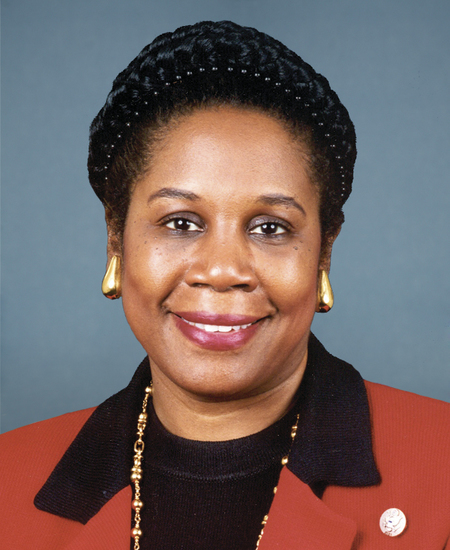
Rep. Sheila Jackson Lee
Sponsored bills
Boundary Waters Wilderness Protection and Pollution Prevention Act This bill withdraws certain federal lands and waters in Minnesota from mining and related activities. Specifically, the bill withdraws approximately 234,328 acres of federal land and waters in a specified area in the Rainy River Watershed of Superior National Forest from entry, appropriation, and disposal under the public land laws; location, entry, and patent under the mining laws; and operation of the mineral leasing, mineral materials, and geothermal leasing laws. The area is adjacent to the Boundary Waters Canoe Area Wilderness and the Boundary Waters Canoe Area Wilderness Mining Protection Area. Land or interest in land within such area that is acquired by the United States shall be immediately withdrawn in accordance with this bill. The Forest Service is authorized to permit the removal of sand, granite, iron ore, and taconite from national forest system lands within such area if the removal is not detrimental to the water quality, air quality, and health of forest habitat within the Rainy River Watershed.
This resolution expresses that the House of Representatives is committed to building upon the 20 years of success of the George McGovern-Robert Dole International Food for Education and Child Nutrition Program, complementing humanitarian assistance efforts and development programs through the continued implementation of the McGovern-Dole Program to address global food insecurity and create conditions for peace and stability, and supporting U.S. farmers, millers, shippers, and commodity groups that provide agricultural commodities for use in the McGovern-Dole Program to help combat global malnutrition and food insecurity and advance global education.
Find It Early Act This bill requires health insurance plans (including public health insurance programs) to cover screenings and diagnostic imaging (with no cost sharing and no limit on frequency) for individuals who are at an increased risk of breast cancer.
Respect for Marriage Act This act provides statutory authority for same-sex and interracial marriages. Specifically, the act replaces provisions that define, for purposes of federal law, marriage as between a man and a woman and spouse as a person of the opposite sex with provisions that recognize any marriage between two individuals that is valid under state law. (The Supreme Court held that the current provisions were unconstitutional in United States v. Windsor in 2013.) The act also replaces provisions that do not require states to recognize same-sex marriages from other states with provisions that prohibit the denial of full faith and credit or any right or claim relating to out-of-state marriages on the basis of sex, race, ethnicity, or national origin. (The Supreme Court held that state laws barring same-sex marriages were unconstitutional in Obergefell v. Hodges in 2015; the Court held that state laws barring interracial marriages were unconstitutional in Loving v. Virginia in 1967.) The act allows the Department of Justice to bring a civil action and establishes a private right of action for violations. The act does not (1) affect religious liberties or conscience protections that are available under the Constitution or federal law, (2) require religious organizations to provide goods or services to formally recognize or celebrate a marriage, (3) affect any benefits or rights that do not arise from a marriage, or (4) recognize under federal law any marriage between more than two individuals.
International Violence Against Women Act of 2022 This bill requires a U.S. global strategy to prevent and respond to violence against women and girls. The bill establishes in the Department of State an Office of Global Women's Issues, which shall be headed by an Ambassador-at-Large for Global Women's Issues. The Ambassador-at-Large shall (1) coordinate U.S. government efforts regarding gender equality and the advancement of women and girls in foreign policy, and (2) develop or update periodically a U.S. global strategy to prevent and respond to gender-based violence. The bill establishes in the U.S. Agency for International Development the position of Senior Coordinator for Gender Equality and Women's Empowerment who shall coordinate policies, programs, and funding regarding gender equality and women's empowerment.
First Responder Fair Return for Employees on Their Initial Retirement Earned Act or the First Responder Fair RETIRE Act This act allows disabled federal first responders (e.g., law enforcement officers, customs and border protection officers, and firefighters) to continue receiving federal retirement benefits in the same manner as though they had not been disabled. Under current law, federal first responders are subject to a mandatory retirement age of 57. To facilitate this earlier retirement, federal first responders are required to pay a greater percentage of their salary towards retirement. Additionally, their annuity amount is calculated at a higher rate than other federal employees. This act allows a federal first responder to remain in the accelerated retirement system if they are placed in another civil service position outside of that system after returning to work from a work-related injury or illness. Further, if such an employee is separated from service before they are entitled to receive an annuity, they may receive a refund of their accelerated contributions.
Working for Immigrant Safety and Empowerment Act of 2022 or the WISE Act of 2022 This bill addresses immigration-related issues for victims of domestic violence and other crimes. For example, the bill (1) extends the period of admission into the United States for certain spouses or children who derive their immigration status from an individual who is abusing the spouse or child; and (2) establishes a presumption that an individual with certain pending applications, such as for a visa for a victim of human trafficking or certain other crimes, should be released from immigration detention without conditions.
This resolution recognizes the anniversaries of the International Day of Peace, Human Solidarity Day, the International Day of Living Together in Peace, and other specified international days. The resolution also expresses that Congress commits to (1) encouraging the people of the United States to continue commemorating international days of peace, coexistence, and cooperation; and (2) supporting activities on such days that promote thoughtful, deliberative, and cooperative actions to achieve peace.
End Tuberculosis Now Act of 2022 This bill authorizes actions, including the provision of international assistance, to combat tuberculosis. The President may provide international assistance for the prevention, treatment, control, and elimination of tuberculosis. The President must also establish goals for U.S. efforts to detect, cure, and prevent all forms of tuberculosis globally by updating the U.S. Government Tuberculosis Strategy (2015-2019) and the National Action Plan for Combating Multidrug-Resistant Tuberculosis. The Government Accountability Office must periodically report to Congress on the impact of efforts to combat tuberculosis that are supported by U.S. bilateral assistance.