

Maddy summaryThis bill prohibits the possession, sale, or transfer of most large-capacity ammunition magazines (holding more than 15 rounds) for the general public, while exempting law enforcement officers (including campus security officers), retired officers, and certain licensed entities like nuclear facility security. It requires new magazines manufactured after enactment to have serial numbers and manufacturing dates, and allows federal grant funds to support buy-back programs for these devices. Existing owners of such magazines lawfully possessed before the law's enactment are exempt from the prohibition. The law applies to devices not already covered under current exemptions for law enforcement, nuclear security, and retired officers.
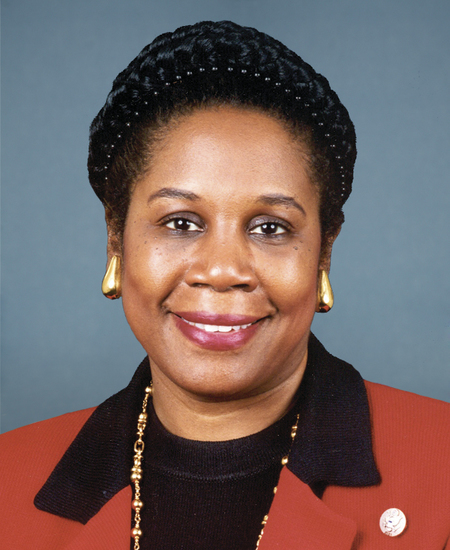
Rep. Sheila Jackson Lee
Sponsored bills
Stop Human Trafficking in School Zones Act This bill establishes an enhanced penalty—an additional prison term of up to five years—for certain human trafficking offenses and sex offenses involving minors that occur within 1,000 feet of the real property comprising a school, school-sponsored activity, playground, or public housing facility; or within 100 feet of certain other places where children gather (e.g., a youth center or swimming pool). The additional prison term must be served consecutively with the prison term imposed for the underlying offense.
Maddy summaryThe HEAL Act (HR 603) requires the U.S. Holocaust Memorial Museum Director to study how public elementary and secondary schools teach about the Holocaust and related antisemitism. The study will examine curriculum requirements, teaching methods (like project-based learning), instructional materials, and assessment approaches across states and school districts. It specifically analyzes whether Holocaust education is mandatory, optional, or integrated across subjects, and how schools address antisemitism and genocide prevention. The resulting report, due within 180 days of the study or three years after enactment, will inform Congress but does not change current school policies. This is a data-gathering measure, not a policy mandate.
Maddy summaryHR 506, the HARM Act, requires the U.S. Secretary of State to designate the Wagner Group as a foreign terrorist organization under immigration law within 90 days of the bill's enactment. This designation would directly affect the Wagner Group and its affiliated entities, subjecting them to sanctions under U.S. law. The bill mandates that the designation apply to any successor or affiliated groups engaged in activities against U.S. interests, including operations in Ukraine, Africa, and the Middle East. It also requires the Secretary of State to submit an annual report on the Wagner Group's international activities to specific congressional committees. The bill focuses on the legal process for designation, not on outcomes or advocacy.
Maddy summaryHR 475 creates a federal grant program to help state, tribal, and local governments protect witnesses in serious criminal cases. It authorizes $30 million annually (2024-2028) for competitive grants to fund witness protection programs targeting cases involving homicide, serious violent felonies, drug offenses, gangs, or organized crime. Grants are awarded based on criteria like witness intimidation rates, unprosecuted cases due to intimidation, and local crime statistics. Recipients must report on their programs, leading to the development and nationwide sharing of best practices for witness safety, relocation, and financial/housing assistance.
Maddy summaryHRES 49 is a symbolic House resolution recognizing the cultural and historical significance of Lunar New Year in 2023. It formally acknowledges Lunar New Year's origins in China over 4,000 years ago, its celebration across East and Southeast Asia (including the Year of the Rabbit in Chinese tradition and Year of the Cat in Vietnamese tradition), and its observance by millions of Asian Americans and others in the U.S. The resolution expresses respect for Asian Americans and all global communities celebrating this holiday and extends well-wishes for a prosperous new year. As a ceremonial resolution, it has no legal effect or policy changes - it solely serves to affirm cultural recognition.
Maddy summaryThis bill renames a U.S. Postal Service facility at 620 East Pecan Boulevard in McAllen, Texas, as the "Agent Raul H. Gonzalez Jr. Memorial Post Office." It updates all federal references to the location to reflect this new name. The bill has no policy impact - it is purely a ceremonial designation honoring an individual. No other provisions or affected groups are involved.
Maddy summaryHR 430, the Lunar New Year Day Act, would designate the Lunar New Year as a federal holiday by adding it to the official list of holidays observed by federal employees. This change would require federal offices to close and federal employees to receive a paid day off on the actual date of the Lunar New Year each year. The holiday would be observed annually on the date the Lunar New Year falls, which varies yearly based on the lunar calendar. This bill directly affects federal workers and operations, aligning with existing federal holiday practices.
Maddy summaryHR 286, the Health Care Providers Safety Act of 2023, provides federal grants to healthcare providers to improve security at their facilities. The bill authorizes the Secretary to fund security services and physical/cyber security enhancements, including video surveillance, data privacy measures, and structural improvements. These grants directly help healthcare facilities, personnel, and patients by addressing safety concerns. The law specifies that funds must be used for necessary security costs to ensure safe access to healthcare services. It does not create new mandates but offers financial support for security upgrades.
Maddy summaryThe Breath of Fresh Air Act (HR 245) provides federal grants to schools for purchasing nebulizers and training staff to manage asthma emergencies. It directly affects elementary and secondary schools serving students with asthma, particularly in areas with high asthma prevalence or limited existing equipment. Schools must have certified nurses on staff, integrate nebulizers into emergency plans, notify parents about medication protocols, and provide 25% non-Federal matching funds (waivable for high-poverty districts). The program prioritizes schools in high-asthma areas, those lacking nebulizers, and those with high student/staff density, authorizing funding for fiscal years 2023-2028.