

Maddy summaryHR 4579, the Fairness for Farm Workers Act, amends the Fair Labor Standards Act to establish phased overtime requirements for agricultural workers. Starting in 2024, most farm employers must pay overtime for hours worked beyond 55 per week (reducing to 50 in 2025, 45 in 2026, and 40 in 2027), with small farms (25 or fewer employees) getting a 3-year delay on the full 40-hour standard. The bill also removes existing exemptions that allowed some agricultural employers to avoid overtime pay for certain workers. This directly affects farm workers in agriculture and their employers, requiring compliance with standard overtime rules previously not applied to this sector.
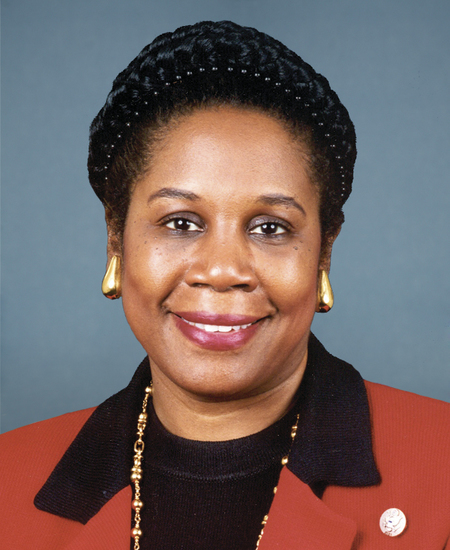
Rep. Sheila Jackson Lee
Sponsored bills
Maddy summaryThis bill requires national parks to reduce disposable plastic products, primarily targeting plastic water bottles and food containers sold to visitors. Park directors must eliminate these sales where feasible after considering factors like operational costs, waste reduction, infrastructure for refill stations, and impacts on park vendors. Each park must also implement visitor education about water availability and report biennially on progress, including visitor satisfaction and safety metrics. The law directly affects all national park units, concessionaire businesses, and park visitors. It mandates a phased, practical approach without banning all plastics immediately.
Maddy summaryHR 4515, the PRIME Act, provides competitive federal grants to qualifying colleges and universities to improve athletic facilities and equipment. It directly affects small-endowment institutions (with endowments under $900 million) that generate less than $20 million annually from athletic programs. Grants of at least $250,000 can be used to build or upgrade stadiums, gyms, fields, or purchase event-related materials like uniforms and equipment, following NCAA/NAIA guidelines. The bill targets schools with limited athletic revenue, aiming to support infrastructure without funding staff salaries or general operations.
This resolution expresses the sense of the House of Representatives that (1) lesbian, gay, bisexual, transgender, queer, intersex, and asexual (LGBTQIA+) rights are human rights and protected by the U.S. Constitution; (2) LGBTQIA+ Pride Month should be celebrated; and (3) all Americans should be treated equally regardless of sexual orientation, sex characteristics, or gender identity.
Maddy summaryHRES 561 is a non-binding House resolution opposing state laws that criminalize access to essential health care. It specifically condemns using criminal penalties against people for pregnancy outcomes (such as miscarriages), seeking abortion or contraception, or receiving gender-affirming care, and disapproves of punishing health care providers or supporters for facilitating such care. The resolution affirms that patients deserve access to reproductive and gender-affirming health services without fear of prosecution or discrimination. It emphasizes that criminalizing these health care decisions violates patient rights and ethical provider obligations, without creating new legal requirements.
Maddy summaryThis bill prohibits defendants in federal criminal cases from using a victim's LGBTQ+ identity (sexual orientation, gender identity, or expression) as a legal excuse for violence or to reduce sentences - a practice known as the "LGBTQ+ panic defense." It specifically bans arguments that a "nonviolent sexual advance or perception" of the victim's identity justified the crime, while allowing evidence of the defendant's past trauma under standard evidence rules. The law directly affects federal criminal trials where defendants attempt to justify violence against LGBTQ+ victims using prejudice-based excuses. It also requires the Attorney General to report annually on federal prosecutions involving bias-motivated crimes against LGBTQ+ individuals.
Maddy summaryHR 4422 (Global Respect Act) requires the President to publicly identify foreign officials responsible for violence, torture, or arbitrary detention against LGBTQI individuals and block their entry to the U.S., including revoking visas for them and their immediate families. It mandates annual reporting to Congress on the list of sanctioned individuals, the reasons for additions/removals, and efforts to coordinate with other countries on similar sanctions. The bill also updates U.S. human rights reporting requirements to explicitly include data on violence and discrimination against LGBTQI people worldwide. These measures aim to increase accountability for human rights violations against LGBTQI individuals without advocating for specific policy outcomes.
Maddy summaryHRES 557 is a non-binding resolution honoring the historical contributions and struggles of Texas' LGBTQ+ community. It recognizes key milestones like Dallas' first pride parade (1972), the legalization of same-sex marriage in Texas (2015), and local advocacy efforts. The resolution does not create new laws or policies - it solely serves as a ceremonial acknowledgment of the community's fight for equality. It cites specific Texas events (e.g., the 1975 Houston LGBT Political Caucus founding) but has no legal effect on discrimination protections or state codes.
Maddy summaryThe Project Safe Neighborhoods Reauthorization Act of 2023 extends federal funding for the Project Safe Neighborhoods (PSN) program through fiscal years 2024-2028, replacing its previous authorization period. The bill directly affects state, local, tribal, and federal law enforcement agencies, prosecutors, and community groups that receive PSN grants to reduce violent crime. Key provisions allow grantees to use funds for hiring crime analysts, covering overtime for officers and assistants, purchasing technology for crime reduction, and supporting multi-jurisdictional task forces. It also requires annual reports from the Attorney General detailing fund usage, community outreach, and violent crime statistics (including murder, robbery, and assault) in each program area. The program operates across all 94 U.S. federal judicial districts and territories.
This resolution supports the continued efforts of the people, civil society, and members of the diaspora of Sierra Leone in their undeniable rights to free, fair, credible, and transparent elections. The resolution also reaffirms the House of Representatives' longstanding commitment to deepen relations between the United States and Sierra Leone.