Maddy summaryHJRES 84 designates August 20 as "Slavery Remembrance Day" to commemorate the arrival of the first enslaved Africans in what is now Virginia on August 20, 1619. The resolution urges the President to issue an annual proclamation encouraging Americans to observe the day with ceremonies and activities reflecting on slavery's history. It specifically honors 21 Black Congress members from the Reconstruction Era as honorary cosponsors and calls for acknowledging the enduring impacts of slavery. As a symbolic resolution, it does not create new laws or directly affect any group beyond establishing an annual observance.
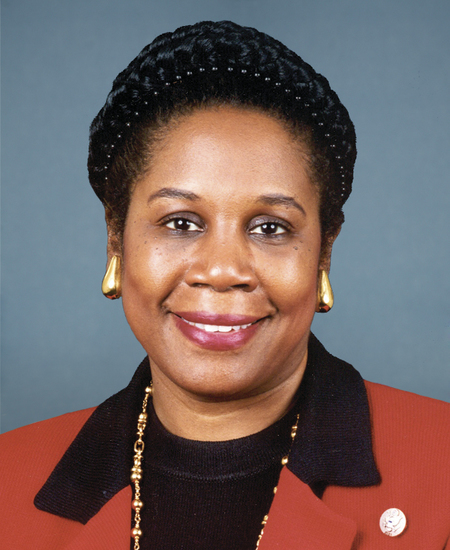
Rep. Sheila Jackson Lee
Sponsored bills
Maddy summary# Summary of the "Protecting Our Democracy Act" This comprehensive legislation aims to strengthen democratic processes, increase government transparency, and prevent foreign interference in elections. Key provisions include: ## Ethics and Transparency - **Ethics Pledge**: Requires all appointees to sign an ethics pledge committing to: - Ban on gifts from registered lobbyists - 2-year revolving door ban (prohibiting participation in matters related to former employers) - Golden parachute ban (no special payments from former employers) - Commitment to decision-making based on public interest - **Tax Transparency**: Requires presidential and vice presidential candidates to disclose 10 years of tax returns, with sitting presidents submitting returns within 30 days of enactment ## Campaign Finance and Foreign Interference - **Foreign Contact Reporting**: Requires political committees to report any contact with "covered foreign nationals" within 1 week - **Enhanced Penalties**: Criminal penalties of up to $1 million and 5 years in prison for violations - **Online Advertising Rules** ("Honest Ads Act"): - Requires clear disclosure of who paid for political ads online - Mandates machine-readable public databases of political ads - Requires visible sponsor identification that remains when ads are shared - Defines "qualified political advertisements" to include various online formats ## Preventing Patronage Systems - Limits exceptions to competitive service for federal positions - Restricts transferring positions between competitive and excepted service - Requires employee consent for position transfers ## Use of Federal Property - Prohibits holding national political conventions on federal property - Requires publicly available visitor records at White House and other official locations (with privacy exceptions) The legislation establishes detailed definitions, reporting requirements, and enforcement mechanisms across multiple agencies, with the goal of increasing transparency, preventing foreign interference, and ensuring ethical conduct in government service.

Maddy summaryHR 5010, the "Recognizing Gun Violence as a Public Health Emergency Act," requires the Secretary of Health and Human Services and CDC to produce annual reports on gun violence impacts. These reports must include detailed data broken down by age, race, location, and incident type (like homicide, suicide, or unintentional shootings), as well as information on community prevention programs and research funding. The bill directly affects federal agencies (HHS and CDC) by mandating this data collection, and indirectly affects communities by creating a standardized public health data source on gun violence. It does not change existing laws or fund new programs but aims to inform future prevention efforts through comprehensive reporting. The reports must supplement, not replace, existing federal health research.
This resolution condemns Iran for the 1988 massacre of political prisoners. It also urges the Biden Administration and U.S. allies to publicly condemn the massacre and to pressure Iran to provide information to the families of the victims.
Maddy summaryThis bill aims to reduce corporate concentration in agriculture by imposing a moratorium on large agribusiness mergers and requiring retroactive review of past mergers that may have harmed competition. It mandates that large meatpackers purchase at least 50% of livestock through spot market sales from nonaffiliated farmers, restores mandatory country of origin labeling for beef, pork, and dairy products, and increases funding for beginning, retiring, and socially disadvantaged farmers. The legislation targets unfair practices by large processors and retailers, requiring transparency in pricing and preventing anti-competitive behavior that has driven down farmer income. It directly affects small-scale farmers, ranchers, and rural communities by strengthening their bargaining power in agricultural markets. The bill's provisions aim to reverse decades of consolidation that have driven down farmer income while increasing food prices for consumers.
Maddy summaryThis bill would prohibit solitary confinement in federal prisons and detention facilities, requiring all incarcerated people to have at least 14 hours per day of out-of-cell group interaction, including 7 hours of structured programming like education, mental health services, and recreation. It establishes strict limits on when confinement can be used (only in emergencies for short periods), mandates medical and mental health assessments, and requires regular reviews of placements in restrictive housing. The bill creates a community monitoring body to oversee implementation and provides financial incentives for states to adopt similar policies for their facilities. The law would take effect within 60 days of enactment, with specific requirements for facility reporting and due process protections.
Maddy summaryHR 4987, the Democracy Restoration Act of 2023, would restore voting rights for people with felony convictions who are living in their communities (not incarcerated), directly affecting approximately 4.6 million disenfranchised Americans. The bill requires states to automatically restore voting rights upon completion of sentences, including probation or parole, without requiring payment of fines or fees. It mandates notification to individuals about their restored voting rights and prohibits states from conditioning voting rights on payment of legal financial obligations. The legislation addresses the disproportionate impact of voting restrictions on racial minorities, particularly Black and Latino communities, who face significantly higher rates of disenfranchisement. This bill would apply to all federal elections held on or after its enactment date.
Maddy summaryHR 4963, the Tax Fairness for Workers Act, would restore tax deductions for certain employee expenses. It creates an above-the-line deduction for union dues and expenses paid by wage-earning employees, and allows miscellaneous itemized deductions for other work-related expenses (like uniforms or supplies) that were previously disallowed after 2017 tax law changes. These provisions directly affect employees who pay union dues or incur qualifying job-related costs. The bill amends specific sections of the Internal Revenue Code to make these deductions available for taxable years beginning after December 31, 2022. It does not change tax rates or provide new benefits, only reinstating previously eliminated deductions for eligible workers.
Chyna Gibson Stop the Transgender Murder Epidemic Act of 2023 or the Chyna Gibson STME Act of 2023 This bill establishes a commission to address various issues facing gender-nonconforming, gender-expansive, and transgender women of color. The commission must be comprised of 13 members who are qualified based on their education, training, activism, or experience, particularly in the field of transgender studies and human rights. The commission may hold hearings and must report its findings and recommendations to Congress no later than 18 months after its first meeting.
Maddy summaryThis bill removes an age restriction for expunging certain criminal records. It amends federal law to eliminate the requirement that a nonviolent offender must have been under 21 years old at the time of a simple possession conviction involving controlled substances. As a result, individuals convicted of these offenses who are now 21 or older can now qualify for record expungement, regardless of their age at the time of the offense. The bill directly affects nonviolent offenders with past simple possession convictions who previously could not seek expungement due to their age when convicted. This change expands eligibility for record clearance under federal expungement provisions.