

Maddy summaryThe REDUCE Act of 2023 imposes an excise tax on virgin plastic resin and certain single-use plastic products, starting at 10 cents per pound in 2024 and increasing to 20 cents per pound by 2026 (with annual inflation adjustments). The tax applies to manufacturers, producers, and importers of plastic products, with exemptions for small businesses producing less than 10 tons annually. Revenue from the tax will fund the Plastic Waste Reduction Fund, which will support recycling infrastructure, reuse systems, and marine debris cleanup efforts. The bill specifically excludes medical products, certain packaging, and hygiene items from the tax requirements.
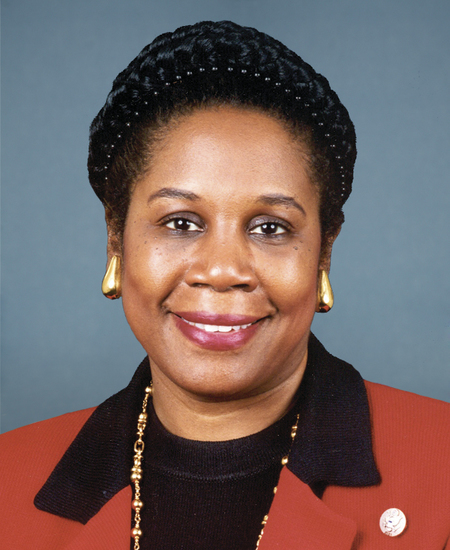
Rep. Sheila Jackson Lee
Sponsored bills
Maddy summaryHRES 714 is a formal recognition resolution celebrating Hispanic Restaurant Week (September 22-October 3, 2023) and acknowledging the economic contributions of Hispanic restaurant owners and employees to the U.S. restaurant industry. It highlights statistics showing Hispanic individuals own a significant share of restaurants and workforce participation in the sector, but does not create new policies, funding, or regulations. This resolution is purely ceremonial, expressing congressional appreciation without any legislative impact.
Maddy summaryThe STORE Act of 2023 amends the Emergency Food Assistance Act to improve how infrastructure grants are distributed to food banks and pantries. It increases annual funding from $15 million to $25 million (2024-2028), prioritizes support for Tribal, low-income, and remote communities, and allows grants to cover mobile delivery services, home delivery, and refrigeration equipment. The bill also requires a report assessing national cold storage and refrigerated truck shortages for emergency food organizations. This directly affects food banks serving underserved areas by expanding their access to funding for critical refrigeration and distribution infrastructure.
Maddy summaryThis bill establishes a new Office within the Department of Justice to address racial disparities in missing and murdered Black women and girls cases. The Office will collect data on case resolution times, coordinate with law enforcement, and create a public dashboard tracking these cases. It also creates grants for community organizations to provide culturally appropriate services, prevention programs, and training for law enforcement targeting violence against Black women and girls. The bill directly affects Black women and girls who are victims of violence and their communities, focusing on improving data collection and support systems rather than changing criminal laws.
Maddy summaryThe Better CARE for Animals Act of 2023 amends the Animal Welfare Act to strengthen enforcement of animal welfare standards. It gives the Attorney General authority to bring civil cases for violations, including seeking penalties up to $10,000 per day per violation and injunctions to remove or relocate animals. The bill also requires the Secretary of Agriculture and Attorney General to coordinate through a new Memorandum of Understanding, focusing on repeat violators. These changes directly affect dealers, exhibitors, and enforcement agencies by expanding civil enforcement tools and clarifying jurisdiction over rule violations.
Maddy summaryHR 4845, the Food Secure Strikers Act of 2023, amends the Food and Nutrition Act to remove a restriction that previously disqualified workers from the Supplemental Nutrition Assistance Program (SNAP) if they were on strike. The bill changes eligibility rules so that striking workers are no longer automatically ineligible for SNAP benefits solely because they are participating in a labor strike. This change directly affects workers involved in strikes who rely on SNAP for food assistance, ensuring they can access benefits during labor disputes. The key provision removes specific language from Section 6(d) of the Food and Nutrition Act that had barred strike participants from SNAP enrollment.
Maddy summaryThis bill amends the Food and Nutrition Act to expand SNAP eligibility and simplify medical expense deductions. It raises the age limit for income exclusions from 17 to 21, directly helping young adults aged 18-21 who previously lost benefits at 17. The bill replaces "excess" medical deductions with a standardized amount based on Social Security Act premium rates, removing the previous requirement to prove elderly or disabled status for medical deductions. States may set higher standard deductions if they meet cost neutrality rules, but the baseline deduction is now fixed annually. These changes streamline eligibility and reduce administrative barriers for SNAP recipients.
Maddy summaryThe John R. Lewis Voting Rights Advancement Act of 2023 would strengthen the Voting Rights Act of 1965 by updating the criteria for which states and localities must obtain federal preclearance before changing voting practices. It would establish new standards for proving vote dilution and vote denial by requiring courts to consider historical discrimination, racial polarization in voting, and whether voting practices disproportionately burden minority voters. The bill would also require states and localities to provide public notice of voting changes and share demographic data about polling locations. These changes would primarily affect jurisdictions with a history of voting rights violations, aiming to prevent discriminatory voting practices before they take effect.
Maddy summaryHRES 695 is a non-binding House resolution commemorating the one-year anniversary of Mahsa Amini's death in Iranian custody and the nationwide protests that followed. It affirms U.S. support for Iranian women's rights and freedom of expression, calls on Iran to end violence against protesters, and demands the release of all detained activists. The resolution specifically references the deaths of over 500 protesters, mass arrests, and Iran's detention of prominent women writers like Nasrin Sotoudeh and Narges Mohammadi.
Maddy summaryHR 5545 requires the U.S. Agency for International Development (USAID) to create and implement a Global WASH in Healthcare Facilities Action Plan. The bill targets healthcare facilities in low- and middle-income countries - where 1 in 5 lack basic water access and 79% lack sanitation - to improve water, sanitation, and hygiene services. Key provisions mandate handwashing stations at all care points, safe waste disposal, menstrual health support, and integration with pandemic preparedness. USAID must report annually on progress, spending, and outcomes like reduced infections, using World Health Organization metrics. The law directly affects patients, healthcare workers, and facilities in high-priority countries identified by USAID.