

Build America's Libraries Act This bill establishes and provides funds through FY2024 for the Build America's Libraries Fund, from which the Institute of Museum and Library Services (IMLS) must allocate funding to states and, through them, need-based grants to libraries to make long-term improvements to library facilities. The IMLS must also award grants to Indian tribes and organizations that primarily serve and represent Native Hawaiians. Specifically, the bill requires each state that receives an allocation, and each library that receives a grant, to carry out certain activities to improve library facilities. These activities include constructing and renovating library facilities, investing in infrastructure projects to improve internet access and connectivity, improving indoor air quality, and making facilities accessible to individuals with disabilities. The bill also outlines administrative and oversight provisions, including by requiring library projects to use iron and steel products that are produced in the United States.
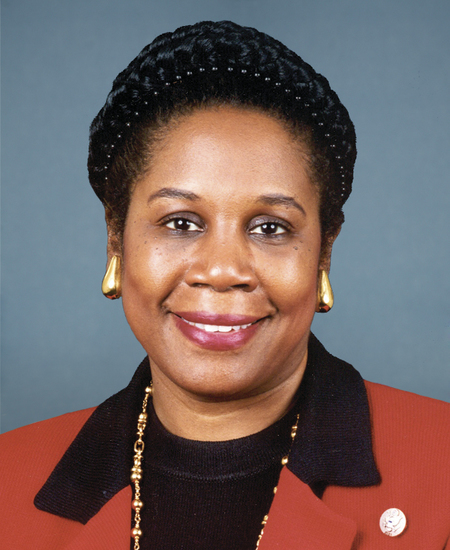
Rep. Sheila Jackson Lee
Sponsored bills
Youth Financial Learning Act This bill directs the Department of Education to award competitive grants to state educational agencies and, through them, subgrants to local educational agencies to integrate financial literacy education into public elementary or secondary schools.
Research Investment to Spark the Economy Act of 2021 or the RISE Act of 2021 This bill authorizes the Departments of Agriculture, Commerce, Defense, Education, Energy, the Interior, Health and Human Services, and Transportation, National Aeronautics and Space Administration (NASA), National Science Foundation, and Environmental Protection Agency to provide support for research regarding COVID-19 (i.e., coronavirus disease 2019) or research disrupted by the COVID-19 pandemic. Support may be used to provide supplemental funding to extend the duration of a grant to a research institution, national laboratory, or individual that was awarded prior to the enactment of this bill, or to expand the purposes of such a grant as specified; issue awards to research the effects of the current pandemic and potential future pandemics; and provide flexibility on awards to account for facility closures or other limitations during the COVID-19 public health emergency. Agencies must provide the support as rapidly as possible. Provided funds shall remain available through FY2021.
Alzheimer's Caregiver Support Act This bill authorizes grants to expand training and support services for families and caregivers of individuals living with Alzheimer's disease or a related dementia. The Department of Health and Human Services may award these grants to community organizations and health care and social service providers.
Infant Protection and Baby Switching Prevention Act of 2021 This bill establishes additional requirements that certain hospitals must meet in order to participate in Medicare. Specifically, as a condition of Medicare participation, hospitals and critical access hospitals that provide neonatal or infant care must have appropriate security procedures to reduce the likelihood of infant patient abduction and baby switching. Noncompliant hospitals are subject to specified civil penalties. The bill also establishes criminal penalties for knowingly altering or destroying a newborn's hospital patient records for the purpose of causing the newborn to be misidentified.
This bill requires the Joint Committee on the Library to obtain, and the Architect of the Capitol to permanently install in the U.S. Capitol or on the U.S. Capitol Grounds, a monument honoring Associate Justice of the Supreme Court Ruth Bader Ginsburg.
Coronavirus Containment Corps Act This bill requires the Centers for Disease Control and Prevention (CDC) to develop, within 21 days, a nationwide contact tracing strategy for COVID-19 (i.e., coronavirus disease 2019) that addresses issues including workforce needs. To implement that strategy, the bill establishes grant programs in the CDC and the Indian Health Service (IHS). It also expands programs in the Department of Labor. The CDC must award grants to state and local health departments to, among other purposes, hire and train individuals for contact tracing positions and related roles. The IHS must award similar grants to tribes and tribal organizations. Additionally, Labor must award grants for states and other jurisdictions to support recruitment and employment of dislocated workers and other individuals in public health roles. Grants and contracts that include contact tracing in their scope of work must comply with prevailing wage requirements that apply to federal service contracts. Employees who work under such grants or contracts must receive similar compensation to that prevailing in the locality where work is performed. The CDC and Labor must report certain information on specified timelines, and the Government Accountability Office must evaluate the activities of grantees.
Stop Infant Mortality And Recidivism Reduction Act of 2021 or the SIMARRA Act This bill directs the Bureau of Prisons to establish a pilot program for incarcerated women and their children born during incarceration to reside together in a separate prison housing unit. It sets forth inmate eligibility criteria and program participation requirements.
Accidental Firearms Transfers Reporting Act of 2021 This bill requires the Federal Bureau of Investigation (FBI) to report to Congress on the number of firearm transfers where (1) a licensed gun dealer submits a background check through the National Instant Criminal Background Check System (NICS), (2) NICS fails to respond within three business days, and (3) the licensed gun dealer completes the transfer. The FBI must also report on the procedures followed once the transferee is discovered to be ineligible.
Coretta Scott King Mid-Decade Redistricting Prohibition Act of 2021 This bill prohibits a state where the congressional districts have been redistricted after a decennial census from carrying out another redistricting until after the next apportionment of Representatives following a decennial census, unless a court requires the state to conduct a subsequent redistricting to comply with the Constitution or enforce the Voting Rights Act of 1965. The bill is applicable to any congressional redistricting which occurs after the regular decennial census conducted during 2020.