

Creation of Opportunities for Medical Manpower in Underserved Neighborhoods by Indemnifying Tuition and Incentivizing Exceptional Service Act or the COMMUNITIES Act This bill increases the amount of student loan repayment available to eligible health care providers who agree to complete a five-year period of obligated service in a health professional shortage area. Specifically, for each year of service, the Department of Health and Human Services shall pay one-fifth of the total amount owed on a participating provider's qualifying student loans. Current law caps the maximum amount of student loan repayment that a provider may receive in exchange for such service.
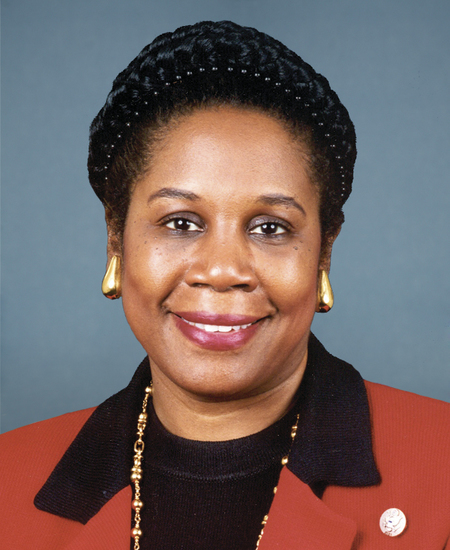
Rep. Sheila Jackson Lee
Sponsored bills
Build Local, Hire Local Act This bill imposes various requirements on certain federally assisted infrastructure projects. The bill also creates infrastructure-related grant programs and establishes the Buy America Bureau. Such federally assisted infrastructure projects must (1) employ a certain percentage of local workers to the maximum extent practicable; and (2) prioritize hiring certain individuals, such as veterans and those facing barriers to employment. A certain percentage of funds for these projects must be used for contracts with small businesses that have fewer than 10 employees. When applying for a contract, grant, or loan related to a project, the applying entity must disclose whether there are any rulings, such as a civil judgment, finding that the entity has violated certain federal labor and occupational safety laws in the last three years. In addition, the Department of Transportation must award grants to entities in disadvantaged and underserved communities for infrastructure projects that create connected, economically prosperous, and environmentally healthy communities. Further, the Department of Labor must provide grants to workforce development boards and industry partnerships for job training programs to train certain groups, such as individuals with barriers to employment, for jobs in targeted infrastructure industries. The bill also establishes the Buy America Bureau within the Department of Commerce to oversee project compliance with existing laws that require the use of U.S.-made materials in certain federally funded projects.
Student Food Security Act of 2021 This bill expands the Supplemental Nutrition Assistance Program (SNAP) and establishes programs to address food insecurity among college students. Specifically, the bill permanently modifies the eligibility requirements to allow additional college students to receive SNAP benefits, and it establishes a demonstration program to allow college students to use SNAP benefits on college campuses instead of meal plans. The bill also advances implementation of certain data-sharing agreements and notifications to help students who apply for federal financial aid to also apply for and receive other federal means-tested benefits (e.g., Section 8 tenant-based housing assistance, Medicaid, and Supplemental Security Income). In addition, the bill (1) requires questions about food and housing insecurity to be incorporated into the National Postsecondary Student Aid Study, and (2) establishes a grant program to support research and address incidences of food and housing insecurity among college students.
Federal Retirement Fairness Act This bill modifies the federal civilian service that is creditable service under the Federal Employees Retirement System (FERS). Specifically, it expands the nondeduction service that may be creditable under FERS. Nondeduction service is federal service where an employee's pay is not subject to retirement deductions (e.g., service under a temporary appointment). Currently, nondeduction service performed before January 1, 1989, is creditable under FERS so long as a deposit is made into the retirement fund to cover the period of nondeduction service. This bill allows nondeduction service performed on or after January 1, 1989, to be creditable under FERS so long as a deposit is made into the retirement fund.
Tax-Free Pell Grant Act This bill excludes from gross income, for income tax purposes, any amount received as a federal Pell Grant. It also expands the definition of qualified tuition and related expenses under the American Opportunity and Lifetime Learning tax credit to include computer or peripheral equipment (up to a maximum of $1,000), child and dependent care expenses, and course materials.
Expand American Educational Opportunity Act of 2021 This bill replaces the Hope Scholarship and Lifetime Learning tax credits with a modified American Opportunity Tax Credit that (1) allows an income tax credit of up to $2,500 of the qualified tuition and related expenses of a student who is carrying at least one half of a normal course load, (2) allows a lifetime dollar limitation for the credit of $15,000 for all taxable years, and (3) increases the refundable portion of the credit to a maximum of $1,500. The bill defines qualified tuition and related expenses as tuition, fees, computer or peripheral equipment, child and dependent care expenses, and course materials for the taxpayer, the taxpayer's spouse, and dependents at certain postsecondary educational institutions. The bill also allows an exclusion from gross income, for income tax purposes, of any amount received as a Federal Pell Grant.
Better Care Better Jobs Act This bill establishes programs and provides funds for state Medicaid programs to improve home- and community-based services (HCBS), such as home health care, personal care, case management, and rehabilitative services. Specifically, the bill provides funds for the Centers for Medicare & Medicaid Services to award planning grants, develop quality measures, and provide technical assistance to states regarding specified HCBS improvements, particularly with respect to access, utilization, and the associated workforce. The bill also increases the Federal Medical Assistance Percentage (i.e., federal matching rate) for HCBS in states that develop plans and meet specified benchmarks for improvements. The bill also makes permanent (1) the Money Follows the Person Rebalancing Demonstration Program (a grant program to help states increase the use of HCBS for long-term care and decrease the use of institutional care), and (2) certain provisions regarding Medicaid eligibility that protect against spousal impoverishment for recipients of HCBS.
Advancing FASD Research, Services, and Prevention Act or the FASD Respect Act This bill expands and establishes programs for fetal alcohol spectrum disorders (FASD). Specifically, it directs the Department of Health and Human Services, the National Institutes of Health, the National Center on Birth Defects and Developmental Disabilities, and the Health Resources and Services Administration to carry out and coordinate research, surveillance, and related activities to diagnose, prevent, and treat FASD. Furthermore, the bill establishes various grant programs to support FASD coalitions and develop systems of care; provide services for individuals affected by FASD and other conditions related to prenatal substance exposure; identify and implement best practices for educating children with FASD; and establish centers for excellence to build relevant capacity for preventing, treating, and responding to the needs of individuals with FASD. The bill also directs the Department of Education and the Department of Justice to develop and disseminate trainings and best practices related to FASD in schools and correctional facilities, respectively.
This resolution recognizes the challenges posed by sickle cell trait and sickle cell disease and encourages relevant screening, research, and surveillance. Sickle cell disease is a group of inherited disorders that cause abnormally shaped red blood cells.
Reducing Hereditary Cancer Act of 2021 This bill provides for Medicare coverage of germline mutation testing for individuals with a personal or family history of a hereditary cancer gene mutation or suspected history of hereditary cancer, as well as for associated coverage of risk-reducing surgeries and screenings.