

Puppies Assisting Wounded Servicemembers for Veterans Therapy Act or the PAWS for Veterans Therapy Act This bill implements a program and a policy related to service dog therapy for veterans. Specifically, the bill requires the Department of Veterans Affairs (VA) to implement a five-year pilot program to provide canine training to eligible veterans diagnosed with post-traumatic stress disorder as an element of a complementary and integrative health program. Eligible veterans are those who are enrolled in the VA health care system and have been recommended for participation by a qualified mental health care provider or clinical team. The VA must seek to enter agreements containing specified elements with accredited nongovernmental entities that have demonstrated ability to provide canine training. Veterans who participate in the program are authorized to adopt the dog they assisted in training if their health provider determines it is in the best interest of the veteran. The VA must establish processes to document and track the progress of participating veterans with respect to health benefits and improvements. The Government Accountability Office must brief Congress and submit a report on the program. The bill also authorizes the VA to provide service dogs to veterans with mental illnesses, regardless of whether they have a mobility impairment.
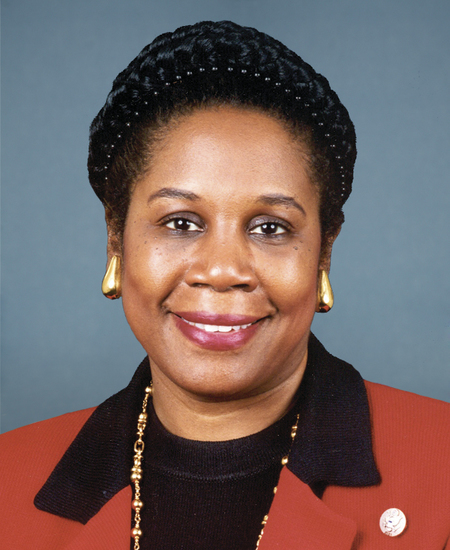
Rep. Sheila Jackson Lee
Sponsored bills
Quality Higher Education Act of 2021 This bill revises the accreditation standards under which an accrediting agency or association must assess an institution of higher education (IHE), and it requires the Department of Education to establish procedures for an agency or association to follow when an IHE fails to meet these standards. An accrediting agency or association must measure an IHE's success in student achievement against at least one standard each in the categories of completion, workforce participation, and progress toward meeting such completion and workforce participation standards. An agency or association must also make certain information such as student achievement standards and IHE performance benchmarks available on a publicly accessible website. Additionally, the National Advisory Committee on Institutional Quality and Integrity must evaluate the effectiveness of the revised standards and compare similar accrediting agencies or associations based on their assessments of IHEs.
Broadband Incentives for Communities Act This bill requires the National Telecommunications and Information Administration (NTIA) to establish a grant program to assist local governments and Indian tribes with efficient review and approval of zoning or permitting applications that facilitate the deployment of broadband infrastructure. Grant recipients must use awarded funds to build application processing capacity or to purchase technology, software, and equipment to facilitate the processing of applications. The NTIA must also establish the Local Broadband Advisory Council to develop solutions to challenges faced by local governments, Indian tribes, and infrastructure providers in facilitating wireless and broadband deployment, including in unserved and underserved communities.
This joint resolution supports the designation of Gospel Music Heritage Month, which would recognize the contributions to U.S. culture derived from the rich heritage of gospel music and gospel music artists.
This resolution expresses the sense of the House of Representatives that policies concerning medication abortions should be grounded in science, be based on a review of medical evidence, and ensure equitable access for patients.
This bill expands the geographic boundaries of the Purchased/Referred Care Delivery Area for the Tunica-Biloxi Tribe of Louisiana to include the Texas counties of Brazoria and Harris.
This resolution urges the United States to protect the human rights of unhoused individuals, to establish regulations and enforcement tools to protect unhoused individuals from violations of civil and human rights, and to establish blanket legal protections for third parties providing goods or services to unhoused individuals. The resolution also urges the United States to establish a process to award appropriate damages, attorney's fees, and costs to a prevailing plaintiff in an action alleging a violation of the human and civil rights of unhoused individuals. Relatedly, the resolution urges the United States to allow the court in such an action to consider housing status and apply leniency in compiling records, receipts, and documentation from those plaintiffs. The resolution also expresses the intention of the House of Representatives to address the unhoused crisis in the United States by providing funding and imposing requirements on the Department of Housing and Urban Development and the Department of Health and Human Services.
This bill directs Congress to present a Congressional Gold Medal to Mahatma Gandhi in recognition of his promotion of nonviolence. The Department of the Treasury must design and produce the medal and is authorized to sell bronze duplicates. The Smithsonian Institution shall display the medal and make it available for research.
Fiscal Analysis by Income and Race Scoring Act or the FAIR Scoring Act This bill requires the Congressional Budget Office's (CBO's) cost estimates for legislation to include a distributional analysis by race and income if the legislation will have a gross budgetary effect of at least 0.1% of gross domestic product in any fiscal year during the 10-year budget window. CBO's analysis must show the transfers that would result by race and income level, and the effects must be shown both in dollars and as a percent change in after-tax-and-transfer-income. The bill also requires CBO to report to Congress on methods for conducting such a distributional analysis by gender.
Open App Markets Act This bill establishes rules related to the operation of an app store by a covered company (i.e., the owner or controller of an app store with more than 50 million U.S. users). An app is a software application or electronic service that may be run or directed by a user on a computer or mobile device. An app store is a publicly available website, software application, or other electronic service that distributes apps from third-party developers to users. The bill prohibits a covered company from (1) requiring developers to use an in-app payment system owned or controlled by the company as a condition of distribution or accessibility, (2) requiring that pricing or conditions of sale be equal to or more favorable on its app store than another app store, or (3) taking punitive action against a developer for using or offering different pricing terms or conditions of sale through another in-app payment system or on another app store. A covered company may not interfere with legitimate business communications between developers and users, use non-public business information from a third-party app to compete with the app, or unreasonably prefer or rank its own apps (or those of its business partners) over other apps. The bill provides for enforcement of its provisions by the Federal Trade Commission and the Department of Justice, as well as through suits brought by developers that are injured by reason of anything forbidden under the bill.