

Dignity for Detained Immigrants Act of 2021 This bill directs the Department of Homeland Security (DHS) to establish standards for facilities holding aliens in its custody, phases out using non-DHS facilities for such purposes, and contains other related provisions. The standards shall comply with the American Bar Association's Civil Immigration Detention Standards. The DHS Office of Inspector General (OIG) shall conduct periodic unannounced inspections of each facility and shall take various actions against noncompliant facilities, including imposing fines, cancelling contracts, and closing facilities. DHS shall report to Congress any death of an alien in its custody within 24 hours and conduct an investigation within 30 days that identifies policy changes that could reduce the likelihood of such a death. DHS is prohibited from entering into contracts for third parties to operate detention facilities or alternatives to detention programs and shall terminate existing contracts within three years of the bill's enactment. The bill establishes that OIG facility inspection reports and contracts for an outside entity to operate a detention facility are records available to the public under the Freedom of Information Act. DHS shall maintain certain information relating to detained aliens, including the alien's location and whether the alien was separated from family. The bill provides for various requirements and procedures related to detaining aliens, including (1) prohibiting DHS from detaining children, (2) imposing a presumption that an alien should be released, and (3) establishing that aliens in custody shall be subject to the least restrictive conditions. The bill also abolishes mandatory detention for asylum seekers.
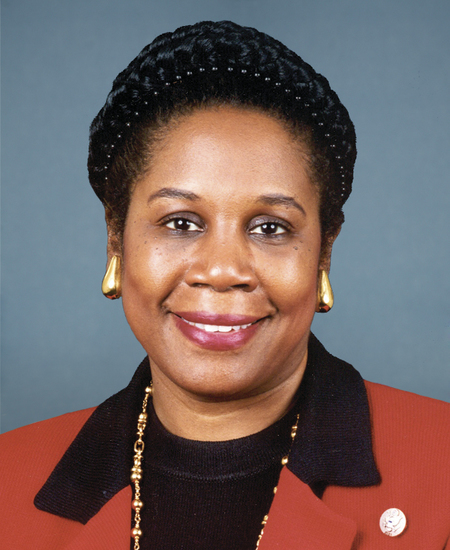
Rep. Sheila Jackson Lee
Sponsored bills
Equal Access to Abortion Coverage in Health Insurance Act of 2021 or the EACH Act of 2021 This bill requires federal health care programs to provide coverage for abortion services and requires federal facilities to provide access to those services. The bill also permits qualified health plans to use funds attributable to premium tax credits and reduced cost sharing assistance to pay for abortion services.
Outdoors for All Act This bill directs the Department of the Interior to establish an outdoor recreation legacy partnership grant program under which Interior may award grants to states, certain political subdivisions of a state, special purpose districts, Indian tribes, or Alaska Native or Native Hawaiian communities or organizations. Funds must be used for projects to (1) acquire land and water for parks and other outdoor recreation purposes in qualifying areas, and (2) develop new or renovate existing outdoor recreation facilities that provide outdoor recreation opportunities to the public in qualifying areas. A qualifying area is an area that has a population of 30,000 or more in the most recent census, or that is administered by an Indian tribe or an Alaska Native or Native Hawaiian community organization. Interior shall give priority to projects that create or significantly enhance access to park and recreational opportunities in an urban neighborhood or community, engage and empower underserved communities and youth, provide opportunities for employment or job training for youth or underserved communities, establish or expand public-private partnerships, and take advantage of coordination among various levels of government.
Cybersecurity Opportunity Act This bill requires the Department of Homeland Security to establish a grant program to promote cybersecurity training and education at institutions of higher education with an enrollment of needy students, historically Black colleges and universities, and minority-serving institutions.
Arts Education for All Act This bill expands arts education and programming for children in early education, K-12 students, and juveniles and adults in the criminal justice system. Specifically, the bill allows Child Care and Development Block Grant funding to be used for additional activities, including arts programming. Additionally, the bill addresses arts programming in elementary and secondary schools by directing each state educational agency to include information on arts programming in its state plan, including how it will integrate arts education instruction into the curriculum and increase the number of arts teachers in schools; requiring state report cards to include information on arts courses; requiring local educational agency (LEA) plans to describe how the LEA will encourage the use of arts education to improve student achievement; and allowing certain funds to be used for professional development for arts teachers. The bill directs the National Center for Education Research to carry out research on the use of arts and arts education in elementary and secondary schools, including in low-performing schools. Further, the National Center for Education Statistics must compile data on arts education. The National Assessment of Educational Progress must include a specified arts assessment. The bill requires a state's juvenile justice and delinquency plan to describe how the state will coordinate services and activities for juvenile justice and delinquency prevention with arts agencies and arts organizations. Additionally, grants for adult offender reentry demonstration projects may be used for facilitating arts education.
This resolution expresses support for the designation of National Vitiligo Awareness Day. (Vitiligo is a chronic condition that results in the loss of pigment in patches on the skin, hair, eyes, and inside of the mouth; the condition may lead to discomfort, itching, and pain.)
Preventing Youth Substance Abuse Act of 2021 This bill authorizes for FY2022-FY2026 the Opioid Affected Youth Initiative, which is administered by the Office of Juvenile Justice and Delinquency Prevention.
This concurrent resolution (1) recognizes the 131 years of significant and meaningful contributions the 1890 Institutions (i.e., historically Black universities established under the Second Morrill Act of 1890) have made to the United States, (2) supports the efforts of the Department of Agriculture and other federal agencies to build stronger partnerships with such institutions, and (3) commits to working in a bipartisan way to address the past funding and program inequities of such institutions.
Indigenous Peoples' Day Act This bill designates Indigenous Peoples' Day as a legal public holiday in lieu of Columbus Day.
Affordable Prescriptions for Patients Through Improvements to Patent Litigation Act This bill limits in certain instances the number of patents that the manufacturer of a biologic drug can assert in a lawsuit against a company seeking to sell a biosimilar version of that drug. (A biologic drug is produced through natural processes or isolated from natural sources. A biosimilar version is substantially similar to the original biologic, which is the reference product, and is often marketed as a less expensive alternative.) The bill's provisions apply to an existing framework that gives the biosimilar manufacturer an abbreviated path to Food and Drug Administration approval to sell the biosimilar. Specifically, if the biosimilar manufacturer completes certain actions under the framework, such as sharing certain information about its product with the reference product manufacturer, the bill limits the number of certain patents that the reference product manufacturer may assert in a lawsuit, such as patents that were filed more than four years after the reference product received market approval. The limit shall not apply to patents claiming certain methods for using the biologic drug. The court in which the infringement lawsuit is filed may increase the limit if justice so requires or if there is good cause for the increase.