

Maddy summaryHR 8851, the Strengthening Citizenship Services for Veterans Act, requires U.S. Citizenship and Immigration Services (USCIS) to conduct citizenship tests, fingerprinting, and oath ceremonies for eligible veteran noncitizens at accessible U.S. ports of entry or overseas embassies/consulates. It directly affects noncitizen veterans who are either outside the U.S., previously removed from the U.S., or deemed inadmissible under immigration law. The bill mandates joint guidance from the Homeland Security and State Departments on implementation methods and requires a report on effectiveness within 180 days of enactment. These changes aim to streamline the naturalization process for veteran noncitizens with pending or future citizenship applications.
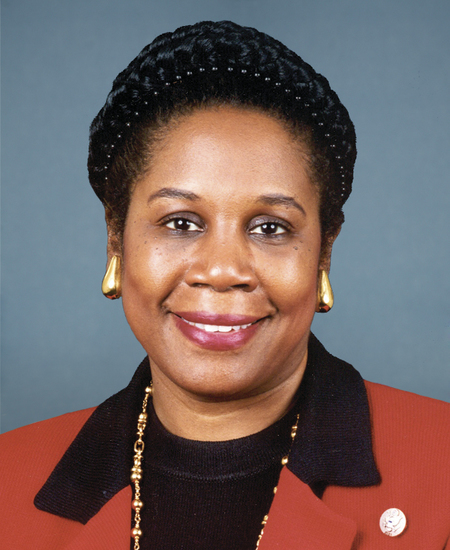
Rep. Sheila Jackson Lee
Sponsored bills
Maddy summaryThis bill creates a federal framework for "extreme risk protection orders" (ERPOs) that temporarily remove firearms from individuals who pose a risk of harming themselves or others. Family members or law enforcement officers can petition a federal court for a temporary order (up to 14 days) based on probable cause, followed by a hearing within 72 hours to determine if a longer-term order (up to 180 days) is warranted. The bill requires clear and convincing evidence of risk at the hearing and mandates respondents to surrender firearms to law enforcement within 48 hours. It also includes provisions for reporting, training law enforcement on ERPOs, and a federal grant program to support state ERPO implementation, without preempting state laws.
Maddy summaryThe Gun Theft Prevention Act requires licensed firearm dealers to implement specific security measures, including locked cabinets, security systems, and site hardening, to prevent gun thefts. It mandates annual security plan certifications with inventory reconciliation, employee background checks before firearm possession, and 30-day reporting of stolen firearms to authorities. The bill increases inspections (annual for high-risk dealers, triennial for others) and establishes civil penalties of up to $20,000 for violations. These requirements apply to all federally licensed gun dealers nationwide, with a one-year transition period for implementation, while maintaining state law authority over firearm dealing.
Maddy summaryThis resolution, introduced around World Refugee Day, expresses congressional support for U.S. efforts to protect refugees and displaced persons globally and within the United States. It highlights that over 117 million people are displaced worldwide, references the U.S. resettling 60,000 refugees in fiscal year 2024, and calls on federal agencies to maintain the Refugee Admissions Program, uphold asylum protections, and support host countries. The resolution does not create new laws but reaffirms existing commitments to refugee resettlement, safety, and integration through current programs.
Maddy summaryThis resolution recognizes June 19, 2024, as Juneteenth Independence Day, acknowledging its historical significance as the anniversary of the end of slavery in the U.S. (specifically referencing Union soldiers' announcement in Galveston, Texas, on June 19, 1865). It does not create new policy but formally encourages all Americans to observe the day through ceremonies and educational activities. The resolution emphasizes Juneteenth's role in honoring African American freedom and its importance to U.S. history and cultural heritage. It follows the 2022 law that established Juneteenth as a federal holiday, focusing solely on symbolic recognition and annual observance.
Maddy summaryHRES 1304 is a symbolic resolution designating June 19, 2024, as "World Sickle Cell Awareness Day" to raise public awareness about sickle cell disease (SCD) globally. It does not create new laws but urges increased focus on SCD research, early detection screenings, equitable access to treatments, and preventative care programs for those affected. The resolution specifically calls on the Department of Health and Human Services to develop global policies supporting newborn screening and treatment access, and recommends forming an interagency group to address barriers in Medicare/Medicaid for SCD therapies. It directly affects public awareness efforts and healthcare policy discussions for the estimated 100,000 SCD patients in the U.S. and millions worldwide, particularly in communities disproportionately impacted by the disease.
Maddy summaryThis resolution (HRES 1309) calls for federal recognition and support of freedmen's settlements - historical Black communities established by formerly enslaved people after emancipation - by preserving their history and investing in their revitalization. It specifically targets communities like Sand Branch, Texas (facing water contamination and poverty) and Africatown, Alabama (struggling with industrial pollution), which have endured systemic disinvestment and environmental hazards. Key provisions include urging federal agencies (like the EPA and HUD) to coordinate funding for historic preservation, economic justice initiatives, and infrastructure improvements, while prioritizing community-led efforts to protect against gentrification and pollution. The resolution does not create new laws but sets a framework for collaboration to address long-standing inequities in these historically marginalized communities.
Maddy summaryHR 8764, the Clean Hands Firearm Procurement Act, prohibits federal agencies from entering contracts with gun dealers who are identified as "covered firearms dealers" based on firearm tracing data. A dealer becomes "covered" if 25 or more firearms traced to them were recovered within 3 years of a crime during two of the past three calendar years. Federal agencies must then avoid contracting with such dealers for the current year and the two preceding years, with a 180-day implementation period. The law includes a national security waiver for the Defense or Homeland Security Secretaries, requiring immediate notification to congressional judiciary committees. This directly affects federal procurement decisions and gun dealers meeting the specified tracing thresholds.
Maddy summaryHR 8760, the Reverend James Lawson, Jr., Congressional Gold Medal Act, authorizes the awarding of a Congressional Gold Medal to Reverend James Lawson, Jr., in recognition of his lifetime contributions to the civil rights movement and nonviolent activism. The bill directs the Treasury Secretary to strike a gold medal bearing his name and image, with bronze duplicates available for sale to cover production costs. This ceremonial honor, intended to commemorate his role in key movements like the Nashville sit-ins, Freedom Rides, and the March on Washington, does not create new laws or affect any government programs or individuals beyond the medal's presentation.
Maddy summaryThis bill creates designated dog relief areas on the U.S. Capitol Grounds for visitors and staff with dogs. It requires dog owners to dispose of waste in sealed bags placed in trash receptacles, with fines of up to $100 for first violations and $500 for repeat offenses enforced by Capitol Police. Collected fines fund Capitol Grounds maintenance. The bill directly affects Capitol visitors, staff, and Capitol Police, and mandates that relief area designs follow ADA accessibility standards while preserving historic character.