Terrorist Reporting Act of 2022 This bill requires the Department of Homeland Security to periodically report to Congress information about any non-U.S. nationals ( aliens under federal law) who (1) were apprehended by the U.S. Border Patrol after unlawfully crossing the border, and (2) appear in the terrorist screening database maintained by the Terrorist Screening Center.
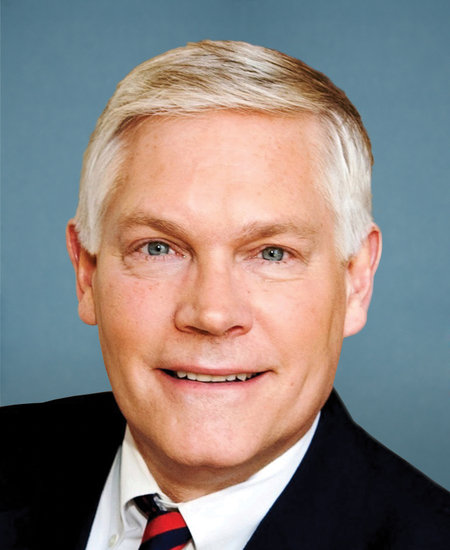
Rep. Pete Sessions
Sponsored bills
Prioritizing the Removal of Migrants Act This bill directs the Department of Homeland Security to prioritize immigration enforcement actions relating to certain groups of non-U.S. nationals (aliens under federal law), including those who (1) were apprehended in the United States after entering unlawfully after November 1, 2020, (2) have been convicted or charged with any criminal offense, (3) are deportable or removable on grounds related to crime or security, or (4) have abused any public benefits program.
Surging Prosecutors to Expedite Alien Removals Act of 2022 This bill requires the Department of Homeland Security (DHS) to establish a ratio of four U.S. Immigration and Customs Enforcement prosecutors for each immigration judge. These prosecutors represent DHS during removal proceedings. DHS must provide a report to Congress within 90 days on the plan and status of achieving the ratio.
Stop the Cartels Act This bill addresses various issues including matters relating to immigration, law enforcement cooperation with Mexico, and drug cartels. The bill bars federal financial assistance for state or local jurisdictions that (1) restrict compliance with immigration detainers issued by the Department of Homeland Security, or (2) have any law or policy that violates immigration laws. Furthermore, under this bill, the detention of alien minors must be governed by specified sections of the Immigration and Nationality Act and not any judicial decree or settlement. (A 1997 settlement agreement imposes requirements related to the treatment of such minors, including limits on how long they may be detained under certain conditions.) The bill also makes various changes to asylum applications, including by (1) increasing the burden that an asylum applicant must meet to establish a credible fear of persecution, and (2) establishing refugee application and processing centers in Central America. In addition, certain Department of State and U.S. Agency for International Development assistance may not be made available to Mexico's government until the State Department certifies that Mexico has removed certain barriers to law enforcement cooperation and intelligence sharing between the United States and Mexico. The bill also establishes the foreign Special Transnational Criminal Organization designation and establishes penalties related to designated organizations, such as making it a crime to knowingly provide material support to such an organization. The State Department must designate specified organizations, including the Sinaloa Cartel, with the designation, and may designate other organizations that fit criteria established in this bill.

Protecting America from IRGC Terrorists Act This bill adds questions to certain visa, permanent residence, and naturalization applications concerning an applicant's association with the Islamic Revolutionary Guard Corps.
Flores Settlement Update and Establishment Act of 2022 This bill modifies and provides statutory authority for certain policies pertaining to the treatment of minors without lawful immigration status under the Flores settlement and revises certain human trafficking laws. For example, the bill requires each member of a family unit seeking asylum to take a DNA test to verify familial relationships within 72 hours of the family encountering U.S. Customs and Border Protection.
Closing Loopholes and Ending Asylum Abuse Act of 2022 This bill imposes restrictions on noncitizens ( aliens under federal law) applying for asylum, authorizes asylum seekers to apply for asylum abroad, and requires applicants to apply abroad in certain instances. For example, the bill requires a refugee's persecution or well-founded fear of persecution to stem from a government (or affiliated entity), whereas currently the persecution does not have to stem from a government. The bill also requires an applicant who passes through another country with a U.S. diplomatic mission that processes asylum claims to apply for asylum while physically in that country.
Lone Star Reimbursement Act This bill requires the Department of Defense to provide approximately $1.43 billion to the state of Texas as reimbursement for the costs of Operation Lone Star incurred in FY2021 and FY2022. (Operation Lone Star is a border security operation initiated and carried out by the state of Texas.)
Biometric Verification for Entry and Reconfirming Identity with Forensics Act of 2022 or the B-VERIFY Act of 2022 This bill addresses various issues pertaining to immigration, such as (1) requiring any applicant for an immigration benefit, including a U.S. national applying for a noncitizen beneficiary, to provide biometric information, including DNA; (2) permanently barring a noncitizen from becoming a U.S. citizen if the noncitizen is the parent of an unaccompanied alien child who arrives at the U.S. border; and (3) prohibiting the Department of Health and Human Services from expending government funds to provide counsel to detained unaccompanied alien children in legal proceedings.
Safety From Violence for Healthcare Employees Act or the SAVE Act This bill establishes a new criminal offense for knowingly assaulting or intimidating hospital personnel during the performance of their official duties in a manner that interferes with their performance of the duties or limits their ability to perform the duties. Additionally, the bill authorizes grants to reduce the incidence of violence at hospitals, including violence or intimidation against hospital personnel in the performance of their duties.