

Cardiovascular Advances in Research and Opportunities Legacy Act This act addresses research, education, and awareness concerning valvular heart disease and its treatment. This disease is caused by damage to or disease affecting any valve that controls blood flow in the heart. The National Institutes of Health may conduct or support research on the disease in consultation with the National Heart, Lung, and Blood Institute (NHLBI). The NHLBI must also conduct a workshop on mitral valve prolapse, which occurs when the valve between the chambers of the left side of the heart seals improperly. The Department of Health and Human Services (HHS) must develop best practices to treat valvular heart disease. HHS may also carry out other projects to increase education and awareness of the disease.
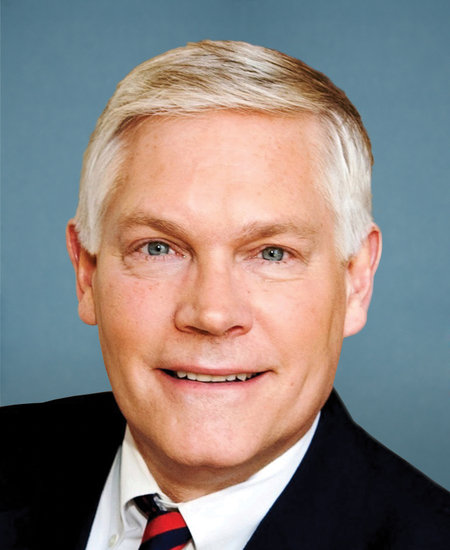
Rep. Pete Sessions
Sponsored bills
Big Cat Public Safety Act This act revises requirements governing the trade of big cats (i.e., species of lion, tiger, leopard, cheetah, jaguar, or cougar or any hybrid of such species) under the Lacey Act to limit the possession, breeding, and exhibition of big cats. The Lacey Act prohibits any person from importing, exporting, buying, selling, transporting, receiving, or acquiring big cats across state lines or the U.S. border. However, some exemptions are provided for certain entities, such as universities and wildlife sanctuaries. (Sec. 3) The act expands the Lacey Act prohibitions to include a prohibition on possessing or breeding big cats. Breeding means facilitating propagation or reproduction (whether intentionally or negligently), or failing to prevent propagation or reproduction. Owners of big cats that were born before this act's enactment may keep their big cats, but the owners must register them with the U.S. Fish and Wildlife Service. The act modifies the list of entities that are exempt from prohibitions to export, buy, sell, transport, receive, acquire, possess, or breed big cats. The modified list includes exemptions for entities or facilities exhibiting animals to the public if they (1) hold a Class C license in good standing under the Animal Welfare Act, and (2) do not allow individuals to come into direct physical contact with big cats. However, direct contact is allowed if the individual is a trained professional, a veterinarian, or directly supporting conservation programs that do not involve commercial activities and meet other specified restrictions. (Sec. 4) A person who knowingly violates the act must be fined not more than $20,000, or imprisoned for no more than five years, or both. The act considers each violation to be a separate offense. The offense must be deemed to have been committed not only in the district where the violation first occurred, but also in any district in which the defendant may have taken or been in possession of the prohibited wildlife species. (Sec. 5) The act extends forfeiture provisions to fish, wildlife, or plants that are bred or possessed; thus, big cats bred or possessed in violation of the act are subject to forfeiture. (Sec. 6) The Department of the Interior must issue regulations to implement this act.
Sunshine Protection Act of 2021 This bill makes daylight savings time the new, permanent standard time. States with areas exempt from daylight savings time may choose the standard time for those areas.
This bill prohibits the use of federal funds to allow an individual who is not a U.S. citizen to vote in any election in the District of Columbia (DC). Further, DC must certify that it does not allow noncitizens to vote in elections as a condition of receiving any federal funds. Federal law bars noncitizens from voting in federal elections; however, the DC Council passed a bill on October 18, 2022, that allows noncitizens who meet residency and other requirements to vote in local elections.
This joint resolution nullifies the interim final rule issued by the Department of Veterans Affairs (VA) titled Reproductive Health Services and published on September 9, 2022. The rule authorizes the VA to provide certain abortion-related care to veterans. The rule also applies to such care provided to beneficiaries covered under the Civilian Health and Medical Program of the Department of Veterans Affairs (CHAMPVA).
Parental Right to Protect Act This bill makes states ineligible for funds under the Child Abuse Prevention and Treatment Act if the state's child protective services system is permitted to (1) remove a child from the custody of the child's parent or legal guardian because the parent or legal guardian is reluctant or refuses to consent to a gender-transition intervention for the child; or (2) use such reluctance or refusal as evidence of abuse or neglect.
First Responder Fair Return for Employees on Their Initial Retirement Earned Act or the First Responder Fair RETIRE Act This act allows disabled federal first responders (e.g., law enforcement officers, customs and border protection officers, and firefighters) to continue receiving federal retirement benefits in the same manner as though they had not been disabled. Under current law, federal first responders are subject to a mandatory retirement age of 57. To facilitate this earlier retirement, federal first responders are required to pay a greater percentage of their salary towards retirement. Additionally, their annuity amount is calculated at a higher rate than other federal employees. This act allows a federal first responder to remain in the accelerated retirement system if they are placed in another civil service position outside of that system after returning to work from a work-related injury or illness. Further, if such an employee is separated from service before they are entitled to receive an annuity, they may receive a refund of their accelerated contributions.
American Safety And Fairness through Expedited Removal Act of 2022 or the American SAFER Act of 2022 This bill expands the classes of non-U.S. nationals (aliens under federal law) who are subject to expedited removal (i.e., removal from the United States without further hearing or review). Specifically, the bill nullifies a 2004 Department of Homeland Security (DHS) rule that generally limits expedited removal to certain situations, such as for non-U.S. nationals encountered within 14 days of entry into the United States without inspection and within 100 miles of a U.S. international land border. The bill also (1) prohibits DHS from implementing a rule that limits expedited removal based on how far a non-U.S. national was from the border when encountered or apprehended, and (2) modifies the relevant statute to state that expedited removal authority applies regardless of where the non-U.S. national was encountered or apprehended.
Declaring War on the Cartels Act of 2022 This bill enhances the term of federal imprisonment for members of certain transnational criminal cartels (i.e., Mexican cartels) who are repeat offenders. It also establishes penalties for U.S. banks and foreign governments that support or otherwise have dealings with these cartels. Specifically, cartel members are subject to an additional 10 to 20 years imprisonment if they are convicted of certain federal crimes (e.g., crimes of violence, fraud, or sexual exploitation) and have been previously convicted of similar crimes (including at the state or local level) within the last five years. Any U.S. national who is convicted as an accessory to such crimes is also subject to up to 15 years of additional imprisonment. The bill also prohibits cartel members from using U.S. banks to conduct business and subjects any related assets to federal seizure. Banks that intentionally do business with cartel members are subject to civil penalties. Additionally, the bill (1) bars noncitizen cartel members and their immediate family from admission into the United States, (2) authorizes sanctions against foreign governments and persons (individuals or entities) that support cartel activity, and (3) requires certain federal agencies to work with foreign governments on combatting cartels. The bill applies to members of the following cartels: The Sinaloa Cartel, The Jalisco New Generation Cartel, The Beltran-Leyva Cartel, The Gulf Cartel, The Los Zetas Cartel, The Tijuana Cartel, and The La Familia Michoacána/Knights Templar Cartel.
This bill authorizes the President to extend nondiscriminatory treatment (i.e., normal trade relations treatment) to products of Kazakhstan, Uzbekistan, and Tajikistan.