No Federal Funds for Abortion Travel Expenses Act of 2023 This bill prohibits the use of federal funds to support interstate travel to obtain an abortion.
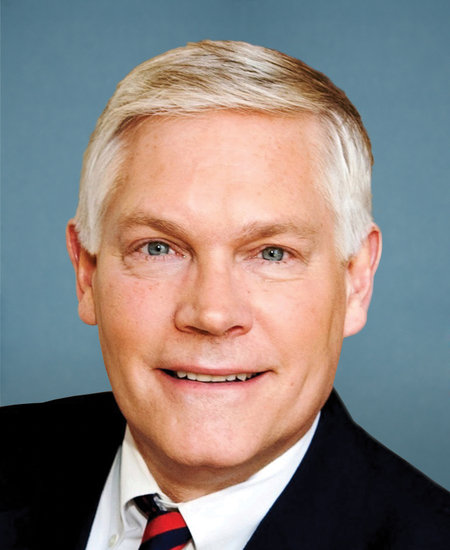
Rep. Pete Sessions
Sponsored bills
Maddy summaryThe Dental and Optometric Care Access Act of 2023 (DOC Access Act) requires health insurance plans covering dental and vision care to allow providers (like dentists and optometrists) to charge patients the usual and customary rate for uncovered services, with a specific rule limiting dental cleanings to the network fee even if it exceeds annual coverage limits. It prohibits plans from restricting providers' choices of laboratories or suppliers for patient care. This law directly affects dental and vision care providers and the health insurance plans that offer these services. The bill establishes concrete billing and coverage standards to improve access to necessary dental and vision care.
Maddy summaryThis bill amends the Fair Labor Standards Act to change how tipped workers' wages are calculated. It removes the previous requirement that tipped employees must "customarily and regularly receive more than $30 a month in tips" to qualify for the lower tipped wage rate. Instead, it requires that tipped workers' combined tips and cash wages must equal or exceed the standard minimum wage for each pay period. Employers can now choose the pay period length (daily, weekly, biweekly, etc.) for this calculation. The bill directly affects restaurant servers, bartenders, and other tipped service workers who earn tips.
Maddy summaryHR 140, the Protecting Speech from Government Interference Act, prohibits federal employees from using their authority to censor speech, particularly affecting individuals with pending applications (like grants or permits) or under investigation by the agency. It bans employees from advocating censorship of speech, suppressing speech of people involved in agency matters, or engaging in censorship while on duty in government spaces, wearing uniforms, or using government vehicles. Exceptions cover law enforcement actions against child pornography, human trafficking, or national security threats. Violations can result in penalties including removal, fines up to $10,000, or reprimands. The bill defines "censorship" broadly to include removing speech from platforms or adding disclaimers.

Protecting American Sovereignty Act This bill prohibits the federal government from implementing any obligations upon the United States that may be contained in a draft report by a World Health Organization (WHO) working group on strengthening the WHO's preparedness and response to health emergencies. This prohibition shall also apply to any related or successor reports and recommendations regarding pandemics.
Maddy summaryHR 1328, the Medical Device Nonvisual Accessibility Act of 2023, requires certain home-use medical devices (like blood pressure monitors and sleep apnea machines) to include nonvisual accessibility features - such as voice commands or audio feedback - by 2025. It directly affects blind or low-vision users who rely on these devices for independent, safe, and private care at home. The bill mandates that devices classified as Class II or III (and cleared via FDA processes) must meet accessibility standards ensuring equal usability for blind or low-vision individuals, with limited waivers allowed for manufacturers facing undue hardship. The FDA will develop and enforce these standards within two years, consulting with accessibility experts and blind users.
Maddy summaryHR 1210, the "Stop Fentanyl Border Crossings Act," amends the Public Health Service Act to give the Secretary of Health and Human Services new authority to block border entries. It directly affects countries with substantial fentanyl smuggling, allowing the Secretary to suspend the introduction of people and property from those nations if they determine it poses a serious public health danger. The key provision permits the Secretary to prohibit border crossings for a set period when fentanyl smuggling creates an increased risk of drugs entering the U.S., based on regulations they establish. This is a procedural change to existing public health law, not a new program.
Continuing Robust and Uninhibited Drilling and Exporting Act or the CRUDE Act This bill limits the President's authority to restrict the export of crude oil from the United States. Currently, the President may restrict the export of oil for up to a year if the President declares a national emergency; the restrictions apply to countries, persons, or organizations for reasons of national security; or the Department of Commerce finds and reports to the President that the export of crude oil has caused sustained material oil supply shortages or sustained oil prices significantly above world market levels and those shortages or price increases have caused or are likely to cause sustained material adverse employment effects. However, this bill only allows the President to make such restrictions if the restrictions apply to countries, persons, or organizations for reasons of national security; or the Department of Defense, the Department of Energy, and Commerce jointly make those findings and report them to the President and Congress.
Maddy summaryThe POWER Act of 2023 prevents the President from blocking or delaying new oil, gas, coal, or mineral leases on federal lands without explicit Congressional approval. It specifically stops executive actions that would delay or cancel permits for energy development on National Forests, public lands, the outer continental shelf, or energy-managed lands. The bill requires Congress to pass new laws if it wants to restrict energy leasing or withdraw land from development under existing federal land laws. This directly affects energy companies seeking to develop resources on federal property by limiting executive authority over lease approvals.
PPP Shell Company Discovery Act This bill requires the Internal Revenue Service (IRS) to compile a list of Paycheck Protection Program (PPP) loan recipients whose loans were forgiven under the program. Additionally, the IRS must compile (1) a list of such loan recipients who did not withhold payroll taxes in 2019, and (2) a list of loan such recipients for which the aggregate amount of PPP loans exceeded four times the greatest amount of wages paid by the recipient during a calendar month in 2019. The IRS must notify the Department of Justice when the lists are complete.