

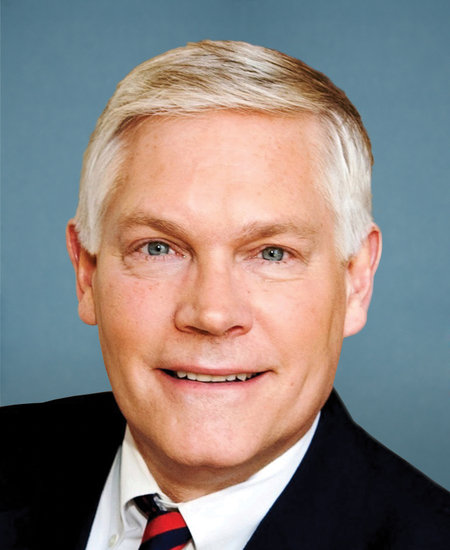
Photo of Pete Sessions
R United States House · District 17 · Texas On the 2026 ballot

Rep. Pete Sessions

Compare
Total votes
2,837
all sessions
Attendance
97%
77 missed
Higher than 89% of chamber peers
With party
95%
of cast votes
Higher than 83% of chamber peers
Bipartisan score
3%
crosses aisle rarely
Lower than 84% of chamber peers
Sponsored
924
bills & resolutions
Near the chamber average
Committees
6
assignments
924 bills and resolutions

Sponsored bills

Total
924
Primary
45
Co-sponsor
879
This page
924
matching current filters
Co-sponsor HR 1694
In committee · United States House · Co-sponsor
Emergency Care Improvement Act

Maddy summaryThe Emergency Care Improvement Act would permanently allow freestanding emergency centers (FECs) to receive Medicare and Medicaid reimbursement for emergency services. FECs are independently licensed facilities operating 24/7 with on-site physicians, providing emergency care equivalent to hospital-based emergency rooms. The bill sets payment rates for FECs equal to hospital outpatient department rates for higher-level emergency services, based on existing Medicare payment structures. This change would apply to over 110 FECs, mostly in Texas, which previously operated under a temporary pandemic waiver and demonstrated 21.8% cost savings to Medicare for similar care.

In committee Dec 17, 2024 1 co-sponsor
Co-sponsor HR 1617
In committee · United States House · Co-sponsor
Prevent Interruptions in Physical Therapy Act of 2023

Maddy summaryThe Prevent Interruptions in Physical Therapy Act of 2023 amends Medicare rules to allow physical therapists to use temporary replacement providers (locum tenens) for outpatient physical therapy services, aligning with existing provisions for physicians. This directly affects Medicare beneficiaries receiving physical therapy and physical therapy practices needing temporary staffing solutions during provider shortages. The bill updates the Social Security Act to extend the current physician locum tenens rule to physical therapists, ensuring continuity of care without requiring separate approval for temporary coverage. It applies to services furnished after the bill's enactment date.

In committee Dec 17, 2024 1 co-sponsor
Co-sponsor HR 977
In committee · United States House · Co-sponsor
Patient Access to Higher Quality Health Care Act of 2023

Maddy summaryThis bill repeals specific provisions from the Affordable Care Act and its 2010 amendment that restricted certain physician referrals to hospitals under Medicare. It directly affects hospitals and physicians who previously faced limitations on referring Medicare patients to facilities they owned or had financial ties with. The key mechanism restores the original rules that allowed such referrals without the prior restrictions, effectively undoing the 2010 changes. This is a procedural change to existing law, not a new policy.

In committee Dec 17, 2024 1 co-sponsor
Co-sponsor HR 2
Passed · United States House · Co-sponsor
Secure the Border Act of 2023

Maddy summaryThe Secure the Border Act of 2023 is a comprehensive immigration bill that focuses on strengthening border security, reforming asylum processes, and updating employment verification systems. The bill requires the immediate resumption of border wall construction, mandates specific staffing levels for Border Patrol agents, and establishes new technology investment plans for Customs and Border Protection. It also introduces stricter asylum eligibility rules, expands penalties for visa overstays, and creates a new employment eligibility verification system that requires employers to check worker authorization status. Additionally, the bill includes provisions for family detention standards, child repatriation policies, and increased funding for border security operations while prohibiting certain types of funding for organizations that facilitate illegal immigration.

Passed Dec 17, 2024 1 co-sponsor
Co-sponsor HR 713
In committee · United States House · Co-sponsor
Declaring War on the Cartels Act of 2023

Maddy summaryThis bill targets specific Mexican cartels (Sinaloa, Jalisco New Generation, Beltran-Levya, Gulf, Los Zetas, Tijuana, and La Familia Michoacana/Knights Templar) by increasing penalties for related crimes, prohibiting cartel members from using U.S. financial institutions, and creating a CARTEL Fund to distribute seized assets (75% to Homeland Security, 25% to Justice Department). It establishes new immigration barriers for cartel members and their family members, and imposes penalties on U.S. citizens who facilitate cartel activities. The bill also authorizes sanctions against foreign governments and individuals that support these cartels, including blocking transactions and denying visas. This legislation would directly affect cartel members, their associates, U.S. citizens facilitating cartel activities, and foreign entities supporting these organizations.

In committee Dec 17, 2024 1 co-sponsor
Co-sponsor HR 497
Passed · United States House · Co-sponsor
Freedom for Health Care Workers Act

Maddy summaryHR 497, the Freedom for Health Care Workers Act, eliminates a federal requirement for healthcare workers in Medicare and Medicaid programs to be vaccinated against COVID-19. The bill directly affects healthcare providers who treat patients under these federally funded programs by preventing the enforcement of the November 2021 HHS rule mandating staff vaccinations. Its key provision prohibits the Department of Health and Human Services from implementing, enforcing, or creating a similar rule regarding vaccination for these workers. This bill changes the policy by removing a specific vaccine mandate for providers in Medicare and Medicaid programs.

Passed Dec 17, 2024 1 co-sponsor
Co-sponsor HR 7
In committee · United States House · Co-sponsor
No Taxpayer Funding for Abortion and Abortion Insurance Full Disclosure Act of 2023

Maddy summaryThis bill bans federal funding for abortions in most cases, prohibiting the use of taxpayer money for abortion services or health insurance plans covering abortion. Exceptions allow funding for abortions resulting from rape, incest, or when a pregnancy endangers a woman's life. It requires health insurance plans sold through the Affordable Care Act (ACA) marketplaces to clearly disclose any separate costs for abortion coverage and prohibits ACA subsidies from being used for plans that cover abortion (except in the specified exceptions). The law directly affects federal programs like Medicaid, ACA marketplace plans, and insurers offering health coverage to individuals using federal subsidies.

In committee Dec 17, 2024 1 co-sponsor
Co-sponsor HR 152
In committee · United States House · Co-sponsor
Hearing Protection Act

Maddy summaryHR 152, titled the "Hearing Protection Act," actually addresses firearm silencers (suppressors), not hearing protection. The bill removes federal registration requirements for silencers by directing the Attorney General to destroy all existing silencer records within 365 days. It also preempts state laws that tax, register, or impose recordkeeping requirements on silencers, making such state rules unenforceable. Additionally, the bill updates tax codes to include silencers as taxable items and clarifies their definition in firearm laws.

In committee Dec 17, 2024 1 co-sponsor
Co-sponsor HJRES 142
In committee · United States House · Co-sponsor
Providing for congressional disapproval under chapter 8 of title 5, United States Code, of the rule submitted by the Department of Labor relating to "Retirement Security Rule: Definition of an Investment Advice Fiduciary".

Maddy summaryHJRES 142 is a congressional disapproval resolution targeting a Department of Labor rule issued on April 25, 2024. It seeks to block the "Retirement Security Rule: Definition of an Investment Advice Fiduciary" (89 Fed. Reg. 32122), which defined standards for financial advisors handling retirement accounts. If passed, this resolution would make the Labor Department's rule ineffective, directly affecting retirement plan advisors and financial institutions subject to the regulation. The bill uses a specific procedural mechanism under Title 5, U.S. Code, to nullify the rule without creating new law.

In committee Dec 16, 2024 1 co-sponsor
Co-sponsor HR 5089
In committee · United States House · Co-sponsor
Reducing Regulatory Burdens Act of 2023

Maddy summaryHR 5089, the *Reducing Regulatory Burdens Act of 2023*, removes the requirement for permits under the Clean Water Act when authorized pesticides are discharged into navigable waters from point sources (like agricultural fields). It directly affects pesticide applicators (e.g., farmers, pest control services) and regulators (EPA, states), eliminating a permit step for standard pesticide applications. The bill amends the Clean Water Act to state that permits are not needed for discharges of authorized pesticides or their residues, unless the discharge results from a FIFRA violation, involves stormwater, or falls under specific industrial categories. This simplifies regulatory compliance for routine pesticide use while maintaining exceptions for discharges linked to violations or certain industrial processes.

In committee Dec 16, 2024 1 co-sponsor
Showing 321 to 330 of 924 bills
Previous 1 … 32 33 34 … 93 Next