

Maddy summaryHRES 874 is a symbolic resolution expressing the House's support for designating November as "Prematurity Awareness Month." It does not create new laws or alter funding but urges the public, organizations, and communities to observe the month through events, promote awareness, and support preterm birth prevention programs. The resolution highlights statistics on preterm births (383,000 babies born preterm in 2021) and health disparities, but its sole action is endorsing the awareness designation. As a non-binding resolution, it has no direct impact on policy or affected individuals beyond raising public visibility.
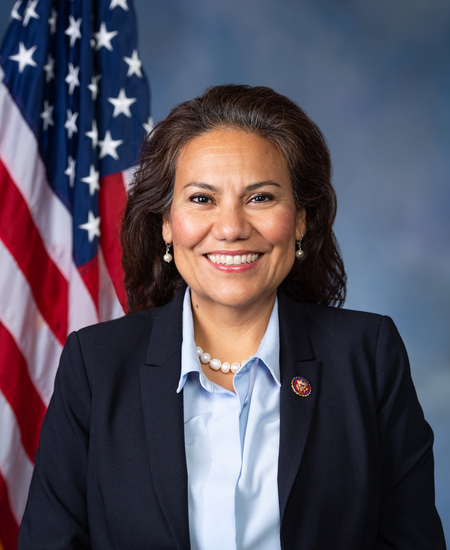
Rep. Veronica Escobar
Sponsored bills
Maddy summaryHRES 114 is a resolution proposing to expel Representative George Santos from the U.S. House of Representatives, citing constitutional authority under Article I, Section 5, Clause 2. It directly targets Santos, who was a sitting member of the House at the time of introduction. The resolution follows the House's constitutional power to expel members for misconduct, though it does not specify the alleged violations. This procedural resolution was referred to the Committee on Ethics for review.
Maddy summaryThis bill establishes a two-year pilot program within the Department of Veterans Affairs (VA) to improve data collection and analysis of suicides and suicide attempts by veterans occurring on VA property (e.g., at medical centers or facilities). It creates a cross-departmental working group - including staff from mental health, health care, benefits, and cemetery offices - to conduct root cause analyses, interview families, and standardize data collection through updated reports and a unified management system. The program requires annual briefings to Congress on findings and mandates annual VA reports starting in 2025 to track trends and recommend prevention strategies. Additionally, it directs the Comptroller General to assess the VA’s suicide prevention efforts, including staffing, policies, and organizational structure.
Maddy summaryHR 6451, the Mental Health Justice Act of 2023, provides $250 million in federal grants to states, tribes, and localities to hire mental health professionals as first responders for specific emergencies. It directs these professionals to replace police in situations involving mental health crises, substance use, or intellectual/developmental disabilities - such as when a 911 caller describes a mental health emergency or a first responder identifies someone needing mental health support. The bill requires grantees to train responders in de-escalation techniques, link individuals to community-based services (not incarceration), and report on outcomes like reduced arrests or use of force. It also mandates data collection on demographics and prevents funneling people into institutional settings, with annual reports to Congress on program effectiveness.
This resolution honors the service, sacrifice, and contributions of Texas veterans and their families. The resolution also expresses that the House of Representatives commits to working with the Department of Veterans Affairs to ensure that veterans are provided timely care and applicable benefits and compensation as a result of their service.
Maddy summaryThis bill requires military commanders to approve leave for active-duty service members and their dependents seeking abortion care without needing to disclose the specific procedure. It mandates reimbursement for travel costs to clinics providing abortion services when local access is unavailable and protects the privacy of those using this leave. The bill explicitly prohibits any negative consequences for service members who request or take such leave. It directly affects military personnel and their families by ensuring timely, private, and accessible abortion care without command interference.
Maddy summaryHRES 831 is a symbolic congressional resolution supporting October as "National Domestic Violence Awareness Month." It does not create new laws or allocate funding, but formally expresses the House of Representatives' support for the goals of raising awareness about domestic violence. The resolution urges Congress to continue highlighting domestic violence's impact and backing programs that prevent and address it. It directly affects public awareness efforts and serves as a non-binding statement of congressional support for victims and advocacy organizations.
Maddy summaryHR 5983, the Clean Water Act of 2023, redefines "protected water resources" under federal law to explicitly include all interstate and intrastate waters (such as intermittent and ephemeral streams), wetlands, and their tributaries. This directly affects federal agencies like the EPA, states managing water quality, and developers or landowners needing permits for activities near these waters. The bill eliminates the Supreme Court’s narrow "navigable waters" definition from Sackett v. EPA (2023), restoring protections for tens of millions of acres of wetlands and millions of miles of small streams. Key mechanisms require the EPA to annually review and adjust exclusions from protections based on scientific evidence, ensuring water bodies critical to drinking water, flood control, and ecosystems remain safeguarded.
Maddy summaryHRES 819 is a symbolic resolution recognizing the 5-year anniversary of the October 27, 2018, antisemitic attack at Pittsburgh’s Tree of Life Synagogue, which killed 11 people. It condemns antisemitism and references rising hate incidents, including the Anti-Defamation League’s 2022 report of record antisemitic activity (3,697 incidents). The resolution honors the victims, expresses solidarity with affected Jewish communities, and reaffirms the U.S. commitment to combatting hate and protecting religious freedom. As a procedural resolution (not a law), it has no binding effect but serves as a formal statement of congressional stance.
Maddy summaryHR 6079, the CHILD Labor Act, strengthens protections against child labor by defining "oppressive child labor" more clearly and expanding prohibitions on children under 18 working in dangerous occupations like mining, manufacturing, and meat processing. The bill requires Federal contractors and recipients of Federal financial assistance to prevent child labor throughout their supply chains, with new reporting requirements and significant penalties for violations including fines up to $750,000 per violation causing death or serious injury. It creates a new "child labor tag" system to identify goods produced with child labor and establishes a system for victims to seek compensatory and punitive damages. The bill also mandates regular reports to Congress on work-related injuries and deaths, with data collection to be conducted in consultation with the Department of Health and Human Services.