

Maddy summaryHR 3121, "Anna’s Law of 2025," requires federal grants to fund trauma-informed training for law enforcement and emergency medical personnel who handle sexual assault, domestic violence, and stalking cases. The training must cover how trauma affects victims’ behavior, prevent retraumatization during interactions, and teach victim-centered communication techniques. It mandates 8 hours of training for new recruits in law enforcement or EMT programs and 4 hours annually for existing staff. The bill also requires grant recipients to use diverse trainers and report annually to Congress on program effectiveness and survivor experiences. This policy directly affects law enforcement agencies, emergency medical services providers, and survivors interacting with these responders.
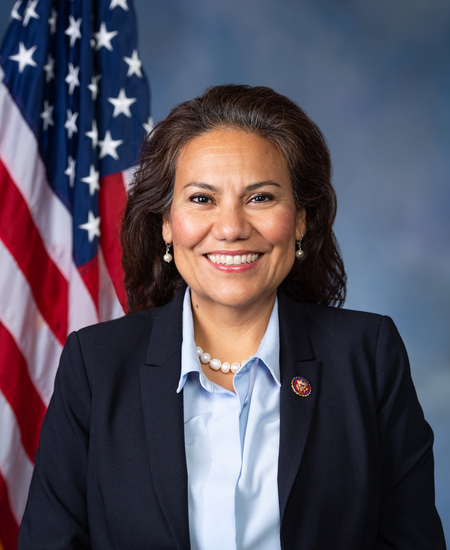
Rep. Veronica Escobar
Sponsored bills
Maddy summaryThe Equality Act (HR 15) amends federal civil rights laws to explicitly prohibit discrimination based on sexual orientation and gender identity in employment, housing, public accommodations, credit, and jury service. It expands existing protections under the Civil Rights Act of 1964 by adding sexual orientation and gender identity as protected characteristics under sex discrimination prohibitions. The bill clarifies that discrimination against LGBTQ people is a form of sex discrimination, consistent with the Supreme Court's Bostock decision, and adds specific definitions for gender identity and sexual orientation. This legislation directly affects businesses, employers, housing providers, financial institutions, and government entities that serve the public. The bill creates a more comprehensive legal framework to address discrimination that LGBTQ people face in multiple aspects of daily life.
Medicare for All Act This bill establishes a national health insurance program that is administered by the Department of Health and Human Services (HHS). Among other requirements, the program must (1) cover all U.S. residents; (2) provide for automatic enrollment of individuals upon birth or residency in the United States; and (3) cover items and services that are medically necessary or appropriate to maintain health or to diagnose, treat, or rehabilitate a health condition, including hospital services, prescription drugs, mental health and substance abuse treatment, dental and vision services, long-term care, gender affirming care, and reproductive care, including contraception and abortions. The bill prohibits cost-sharing (e.g., deductibles, coinsurance, and copayments) and other charges for covered services. Additionally, private health insurers and employers may only offer coverage that is supplemental to, and not duplicative of, benefits provided under the program. Health insurance exchanges and specified federal health programs terminate upon program implementation. However, the program does not affect coverage provided through the Department of Veterans Affairs or the Indian Health Service. The bill also establishes a series of implementing provisions relating to (1) health care provider participation; (2) HHS administration; and (3) payments and costs, including the requirement that HHS negotiate prices for prescription drugs. Individuals who are age 18 or younger, age 55 or older, or already enrolled in Medicare may enroll in the program starting one year after enactment of this bill; other individuals may buy into the program at this time. The program must be fully implemented two years after enactment.
Maddy summaryHR 3045, the West Bank Violence Prevention Act of 2025, imposes U.S. sanctions on foreign individuals and entities responsible for violence, displacement, or property destruction in the West Bank. It targets those directly involved in attacks on civilians, forced displacement, or property seizures, including settler leaders or officials of groups engaged in such activities. Key provisions require freezing assets of sanctioned individuals within U.S. jurisdiction and blocking their entry into the United States via visa restrictions. The law applies to foreign nationals meeting specific criteria outlined in the bill, not U.S. citizens or entities.
Maddy summaryThe CAP Act of 2025 creates a competitive grant program administered by the EPA to help eligible entities - such as local governments, tribes, and tribal organizations - develop climate adaptation plans. These plans must assess climate risks to communities, ecosystems, and infrastructure while prioritizing input from environmental justice communities (defined as areas with significant low-income, minority, or Indigenous populations facing climate impacts). Applicants must demonstrate inclusion of low-income communities, include specific risk assessments, and integrate plans with existing local strategies like hazard mitigation or land use plans. The program requires no matching funds from recipients and mandates that plans address both greenhouse gas reduction and adaptation measures. It directly affects communities vulnerable to climate change, particularly those designated as environmental justice communities under the bill.
Maddy summaryThe PIGS Act of 2025 requires that breeding pigs be housed in conditions allowing them to move freely and turn around, with a minimum of 24 square feet of space per pig starting December 31, 2025. This law directly affects pig producers raising breeding pigs (specifically females six months or older, or pregnant pigs), mandating changes to housing practices that currently use restrictive crates. The bill provides $10 million in federal funding to help producers comply, prioritizing independent farmers, and includes exceptions for transportation, veterinary care, and a short period before birth. It does not preempt stricter state animal welfare laws.
Maddy summaryHR 2185, the Mink VIRUS Act, prohibits fur farming of mink in the U.S. beginning one year after enactment (Section 2(a)). It requires painless mink termination methods meeting federal euthanasia standards and AVMA guidelines (Section 2(b)), with civil penalties of up to $10,000 per violation. The bill establishes a USDA payment program (Section 3) to compensate fur farm owners for compliance costs and the market value of their mink operations (valued as of the day before enactment), subject to restrictions on fund use and permanent land easements banning future fur farming. The law directly affects mink fur farm owners and operators, ending commercial mink farming while providing financial transition support.
Maddy summaryHR 2910, the Youth Workforce Readiness Act of 2025, establishes a federal grant program to fund community-based organizations in creating after-school and out-of-school-time workforce readiness programs for youth aged 6-18. The bill authorizes $100 million annually (2026-2030) to support activities like career pathway planning, paid work experiences (including apprenticeships), occupational skill training aligned with local job needs, and employer partnerships. It directly affects eligible youth - particularly those in underserved communities - and requires grantees to coordinate with schools, employers, and local workforce boards, while mandating youth councils to advise on program design. The program emphasizes measurable outcomes, including improved school attendance, skill development, and transitions to postsecondary education or employment.
Maddy summaryThe "You Earned It, You Keep It Act" (HR 2909) would exempt wages above $250,000 from Social Security taxes after 2025 and include income over $250,000 in Social Security benefit calculations. It applies to high-wage earners and self-employed individuals whose income exceeds this threshold, with special provisions for those receiving wages from multiple employers. The bill modifies how Social Security taxes are calculated by removing the tax on income above $250,000 and adjusts benefit formulas to count that income toward future payments. These changes would affect how Social Security taxes are paid and benefits are determined for high earners beginning in 2026.
Maddy summaryHRES 326 is a non-binding resolution designating April 10 as "Dolores Huerta Day" to honor the late labor and civil rights leader Dolores Huerta. It recognizes her foundational work co-founding the United Farm Workers, leading grape boycotts that secured union contracts, advocating for farm workers' safety, and championing women's rights and Latino political representation. The resolution has no policy impact or direct effect on any group, as it solely serves to commemorate Huerta's legacy. It was introduced by multiple House members in recognition of her contributions to civil rights and equality.