

Maddy summaryThis bill creates a new federal crime for assaulting law enforcement officers causing serious injury or death, with penalties up to 10 years in prison for serious injury and up to life for aggravated cases involving death, kidnapping, or attempted killing. It applies when offenses involve interstate travel, commerce, or target officers engaged in law enforcement duties. Federal prosecution requires Attorney General certification that state authorities cannot or will not handle the case, or that federal action is necessary for public safety. The law covers all law enforcement officers (state, local, and federal) who enforce criminal laws or detain individuals.
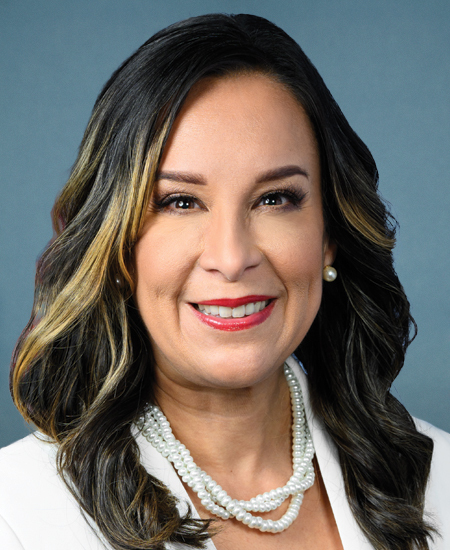
Rep. Monica De La Cruz
Sponsored bills
Prohibition of Agricultural Land for the People's Republic of China Act This bill requires the President to prohibit nonresident aliens, foreign businesses, and agents associated with China's government from (1) purchasing agricultural (including ranching) real estate located in the United States, or (2) participating in Department of Agriculture programs that are unrelated to food and safety regulatory requirements.
Maddy summaryThis bill helps new car dealers affected by pandemic-era supply chain disruptions by changing tax rules for inventory sales. It allows dealers using LIFO accounting to treat certain sales of unsold vehicles (liquidations) between March 2020 and December 2021 as "qualified" for tax purposes. Dealers can defer recognizing income from these sales and have until 2026 to replace the sold vehicles before potential tax adjustments apply. The provision specifically targets dealers who couldn't replenish inventory during the supply chain crisis.
Maddy summaryHR 712, the State Border Security Reimbursement Act of 2023, requires the federal government to reimburse states that spent over $2.5 billion on border security costs between 2013 and 2023. It directly affects states like Texas, which reported spending more than $3.2 billion on border security during that period, as documented in the bill's findings. The bill mandates that eligible states submit detailed expense reports within 180 days of enactment, and the federal government must reimburse these costs within one year. This policy aims to address states' financial burden from covering what Congress deems a federal responsibility, without creating new funding streams.
Maddy summaryThe HEAL Act (HR 603) requires the U.S. Holocaust Memorial Museum Director to study how public elementary and secondary schools teach about the Holocaust and related antisemitism. The study will examine curriculum requirements, teaching methods (like project-based learning), instructional materials, and assessment approaches across states and school districts. It specifically analyzes whether Holocaust education is mandatory, optional, or integrated across subjects, and how schools address antisemitism and genocide prevention. The resulting report, due within 180 days of the study or three years after enactment, will inform Congress but does not change current school policies. This is a data-gathering measure, not a policy mandate.
Protecting Life and Integrity in Research Act of 2023 This bill restricts research that uses human fetal tissue from an induced abortion. Specifically, it prohibits the Department of Health and Human Services from conducting or supporting such research. Additionally, the bill applies requirements on the research of transplantation of fetal tissue for therapeutic purposes to research on fetal tissue in general. The bill also prohibits soliciting or acquiring a donation of human fetal tissue from an induced abortion, other than for purposes of an autopsy or burial.
Maddy summaryHR 556, the 21st Century Dollar Act, requires the U.S. Treasury Secretary to develop and report to Congress on a strategy to maintain the dollar's role as the primary global reserve currency. The bill mandates a detailed report within 180 days of enactment, covering implementation measures, legislative recommendations, assessments of foreign digital currencies (especially China's renminbi), and risks to U.S. interests from international currency trends. The Treasury must also submit annual updates on this strategy and provide an assessment of China's currency policies and cross-border payment systems. The requirement expires 7 years after the bill becomes law. This bill directly affects the Treasury Department and Congress, focusing on concrete reporting obligations rather than new spending or regulations.
Maddy summaryThe Educational Choice for Children Act creates tax credits for individuals and corporations that contribute to scholarship granting organizations providing education scholarships. Individuals can claim a credit up to $5,000 or 10% of their income, while corporations can claim up to 5% of taxable income. The scholarships are available to students from households with income up to 300% of the area median income, and can be used for private school tuition, tutoring, and other educational expenses at elementary and secondary schools. The bill includes strict requirements for scholarship organizations to verify income, conduct audits, and prevent misuse of funds, while also prohibiting government control over these organizations and protecting private and religious schools from discrimination in the program. It establishes a $10 billion annual cap on the total tax credits available.
ATF Accountability Act of 2023 This bill establishes a federal statutory process for licensed gun dealers, importers, or manufacturers to appeal a ruling or determination by the Bureau of Alcohol, Tobacco, Firearms and Explosives.
Maddy summaryThis bill expands foreign investment review to cover U.S. agriculture by requiring transactions involving foreign control of agricultural businesses to undergo scrutiny by the Committee on Foreign Investment (CFIUS). It classifies agricultural supply chains as both critical infrastructure and critical technologies, directly affecting foreign entities seeking to acquire or influence U.S. farms, food production, and supply chains. The bill mandates annual reports from the Secretary of Agriculture and the Government Accountability Office on foreign investments in agriculture, including risks to food security and intellectual property. These provisions aim to mitigate potential threats to U.S. food supply chains from foreign adversaries through enhanced oversight.