

Maddy summaryHR 1719, the Honoring Our Fallen Heroes Act of 2023, establishes a presumption that certain cancers diagnosed in public safety officers (like police and firefighters) are work-related if linked to their duties. It defines 22 specific cancers (including lung, mesothelioma, and WTC-related cancers) as "exposure-related," allowing officers or their families to receive benefits without proving direct work connection, provided they were diagnosed within 15 years of leaving active service. The bill also creates a process for adding new cancers to the list based on scientific evidence, requiring the Bureau to review petitions and make decisions within 180 days. This applies to deaths or disabilities occurring on or after January 1, 2023, directly affecting officers who developed covered cancers during service.
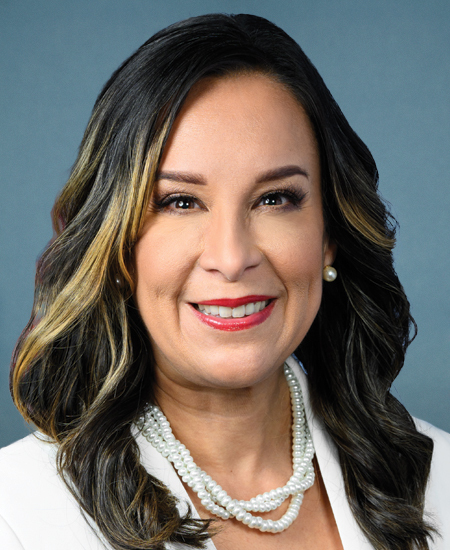
Rep. Monica De La Cruz
Sponsored bills
Maddy summaryHR 3433, the "Give Kids a Chance Act of 2024," requires pharmaceutical companies developing certain cancer drugs to conduct pediatric studies if the drugs target molecular pathways relevant to childhood cancers. It directly affects drug manufacturers submitting new applications for cancer treatments, particularly those combining previously approved adult cancer drugs or containing a single new active ingredient. The bill amends FDA regulations to mandate these pediatric investigations only when specific conditions are met, such as when a drug's molecular target is relevant to pediatric cancer growth. The FDA must issue implementing guidance within 12 months, and reports to Congress will track implementation and effectiveness starting 2 years after enactment.
Maddy summaryHRES 1485 designates the third Friday of September each year as "National POW/MIA Recognition Day" to honor prisoners of war and missing-in-action military personnel. The resolution expresses the House's support for this designation and encourages Americans to observe the day through community commemorations, displaying the POW/MIA flag, and performing acts of service for families of those affected. It does not create new laws or alter existing policies but builds on the existing National POW/MIA Flag Act (Public Law 116-67) that requires the POW/MIA flag to be flown on federal properties. The resolution focuses on symbolic recognition and public engagement rather than substantive policy changes.
Maddy summaryThis bill requires the Department of Housing and Urban Development (HUD) to include specific whistleblower protection clauses in certain contract modifications. HUD must make "best efforts" to add these clauses to contracts modified within 180 days of the bill's enactment, covering extensions, renewals, cost adjustments, or other significant changes. It directly affects HUD contractors whose agreements undergo these types of modifications, ensuring whistleblower protections apply to those contracts.
Maddy summaryHR 6033, the SPEAK Act of 2024, creates a task force within the Department of Health and Human Services to address telehealth barriers for patients with limited English proficiency (LEP). The task force - comprising healthcare providers, tech vendors, language services, and patient advocates - will assess current obstacles and develop best practices for improving access to telehealth platforms, video interpretation, and digital patient portals. Within 90 days of each annual report, the Secretary must publish a public website sharing these best practices, including guidance on integrating interpreters and making telehealth instructions accessible. The bill directly affects LEP patients and healthcare providers who serve them, aiming to make digital health tools more usable through concrete, evidence-based recommendations.
Maddy summaryThe JUDGES Act of 2024 authorizes new federal district court judgeships across multiple states to address rising case backlogs in the federal judiciary. It specifies new permanent judgeships for districts including California (multiple districts), Florida, Texas, Delaware, Indiana, Iowa, New Jersey, and New York, with implementation phased through 2035, and creates temporary judgeships for Oklahoma districts with specific vacancy rules. The bill authorizes funding for these positions and requires reports on judicial caseloads and detention space needs, while mandating public access to the Judicial Conference's judgeship recommendations. The bill directly affects federal district courts in the specified locations by increasing judicial staffing to handle growing case volumes.
Maddy summaryHR 705, the Veterans 2nd Amendment Protection Act, prohibits the Department of Veterans Affairs (VA) from automatically sending veterans' personal information to the national background check system solely because a fiduciary (like a guardian) manages their benefits. It specifically blocks the VA from sharing this data with the Justice Department without a court order finding the veteran a danger to themselves or others. This directly affects veterans who have a fiduciary appointed due to incapacity but are not deemed dangerous, preventing automatic barriers to firearm purchases based only on their fiduciary status. The bill amends 38 U.S.C. § 5501B to require judicial authorization before such data can be transmitted.
Maddy summaryThe Preventing the Financing of Illegal Synthetic Drugs Act (HR 1076) requires the Government Accountability Office (GAO) to study how criminal groups finance synthetic drug trafficking into the U.S., including the use of social media platforms and payment apps like CashApp. The study will examine business models, money laundering tactics, government efforts to disrupt these networks, and overlaps with human trafficking. It must be completed within one year of enactment, with findings reported to Congress. This bill does not change existing laws but aims to provide data to inform future policy decisions on combating illicit drug finance.
Maddy summaryHR 9561, the Pay Our Border Patrol and Customs Agents Act of 2025, ensures that U.S. Border Patrol Agents and Customs and Border Protection officers working during a government shutdown receive their salaries. It appropriates funds from the Treasury (not regular appropriations) to cover their pay during any lapse in discretionary funding in fiscal year 2025. This bill directly affects these specific federal employees who are required to work during shutdowns but would otherwise face pay delays. It is a procedural measure focused solely on payment mechanisms, not on changing work requirements or policy.
Maddy summaryThe context provided for HR 9146 does not include the full text of the amendment or the specific language added to Section 1703(d)(2) of title 38, U.S. Code. Without the actual provisions of the new subparagraph (F) titled "Continuity of care," it is impossible to describe the bill's key mechanisms, who it affects, or its concrete policy changes. The bill's title suggests it relates to veterans' health care continuity under the Veterans Community Care Program, but the details are omitted in the provided excerpt. Therefore, a complete and accurate summary cannot be generated from the available information.