

Maddy summaryHR 703, the Main Street Tax Certainty Act, makes a key tax deduction permanent for small business owners. It removes the temporary sunset provision (subsection (i)) from Section 199A of the tax code, ensuring the qualified business income deduction remains available for eligible small businesses. This change directly affects pass-through business owners (like S-corps, partnerships, and sole proprietorships) who currently qualify for this deduction. The permanent change takes effect for tax years starting after December 31, 2025.
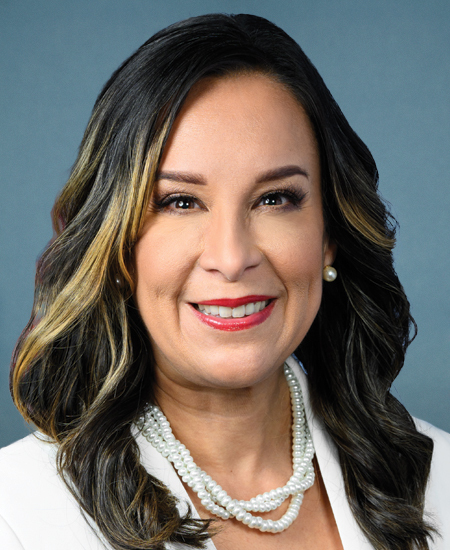
Rep. Monica De La Cruz
Sponsored bills
Maddy summaryHJRES 28 proposes a constitutional amendment to permanently fix the number of justices on the U.S. Supreme Court at nine. This would require ratification by 38 state legislatures (three-fourths of states) within seven years to become part of the Constitution. The amendment directly affects the structure of the Supreme Court, which has had nine justices since 1869 but could otherwise be altered by future congressional action. It does not change current court operations or create new laws, but instead seeks to make the nine-justice composition a permanent constitutional requirement.
Maddy summaryThis bill amends U.S. immigration law to deny entry to noncitizens convicted of or admitting to certain violent crimes, and to make them deportable. It directly affects noncitizens who have been convicted of or admitted to sex offenses, domestic violence, stalking, child abuse/neglect, or violating protection orders involving threats of violence. Key provisions add these offenses as grounds for denying entry (inadmissibility) under Section 212(a)(2) and as grounds for deportation (deportability) under Section 237(a)(2). The law specifies that domestic violence and protection order violations are included regardless of whether the jurisdiction received specific federal grant funding.
Maddy summaryHRES 50 is a symbolic resolution, not a bill with policy changes. It declares that states bordering Mexico have the constitutional right under Article I, Section 10 to defend against "paramilitary, narco-terrorist cartels" and criminal actors at the southern border. The resolution states that states like Texas, Arizona, New Mexico, and California were "invaded" or faced "imminent danger" from these groups from 2021-2024, and that the federal government failed to protect them. It makes no new laws or allocate funds - only asserts a constitutional interpretation for states to act unilaterally. (Note: This is a procedural resolution; no concrete policy change is enacted.)
Chiropractic Medicare Coverage Modernization Act of 2025 This bill expands Medicare coverage of chiropractic services to include all services provided by chiropractors, rather than only subluxation corrections through manual manipulation of the spine.
Maddy summaryHR 506, the "Security First Act," allocates $110 million annually (2025-2028) for border security grants to state/local law enforcement through the Operation Stonegarden program, funded by a new trust fund using seized monetary instruments at the border. It requires the State Department to assess whether major Mexican cartels (like Sinaloa and Jalisco New Generation) and gangs (like Tren de Aragua) meet criteria for foreign terrorist organization designation. The bill mandates a detailed technology needs analysis by DHS within one year, evaluating border security tech gaps, new surveillance systems, and infrastructure to address threats like drug trafficking and human smuggling. This analysis must be updated biannually and includes assessing privacy impacts, staffing needs, and coordination with Mexican law enforcement.
This joint resolution recognizes the sacrifice of veterans of the Vietnam War and commends them for their sacrifice to the United States. The joint resolution also urges the President to formally acknowledge the widespread mistreatment of such veterans as part of the ongoing Vietnam War Commemoration and issue a formal apology to the veterans and their families. Additionally, the joint resolution expresses urgent support for increased education to better reflect the sacrifice and treatment of Vietnam veterans.
Maddy summaryHR 465, the "Old Glory Only Act," requires all U.S. diplomatic and consular posts abroad to fly only the United States flag. The bill directs the Secretary of State to ensure no other flags are displayed over these government facilities. This is a procedural change affecting the physical display of flags at U.S. embassies and consulates worldwide, with no other policy provisions. It mandates a specific practice without altering other diplomatic protocols or affecting citizens or organizations.
Maddy summaryHR 424, the State Border Security Reimbursement Act of 2025, requires the federal government to reimburse states that spent over $2.5 billion on border security since 2014. It directly affects states like Texas, which has allocated over $3.2 billion for border security since 2008-2009 due to federal inaction. States meeting the spending threshold must submit expense reports within 180 days of the bill's enactment, and the federal government must reimburse these costs within one year of submission. The bill aims to address the financial burden on states that have funded border security efforts primarily the federal government's responsibility.
Maddy summaryHR 28, the *Protection of Women and Girls in Sports Act of 2025*, amends Title IX to prohibit federally funded schools from allowing male-identified individuals (based on biological sex at birth) to compete on women’s or girls’ sports teams. It explicitly states that such participation would violate federal civil rights law, with exceptions only for training/practice that doesn’t displace female athletes from roster spots, competitions, scholarships, or other benefits. The bill mandates a Comptroller General study to define "other benefits" lost by girls when males compete in single-sex sports, including impacts on psychological well-being, scholarship access, and safe participation environments. This bill directly affects all athletic programs receiving federal funding, requiring compliance with its biological-sex-based eligibility rules.