

Maddy summaryThis bill prohibits federal funding for two specific initiatives: the Justice40 Initiative (focused on delivering 40% of climate benefits to disadvantaged communities) and the American Climate Corps (a program announced in a September 2023 White House fact sheet to create climate jobs for young people). It blocks all federal budget allocations for these programs, directly affecting their implementation. The bill does not create new programs or alter existing laws, but prevents the use of taxpayer funds to support these two named initiatives.
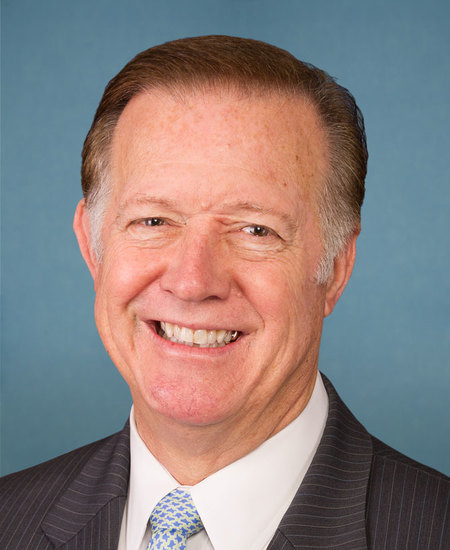
Rep. Randy K. Weber, Sr.
Sponsored bills
Maddy summaryThis resolution (HRES 859) is a ceremonial House measure honoring U.S. veterans on Veterans Day 2023. It formally recognizes veterans' service and sacrifice, calling on the American public to observe Veterans Day to acknowledge their role in protecting U.S. freedoms. The resolution does not create new policies, allocate funds, or affect specific groups - it is purely symbolic. It was introduced by 33 bipartisan House members and passed by the House without committee action.
Strengthen Taxpayer Rights Act of 2023 This bill prohibits Internal Revenue Service (IRS) employees, except for employees of the IRS Independent Office of Appeals, from participating in a conference brought by such office to resolve a taxpayer's disputed tax liability without the taxpayer's consent.
Maddy summaryThis bill requires the Secretaries of Defense and State to submit biannual reports to Congress assessing Ukraine's compliance with U.S. end-use monitoring for defense exports (under the Blue Lantern and Golden Sentry programs since February 2022). It mandates listing Ukrainian officials found violating these monitoring requirements, making them ineligible for U.S. visas, entry, or immigration benefits. The bill also requires immediate revocation of any existing U.S. visas held by listed individuals, regardless of when the visa was issued. It directly affects Ukrainian government officials involved in defense export monitoring violations, not the general public or broader policy.
Maddy summaryThis bill expands grounds for denying entry to foreign nationals under U.S. immigration law. It makes individuals inadmissible if they engage in activities related to espionage/sabotage (even if such activity would violate U.S. law if done domestically), violate export laws for sensitive goods/technology, or seek entry to oppose the U.S. government by force. It also bars spouses or children of inadmissible individuals if the qualifying activity occurred within the last five years. The changes apply directly to foreign nationals seeking visas or entry into the United States.
Maddy summaryThe SHIP Act imposes sanctions on foreign entities that knowingly handle Iranian petroleum, targeting those involved in port operations, transportation, refining, or ship-to-ship transfers of Iranian oil. Starting 90 days after enactment, the President must block assets, deny visas, and impose penalties on individuals or companies engaging in these activities, including family members or owners of sanctioned entities. It requires annual reports tracking Iran's oil exports, revenues, and key players like shipping companies and ports. The sanctions terminate if the President certifies Iran has stopped supporting terrorism and dismantled weapons programs.
Maddy summaryThis bill prohibits federal funding for Planned Parenthood Federation of America and its affiliates, clinics, or related entities. It directs that funds previously allocated to Planned Parenthood must instead support other providers - including community health centers, hospitals, and clinics - that offer women’s health services like contraception, cancer screenings, and prenatal care. The bill explicitly states it does not reduce overall federal funding for women’s health care or affect existing abortion-related funding restrictions in appropriations laws. It ensures continued access to these services through alternative providers, particularly in underserved communities.
Maddy summaryThis bill requires the Committee on Foreign Investment in the United States (CFIUS) to review certain new investments by China in U.S. real estate intended for manufacturing facilities. It specifically targets transactions where the Chinese government or entities it controls could gain control of a U.S. business operating on that property, such as through ownership stakes, board appointments, or ties to the Chinese Communist Party. The bill mandates that these investments must be reported to CFIUS before completion, affecting Chinese investors planning to build factories or similar facilities in the U.S. with government connections.
Maddy summaryHRES 798 is a House resolution condemning support for Hamas, Hezbollah, and other terrorist organizations at colleges and universities. It states such support may create a hostile environment for Jewish students, faculty, and staff, citing incidents like blaming Israel for the October 7 Hamas attack. The resolution urges the Secretary of Education to direct the Office for Civil Rights to investigate and take action where appropriate. This non-binding resolution expresses the House's position but does not create new law or policy changes.
Maddy summaryHR 6201, the Iranian Sanctions Enforcement Act of 2023, creates the Iran Sanctions Enforcement Fund to cover costs related to seizing and forfeiting property from Iran or its designated proxies (like Hezbollah or the Revolutionary Guard Corps) that violate U.S. sanctions. The fund, initially $150 million, pays for investigative costs, property management, informant rewards, and equipment for federal, state, and local agencies involved in enforcement. It also establishes an Export Enforcement Coordination Center within Homeland Security to improve interagency cooperation on enforcing export controls targeting Iran. The bill requires annual reports on fund usage and mandates repayment of the initial $150 million by 2034, unless waived for national security reasons.