

Monetary Metals Tax Neutrality Act of 2024 This bill exempts gains or losses from the sale or exchange of certain coins or bullion from recognition for income tax purposes. The exemption applies to gains or losses from the sale or exchange of (1) gold, silver, platinum, or palladium coins minted and issued by the Department of the Treasury; or (2) refined gold or silver bullion, coins, bars, rounds, or ingots that are valued primarily based on their metal content and not their form.
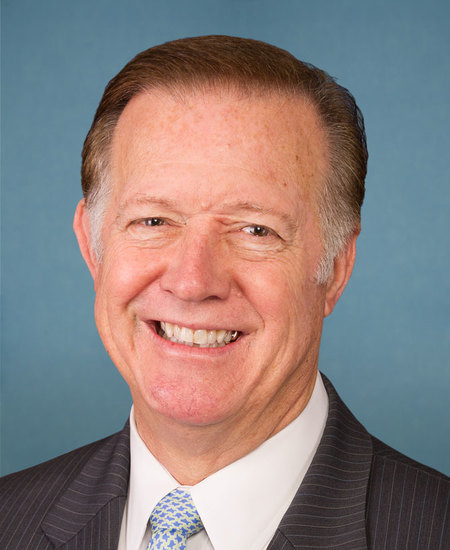
Rep. Randy K. Weber, Sr.
Sponsored bills
Maddy summaryThis bill designates the U.S. Postal Service facility at 2395 East Del Mar Boulevard in Laredo, Texas, as the "Lance Corporal David Lee Espinoza, Lance Corporal Juan Rodrigo Rodriguez & Sergeant Roberto Arizola Jr. Post Office Building" to honor these three military service members. It changes the official name of the building for all government references, maps, and records, but does not alter postal services or create new policy. The bill was enacted on May 7, 2024, following passage by both the House and Senate.
Maddy summaryHR 8231, the James Earl Jones Congressional Gold Medal Act, authorizes a Congressional Gold Medal to be awarded to actor James Earl Jones in recognition of his distinguished career in theater and film, and his role in advancing inclusion and equal opportunities for people of all backgrounds in the entertainment industry. The Treasury will strike the medal with an image and inscription of Jones, and may produce and sell bronze duplicates to cover costs, with proceeds deposited into the U.S. Mint's public enterprise fund. This bill serves as a ceremonial honor with no new legal requirements or policy changes.
Maddy summaryThis bill directs the Department of Education to use the International Holocaust Remembrance Alliance (IHRA) definition of antisemitism when enforcing Title VI of the Civil Rights Act in federal education programs. It clarifies that discrimination against Jewish individuals based on actual or perceived shared ancestry or ethnic characteristics may violate Title VI protections, requiring agencies to consider antisemitism intent during investigations. The law affects schools and universities receiving federal funds by guiding how they handle discrimination complaints related to antisemitism. It does not create new legal standards or expand the Department of Education's authority, as explicitly stated in the bill.
Maddy summaryHJRES 134 is a joint resolution seeking congressional disapproval of a Department of Labor rule titled "Improving Protections for Workers in Temporary Agricultural Employment." The bill targets the specific rule published in the Federal Register (89 Fed. Reg. 33898, April 29, 2024) that aimed to strengthen worker protections for temporary agricultural employees. If passed, this resolution would block the rule from taking effect, preventing the Department of Labor's new regulations from being implemented. The measure directly affects the rule's implementation, not the workers or employers it was designed to protect.
Maddy summaryThis resolution (HRES 1188) asks the President to issue an annual proclamation designating the month of May as "Fallen Heroes Memorial Month" to honor U.S. military members who died in service. It does not create new laws or benefits but requests the President to formally recognize this designation each year. The resolution urges Americans to reflect on the sacrifices of over 1.3 million fallen service members and their families, and to support veteran organizations. It is a symbolic gesture focused on commemoration, not policy change.
Maddy summaryHR 8208, the Stop the BIS Rule Act, blocks federal funding for the Bureau of Industry and Security (BIS) to finalize, implement, or enforce a proposed rule on firearms export controls. The rule, issued April 26, 2024 (89 Fed. Reg. 34680), aimed to enhance controls for firearms and related items. By prohibiting funds for this specific rule, the bill prevents the government from moving forward with the proposed regulations, which would have affected firearms exporters. The bill directly targets the BIS's ability to act on the rule, not the rule's content.
Maddy summaryThe Weather Act Reauthorization Act of 2023 reauthorizes and updates the Weather Research and Forecasting Innovation Act of 2017, focusing on improving weather forecasting capabilities across multiple domains. It authorizes annual funding for research and development in tornado, hurricane, and atmospheric river forecasting, with specific provisions for enhancing data collection from commercial sources and improving public communication of weather warnings. The bill establishes programs to improve data assimilation practices, support agricultural and water management applications, and enhance the National Oceanic and Atmospheric Administration's computing resources for weather modeling. This legislation directly affects the National Oceanic and Atmospheric Administration, its partners in the weather enterprise, and the public who rely on weather forecasts and warnings for safety and planning.
Maddy summaryHR 8147 repeals the Corporate Transparency Act, which required certain businesses (typically those with more than 20 employees) to report beneficial ownership details to the Treasury Department. This bill eliminates the requirement for companies to disclose who ultimately owns or controls them, directly affecting business owners and financial institutions that previously submitted this information. The bill also makes minor technical changes to Title 31 of the U.S. Code to remove references to the repealed provisions. The repeal would end the existing financial transparency reporting obligation for covered entities.
Maddy summaryHJRES 129 is a joint resolution seeking congressional disapproval of a federal rule issued by the Departments of Labor, Treasury, and Health and Human Services. The rule, published April 3, 2024, established guidelines for "Short-Term, Limited-Duration Insurance" plans - health insurance products sold for shorter periods than standard plans, often with fewer consumer protections. This resolution would nullify that rule under the Congressional Review Act, preventing it from taking effect. The action directly affects the regulatory framework governing these short-term health insurance plans and the insurers offering them.