

Maddy summaryHR 7142 (Alternatives to PAIN Act) requires Medicare Part D plans to cover non-opioid pain management drugs with no deductible and at the lowest copay level starting in 2025. It defines "qualifying non-opioid drugs" as FDA-approved medications that don’t act on opioid receptors (like certain NSAIDs or nerve pain treatments), excluding opioids and schedule I-III drugs. The bill prohibits Medicare plans from forcing patients to try opioids first (step therapy) or requiring prior approval for these non-opioid options. It directly affects Medicare beneficiaries needing pain management, especially those seeking alternatives to opioids for post-surgical or acute pain. The policy change aims to improve access to non-addictive pain treatments while preserving doctors' authority to prescribe medically appropriate care.
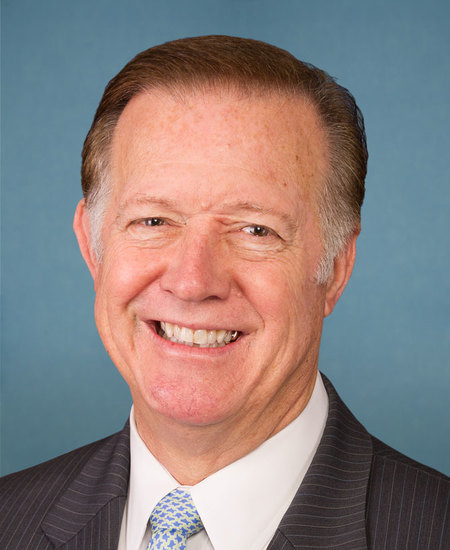
Rep. Randy K. Weber, Sr.
Sponsored bills
Maddy summaryThis bill amends Medicare eligibility rules to explicitly include occupational therapy as a qualifying service for home health care. It changes the Social Security Act to state that beneficiaries need "occupational, or speech therapy" (instead of only "speech therapy") to qualify for home health services. This change directly affects Medicare beneficiaries requiring occupational therapy at home, expanding access to this specific care. The policy takes effect for services provided on or after January 1, 2025.
Maddy summaryThis bill, HR 6860, protects patients with end-stage kidney disease (ESRD) who require dialysis by preventing health insurance plans from discriminating against them. It amends Medicare rules to prohibit plans from treating dialysis coverage differently than other medical services based on a patient’s ESRD diagnosis, need for dialysis, or any other factor. The bill clarifies that plans can still choose which dialysis providers to include in their networks but cannot deny or limit coverage for dialysis services solely because of the patient’s condition. It ensures Medicare remains the secondary payer for these services as intended, without forcing plans to cover specific providers.
Maddy summaryThis bill protects religious child welfare providers from losing government contracts or funding if they refuse to provide services conflicting with their sincerely held religious beliefs (e.g., certain foster care or adoption placements). It prohibits states and federal agencies from denying contracts, licenses, or renewals for this reason, and allows providers to sue for violations with recovery of damages and legal fees. States violating the law risk losing 15% of federal child welfare funding. The law applies to all federally funded child welfare services, including foster care, adoption support, and family preservation programs.
Maddy summaryThe Maximum Pressure Act (HR 6114) is a legislative proposal that would maintain and expand U.S. sanctions against Iran. The bill would codify existing sanctions, require Iran to meet 12 specific conditions before sanctions could be lifted (including ending support for terrorism, releasing hostages, and ending nuclear enrichment), and expand sanctions on Iran's Revolutionary Guard Corps and missile programs. It also establishes new reporting requirements for the U.S. government to monitor Iran's activities and the impact of sanctions. The legislation would require congressional review before any sanctions could be lifted or modified, preventing the executive branch from unilaterally easing restrictions.
Maddy summaryThis bill revokes a specific waiver determination related to Iran sanctions that the State Department submitted to Congress on September 11, 2023. It directly affects the application of certain sanctions under two 2012 laws: the National Defense Authorization Act (Section 1245(d)(5)) and the Iran Freedom and Counter-Proliferation Act (Sections 1244(i) and 1247(f)). The bill’s key provision is to nullify the September 11 waiver, meaning the underlying sanctions must now be enforced without exception. This is a procedural change that reinstates the original sanctions requirements, not a new policy.
Maddy summaryThe Revoke Iranian Funding Act of 2023 would cancel all existing U.S. licenses and exemptions allowing funds to be released to Iran for humanitarian purposes, including a $6 billion transfer from South Korea. It also rescinds a specific waiver issued in September 2023 that permitted such transfers. The bill requires the Treasury to submit a 30-day report to Congress detailing Iranian assets blocked by the U.S. and current sanctions exemptions related to Iran. This legislation directly restricts U.S. financial access for Iran and its designated entities, aiming to prevent funds from being diverted to support terrorism.
Maddy summaryHR 5967, the Unemployment Integrity Act of 2023, requires unemployment claimants to participate in job-seeking activities to maintain benefits. Specifically, it mandates that claimants respond to work-related requests, attend reemployment interviews, and comply with reasonable requests like drug testing or skills assessments. The bill also requires states to conduct a study on increasing random audits of unemployment claims and mandates that states adopt these new requirements to receive federal funds for extended unemployment benefits. These changes apply to weeks beginning one year after the bill's enactment, with adjustments for states holding biennial legislative sessions. The law directly affects individuals claiming unemployment benefits by linking eligibility to active job-seeking participation.
Maddy summaryHR 5208, the Health Care Provider Shortage Minimization Act of 2023, clarifies tax treatment for temporary healthcare workers. It amends the tax code to specify that locum tenens physicians and advanced care practitioners (like nurse practitioners or physician assistants) providing services for up to one year at a single site are not treated as employees for tax purposes. This means the workers themselves, the healthcare facilities hiring them, and payors avoid employer tax obligations related to these temporary services. The bill directly affects temporary healthcare providers and facilities seeking to fill staffing gaps without complex employment tax compliance.
Maddy summaryThis bill amends the Affordable Care Act and Medicaid/CHIP programs to deny health insurance subsidies, coverage, and related benefits to individuals with Deferred Action for Childhood Arrivals (DACA) status. Specifically, it excludes people lawfully present only due to the 2012 DHS memo granting deferred action from eligibility for ACA subsidies, Medicaid, and the State Children's Health Insurance Program (CHIP). The bill requires states to remove DACA recipients from enrollment in health plans and rescind any existing waivers that allowed such coverage. It directly affects approximately 800,000 DACA recipients who currently qualify for ACA subsidies and Medicaid/CHIP under existing rules.