

Maddy summaryHRES 402 is a symbolic House resolution honoring mothers and recognizing the significance of motherhood on Mother's Day. It affirms that mothers are women who raise children, supports policies recognizing mothers as mothers, and encourages the public to celebrate mothers' contributions to families and society. The resolution does not create new laws, allocate funds, or affect specific policies - it is a ceremonial gesture expressing support for traditional definitions of motherhood. It directly addresses the public and the House's recognition of mothers, with no concrete policy changes or impacts on individuals or programs.
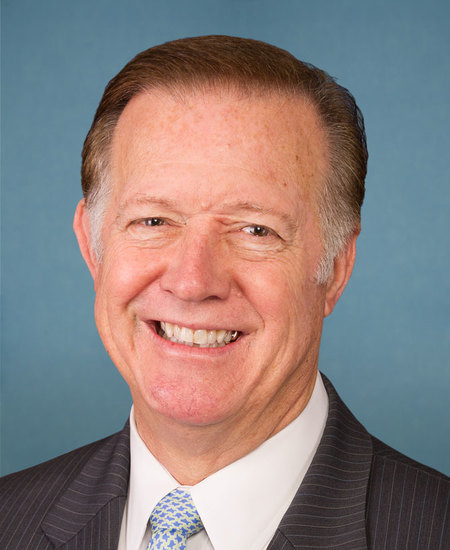
Rep. Randy K. Weber, Sr.
Sponsored bills
Maddy summaryThe Pregnancy.Gov Act requires the creation of a federal website, pregnancy.gov, to help pregnant and postpartum women find local resources. The website must allow users to search by ZIP code, filter services by distance (1-100 miles), and provide feedback on usability. It prohibits listing organizations that provide or support abortions (including abortion counseling, referrals, or financial support) and excludes such entities from receiving federal grants for resource aggregation. Within 180 days of launch, the government must report to Congress on website traffic, user experience, and gaps in available services, with multilingual access required.
Maddy summaryHRES 395 is a non-binding resolution (not a law) that establishes a symbolic "Bill of Rights" for U.S. law enforcement officers during internal investigations into alleged misconduct. It outlines specific procedural protections, including the right to have legal counsel present during interviews, the right to know investigation details in advance, protection from offensive language or threats during questioning, and the right to not face discipline for invoking the Fifth Amendment. The resolution aims to support officers by ensuring fair investigation processes while condemning calls to defund or dismantle police departments. It does not create new legal rights or change existing laws but encourages states to adopt similar protections for officers.
More Opportunities for Moms to Succeed Act or the MOMS Act This bill establishes requirements to enable the collection of certain child support during pregnancy, establishes grants for supportive services for women that promote alternatives to abortions, and requires the Department of Health and Human Services (HHS) to establish a website with pregnancy resources other than those about abortions. Specifically, the bill requires states to apply child support obligations to the time period during pregnancy under the Child Support Enforcement program. (The program enables states to receive federal matching funds for expenses related to child support enforcement activities and related services.) Such child support applies at the request of the mother and may be applied retroactively. Also, HHS must award grants to nonprofits to provide pregnant and postpartum women, and women parenting young children, with services or information on topics including health care (excluding abortions), child care, and employment assistance. It also requires HHS to provide grants to health care providers in rural or medically underserved areas, as well as tribal areas, to purchase equipment enabling telehealth visits for prenatal and postnatal care (e.g., monitoring devices). Additionally, the bill requires HHS to establish a public website to inform pregnant and postpartum women, and women parenting young children, of nearby services and resources on topics including health care, material or legal support, and alternatives to abortion. States must, as a condition of receiving certain federal funds, provide lists of nonprofit child placement agencies for potential inclusion on the site.
Maddy summaryHR 3208, the "No Official Palestine Entry Act of 2025," prevents U.S. funding for United Nations agencies that grant Palestine any status, rights, or privileges beyond its current observer status. The bill amends two existing laws to replace the phrase "full membership" with "any status, rights, or privileges beyond observer status" in funding restrictions. This directly affects U.S. government decisions on contributing to UN agencies if Palestine's standing is upgraded. The policy change specifically targets funding eligibility, not direct impacts on Palestinian citizens or officials. The bill explicitly excludes Taiwan from its provisions.
Maddy summaryHR 3220 establishes a "quantum sandbox" program to accelerate near-term quantum technology applications. The bill requires the Commerce Secretary, working with NIST, to create a public-private partnership focused on developing and testing quantum computing, communication, and sensing solutions that can be deployed within 24 months. This program will engage industry groups, national labs, and research centers to break down barriers to accessing quantum hardware for practical uses. The goal is to deliver tangible benefits to U.S. businesses and consumers through faster innovation in quantum applications.
Maddy summaryThis bill requires the U.S. President to identify and sanction individuals involved in "involuntary harvesting of organs" in China by blocking their U.S. property and banning their entry. It mandates an annual list of designated persons (submitted to Congress) and imposes sanctions like visa restrictions and asset freezes under the International Emergency Economic Powers Act. Exceptions cover humanitarian aid, national security activities, and UN-related travel. The sanctions expire after 5 years, and the bill also requires a report on China's organ transplant practices and whether Falun Gong persecution meets atrocity definitions. The bill directly targets Chinese officials/entities linked to organ harvesting claims, not Falun Gong practitioners.
Maddy summaryHRES 373 is a symbolic resolution expressing support for designating May as "Fallen Heroes Memorial Month" to honor U.S. military service members who died in service. It urges the President to issue an annual proclamation designating May as this commemorative month, recognizing over 1.3 million fallen service members and calling on Americans to reflect on their sacrifice. The resolution does not create new laws or requirements but formally requests a presidential proclamation to honor these veterans and their families. It directly affects the President (who would issue the proclamation) and the public (who are encouraged to participate in remembrance). This is a non-binding ceremonial gesture, consistent with existing Memorial Day observances.
Maddy summaryHR 3134, the Emergency Care Improvement Act, allows Medicare and Medicaid to reimburse freestanding emergency centers (FECs) for specific emergency services. The bill defines FECs as 24/7 facilities meeting state emergency care standards, with physician staffing, hospital referral agreements, and quality programs - currently operating in over 118 locations, primarily in Texas. It amends coverage rules to include FECs under Medicare Part B and Medicaid for "specified emergency services" (excluding certain evaluation codes), sets payment rates based on outpatient department standards, and extends EMTALA emergency care laws to cover these centers. This policy change directly affects FECs and Medicare/Medicaid beneficiaries by enabling reimbursement for emergency care previously excluded from coverage.
Maddy summaryThis bill requires Medicare to only cover nerve conduction studies and needle electromyography tests at facilities meeting specific quality standards. To qualify, facilities must be accredited by an organization that verifies they have a quality program, use approved equipment, ensure staff have proper training, and interpret results on-site during procedures. Starting 3-4 years after enactment, Medicare will not pay for these services at non-compliant facilities. The bill also establishes an advisory committee to help develop and update these standards, aiming to improve care quality and reduce fraud.