

Mahsa Amini Human rights and Security Accountability Act or the MAHSA Act This bill requires the President to impose property- and visa-blocking sanctions on certain persons (individuals and entities) affiliated with Iran. The President must make determinations about whether certain existing sanctions apply to specified persons and impose the applicable sanctions, including determinations concerning (1) the Supreme Leader of Iran and any official in the Office of the Supreme Leader of Iran, (2) the President of Iran and any official in the Office of the President of Iran, and (3) any entity overseen by the Office of the Supreme Leader of Iran which is complicit in supporting human rights abuses or terrorism.
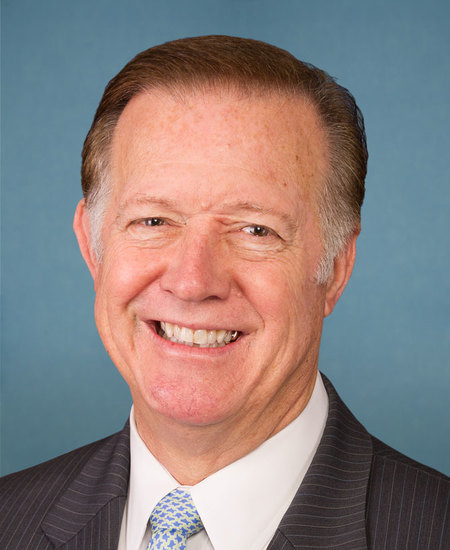
Rep. Randy K. Weber, Sr.
Sponsored bills
Presidential Budget Accountability Act This bill restricts the use of federal funds for presidential travel if the President's budget is not submitted to Congress by the first Monday in February as required by law. Specifically, if the President's budget is not submitted to Congress on or before the first Monday in February of a year, federal funds may not be used for the travel expenses of the President during the period beginning on the first Tuesday of February of that year and ending on the date the budget is submitted.
Presidential Accountability for Yearly Submission of The United States' Budget Act or the PAYSTUB Act This bill restricts the use of federal funds for the salaries or expenses of political employees if the President's budget is not submitted to Congress by the first Monday in February as required by law. Specifically, if the President's budget is not submitted to Congress on or before the first Monday in February of a year, federal funds may not be used for the salary or expenses of any political employee during the period beginning on the first Tuesday of February of that year and ending on the date the budget is submitted. On the earliest possible date after the President's budget is submitted, political employees whose salaries or expenses were not paid during a period in which the President's budget had not yet been submitted must be paid for that period.
Stop the Sexualization of Children Act This bill prohibits the presentation of sexually oriented materials to children under the age of 10. The bill defines sexually oriented material as any (1) depiction or description of sexual activity; (2) lewd or lascivious depiction or description of human genitals; or (3) topic involving gender identity, gender dysphoria, transgenderism, sexual orientation, or related subjects. Specifically, the bill prohibits (1) the use of federal funds to develop, implement, facilitate, or fund any sexually oriented program, event, or literature for children under the age of 10; and (2) the use of federal facilities or properties to host or promote such programs, events, or literature. The bill grants a parent or guardian a private right of action against a government official, government agency, or private entity that violates this bill. Additionally, the bill prohibits federal agencies from disbursing federal funds to a government agency or private entity for three fiscal years if the agency or entity has received two or more injunctions for violations of the bill in a five-year period.
State Immigration Enforcement Act This bill authorizes state and local governments to enact and enforce laws that penalize conduct prohibited under federal immigration law. Such state and local laws may only impose civil and criminal penalties that do not exceed the penalties imposed by federal law. The bill also revokes a federal law that preempts (blocks) state and local laws that impose civil or criminal penalties for employing non-U.S. nationals who are not authorized to work in the United States.
Combating the Persecution of Religious Groups in China Act This bill expresses the sense of Congress that the United States should promote religious freedom in China and makes statements of policy related to such freedom. In particular, the bill states that it is U.S. policy to consider senior Chinese government officials who are responsible for the persecution of Christians or other religious minorities in China to have committed (1) a gross violation of internationally recognized human rights for the purpose of imposing certain sanctions, and (2) a particularly severe violation of religious freedom for the purpose of determining whether such an individual is admissible into the United States.
Healthcare Freedom Act of 2022 This bill expands the availability of health savings accounts. It renames such accounts as health freedom accounts and allows all individuals to receive increased tax deductions for contributions to such accounts. The term qualified medical expenses is expanded to include costs associated with direct primary care, health care sharing ministries, and medical cost sharing organizations. The bill also excludes employer contributions to health freedom accounts from employee gross income for income tax purposes.
Family and Small Business Taxpayer Protection Act This bill rescinds unobligated amounts appropriated to the Internal Revenue Service by the Inflation Reduction Act of 2022 for its enforcement and other activities.
End Lockdowns and Vaccine Mandates Act This bill prohibits a federal, state, or local government from placing restrictions on opening, remaining in, or entering a place of business (i.e., lockdowns) as part of that government's response to prevent the spread of communicable diseases or from requiring vaccinations in connection with employment.
Nuclear Assistance for America's Small Businesses Act This bill provides assistance to eligible small businesses that seek to engage in the research, development, and deployment of advanced nuclear reactors. Upon the request of small businesses, the Nuclear Regulatory Commission must delay collecting a certain portion of application fees for construction permits, operating licenses, or combined licenses for advanced nuclear reactors.