

Ending Catch and Release Act of 2022 This bill changes the treatment of certain non-U.S. nationals ( aliens under federal law) without lawful immigration status, including by prohibiting the release of asylum seekers into the United States while their cases are pending. The Department of Homeland Security (DHS) may not (with some exceptions) release an individual who is not clearly entitled to admission into the United States while the individual's case is pending, even if the individual is an asylum seeker. DHS may instead detain the individual or return the individual to a neighboring country in certain situations. The bill also expands expedited removal from the United States (i.e., removal without further hearing or review) to include individuals present in the United States without being admitted, with certain exceptions. Under current law, individuals are subject to expedited removal if they lack proper documentation or obtained an immigration benefit through fraud; such individuals are still subject to expedited removal under the bill. The bill also modifies the standard for establishing a credible fear of persecution to avoid expedited removal. Generally, an asylum seeker may avoid expedited removal if an asylum officer finds such a credible fear. Under this bill, an officer may find credible fear if it is more likely than not the individual can establish their eligibility for asylum, whereas under current law, the officer may find credible fear if there is a significant possibility that the individual can establish their eligibility.
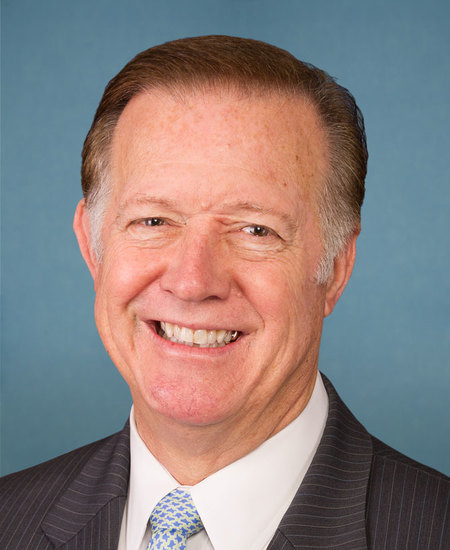
Rep. Randy K. Weber, Sr.
Sponsored bills
Justified Action for Securing Our Nation Act or the JASON Act This bill authorizes the Department of Homeland Security (DHS) to suspend the entry of all non-U.S. nationals ( aliens under federal law) or any class of non-U.S. nationals for up to 60 days, if DHS determines that allowing the entry of such individuals would be detrimental to the United States. The bill also establishes that in certain situations, it shall be presumed to be detrimental to allow the entry of any non-U.S. national into the United States, such when the increase in the number of DHS apprehensions at land borders exceed certain thresholds.
Preventing Underhanded and Nefarious Iranian Supported Homicides Act of 2022 or the PUNISH Act of 2022 This bill extends sanctions and national emergencies related to Iran established by specified executive orders and limits the authority of the President to waive sanctions related to Iran. The bill requires the Department of State to periodically report whether Iran or any foreign person has supported specified activities, including murder or politically motivated detention in Iran of a U.S. citizen.
Protect Pregnancy Care Centers Act of 2022 This bill directs the Inspectors General of the Department of Justice and the Department of Homeland Security to report to Congress on domestic violent extremism against pregnancy centers. Such report shall include criteria for opening, managing, and closing investigations related to domestic violent extremism; information sharing relating to domestic violent extremism within and between the federal government, state, local, tribal, territorial, and foreign governments, specified congressional committees, nongovernmental organizations, and the private sector; all incidents of domestic violent extremism against pregnancy centers from May 1, 2022, through the date of this bill's enactment; and a recommendation as to criteria to be utilized in establishing a potential program to make grants to pregnancy centers for purposes of enabling grantees to prevent, prepare for, protect against, and respond to domestic violent extremism, and a report on current federal programs and federal funding streams available to pregnancy centers for such purposes.
Protecting Kids from Candy-Flavored Drugs Act This bill establishes enhanced criminal penalties for certain federal drug offenses involving the manufacture or distribution of candy-flavored controlled substances or similar products for minors. Specifically, the bill imposes enhanced criminal penalties for a federal drug offense that involves manufacturing, creating, distributing, dispensing, or possessing with intent to distribute a controlled substance listed in schedule I or II that is combined with a candy or drink, marketed to appear similar to a candy or drink, or modified by flavoring or coloring to appear similar to a candy or drink. To be subject to an enhanced penalty, the individual must have knowledge or reasonable cause to believe that the controlled substance will be distributed, dispensed, or sold to an individual who is under 18 years of age.
Protecting Pain-Capable Unborn Children from Late-Term Abortions Act This bill establishes a new criminal offense for performing or attempting to perform an abortion if the probable gestational age of the fetus is 15 weeks or more. A violator is subject to criminal penalties—a fine, a prison term of up to five years, or both. The bill provides exceptions for an abortion (1) that is necessary to save the life of the pregnant woman, or (2) when the pregnancy is the result of rape or incest. A physician who performs or attempts to perform an abortion under an exception must comply with specified requirements. A woman who undergoes a prohibited abortion may not be prosecuted for violating or conspiring to violate the provisions of this bill.
Bureaucrats to the Border Act This bill renames the DHS Volunteer Force of the Office of the Chief Human Capital Officer of the Department of Homeland Security as the DHS Mission Support Force. It also requires new employees of the Internal Revenue Service (IRS) to serve in a 30-day detail with U.S. Customs and Border Protection or U.S. Immigration and Customs Enforcement to assist with immigration proceedings at the southern border; the bill applies to new IRS employees who are hired as a result of recent funding increases for IRS enforcement activities.
Governing Unaccredited Representatives Defrauding VA Benefits Act or the GUARD VA Benefits Act This bill imposes criminal penalties and/or fines on individuals for directly or indirectly soliciting, contracting for, charging, or receiving any unauthorized fee or compensation with respect to the preparation, presentation, or prosecution of any claim for Department of Veterans Affairs benefits. The attempted commission of such offenses is also punishable by fine or imprisonment.
Protect Children's Innocence Act This bill places restrictions on the provision of gender affirming care. Gender affirming care includes performing surgery, administering medication, or performing other procedures for the purpose of changing the body of an individual to correspond to a sex that differs from the individual's biological sex. Specifically, the bill makes it a felony to perform any gender affirming care on a minor and it permits a minor on whom such care is performed to bring a civil action against each individual who provided the care. Additionally, the bill prohibits the use of federal funds for gender affirming care or for health insurance that covers such care. Such care may not be provided in a federal health care facility or by a federal employee. The bill also prohibits qualified health plans from including coverage for gender affirming care. Further, plans that include coverage for such care are not eligible for federal subsidies. Finally, the bill prohibits institutions of higher education from offering instruction in gender affirming care. It also makes any non-U.S. national ( alien under federal law) who performs gender affirming care on a minor deportable and inadmissible to the United States. The restrictions under this bill do not apply to the provision of care under certain circumstances such as when an individual does not have normal sex chromosome structure, sex steroid hormone production, or sex steroid hormone action.
Advanced Border Coordination Act of 2022 This bill requires the Department of Homeland Security to establish at least two Joint Operations Centers along the U.S.-Mexico border. The centers shall provide centralized operations hubs for (1) coordinating operations between federal, state, local, and tribal agencies as needed; and (2) coordinating and supporting border operations, including detecting criminal activity, such as activity related to transnational criminal organizations and illegal border crossings.