

Declaring War on the Cartels Act of 2022 This bill enhances the term of federal imprisonment for members of certain transnational criminal cartels (i.e., Mexican cartels) who are repeat offenders. It also establishes penalties for U.S. banks and foreign governments that support or otherwise have dealings with these cartels. Specifically, cartel members are subject to an additional 10 to 20 years imprisonment if they are convicted of certain federal crimes (e.g., crimes of violence, fraud, or sexual exploitation) and have been previously convicted of similar crimes (including at the state or local level) within the last five years. Any U.S. national who is convicted as an accessory to such crimes is also subject to up to 15 years of additional imprisonment. The bill also prohibits cartel members from using U.S. banks to conduct business and subjects any related assets to federal seizure. Banks that intentionally do business with cartel members are subject to civil penalties. Additionally, the bill (1) bars noncitizen cartel members and their immediate family from admission into the United States, (2) authorizes sanctions against foreign governments and persons (individuals or entities) that support cartel activity, and (3) requires certain federal agencies to work with foreign governments on combatting cartels. The bill applies to members of the following cartels: The Sinaloa Cartel, The Jalisco New Generation Cartel, The Beltran-Leyva Cartel, The Gulf Cartel, The Los Zetas Cartel, The Tijuana Cartel, and The La Familia Michoacána/Knights Templar Cartel.
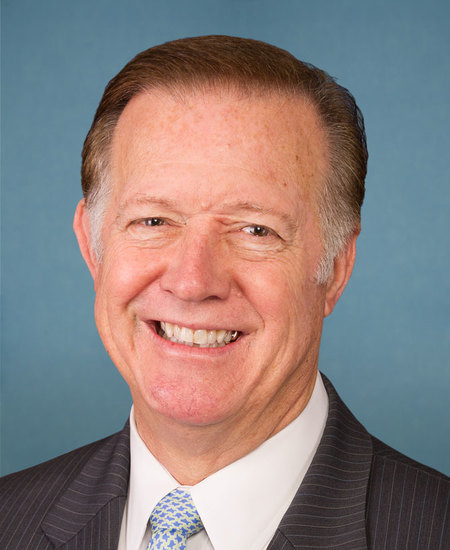
Rep. Randy K. Weber, Sr.
Sponsored bills
Prison Staffing Reform Act of 2022 This bill requires the Bureau of Prisons (BOP) to (1) complete (through an external entity) a comprehensive review of staffing across the BOP, and (2) implement a plan for filling vacancies.
This joint resolution nullifies the final rule submitted by the Department of Homeland Security titled Public Charge Ground of Inadmissibility published on September 9, 2022. The 2022 final rule nullified an August 14, 2019, final rule. The 2019 final rule made it more likely that a non-U.S. national ( alien under federal law) would be denied admission or lawful permanent resident status because that individual is likely to become a public charge (i.e., receive certain public benefits). This joint resolution restores into effect the nullified 2019 final rule.
This joint resolution nullifies the interim final rule submitted by the Department of Justice and the Department of Homeland Security and published on March 29, 2022, concerning procedures for the consideration of asylum claims and other related issues. (Among other changes, the interim final rule requires an asylum seeker subject to expedited removal to be screened by an asylum officer for a credible fear of persecution or torture, rather than a credible fear of persecution, reasonable possibility of persecution, or reasonable possibility of torture.)
This joint resolution proposes a constitutional amendment that prohibits the U.S. government from increasing its debt except for a specific purpose by a law adopted by three-fourths of the membership of each chamber of Congress.
This resolution declares that critical race theory is a form of Marxist ideology, is counter to the U.S. form of government, and poses a threat to the country, its citizens, and the free world.
This resolution expresses support for the Supreme Court's holding in Dobbs v. Jackson Women's Health Organization (that there is no constitutional right to abortion). The resolution also applauds the courage of the Justices for standing by their allegiance to the Constitution and the legitimacy of the Supreme Court, and it expresses a commitment to supporting policies that continue to protect all life.
Maddy summaryHRES 1183 is a non-binding House resolution condemning domestic terrorist violence targeting religious organizations and pregnancy support groups. It specifically references multiple recent incidents of vandalism and arson against such facilities - including pregnancy centers and churches - occurring after the leak of a Supreme Court abortion decision. The resolution urges the Department of Justice, FBI, and National Security Council to investigate and prosecute these attacks and update domestic terrorism strategies to prevent future violence. As a symbolic measure, it does not create new laws but formally expresses the House’s stance against targeting these groups.
This resolution expresses the sense of the House of Representatives that (1) for purposes of federal law, a person's sex means the person's biological sex at birth; and (2) distinctions between the sexes are justified in certain settings, laws, and policies.
Maddy summaryThis resolution designates the week of May 1-7, 2022, as "National Correctional Officers Week" to recognize correctional officers' service. It expresses House support for the observance and honors correctional officers nationwide for their role in maintaining safety within correctional facilities. The resolution highlights their responsibilities in protecting public safety, managing inmate care, and working in high-risk environments. It does not create new laws, policies, or funding but serves as a symbolic gesture of appreciation for correctional officers' contributions.