

Reducing Barriers for Military Voters Act This bill requires the Department of Defense (DOD) to develop a plan for providing end-to-end electronic voting services (e.g., services for registering to vote and returning a ballot) in participating states for absent uniformed service members who are deployed or mobilized in locations with limited or no postal service. Specifically, DOD must develop the plan by consulting with state and local election officials. Further, the plan must include (1) methods to ensure that voters have the opportunity to verify that their ballots are received and tabulated, (2) methods to generate a verifiable and auditable vote trail, and (3) an assessment of whether commercially available technologies may be used to carry out the plan. DOD must implement the plan for a trial group of voters in participating states for the 2024 federal elections. The plan must be implemented for all voters in participating states for the 2026 federal elections and subsequent years.
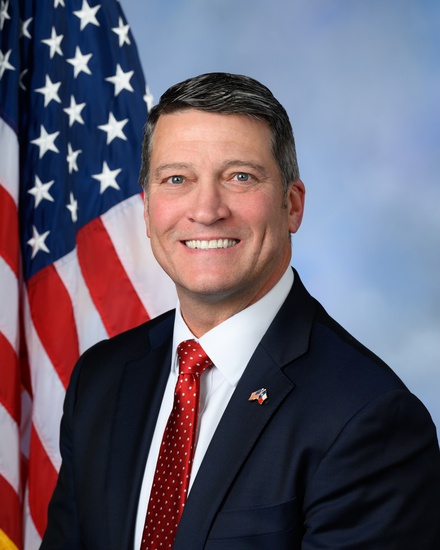
Rep. Ronny Jackson
Sponsored bills
Increasing Access to Osteoporosis Testing for Medicare Beneficiaries Act of 2021 This bill specifies that certain Medicare payment rules applicable to imaging services shall apply to dual-energy x-ray absorptiometry services used in bone mass scans beginning in 2022. The Centers for Medicare & Medicaid Services must establish national minimum payment amounts for such services.
Stop Cancel Culture from Degrading Honor Act This bill prohibits the rescission of a military decoration after 10 years have passed since it was awarded unless the award was based on fraud or other misinformation or the individual awarded the decoration is prohibited from interment memorialization in the National Cemetery Administration of the Department of Veterans Affairs or Arlington National Cemetery.
Iran China Accountability Act This bill prohibits the use of funds to enter into any negotiation with Iran regarding an Iran nuclear agreement until the President makes specified certifications concerning the actions of China and Iran. Specifically, the President must certify that China has ceased incarcerating Uighur individuals in the Xinjiang region. Additionally, the President must certify that, among other actions, Iran has terminated all agreements involving the receipt of funds from China and all ties and transfer of cash to Iranian proxy forces, including Hamas. Further, any Iran nuclear agreement that the United States enters into must certify the destruction of any and all Iranian nuclear and missile capabilities, weapons, infrastructure, chemical weapons, and offensive cyber activity. Such agreement shall be deemed a treaty requiring advice and consent of the Senate.
Permanency for Audio-Only Telehealth Act This bill expands coverage of telehealth services under Medicare. Specifically, the bill permanently removes geographic restrictions on originating sites (i.e., the location of the beneficiary). It also permanently expands coverage to include audio-only services for evaluation and management and behavioral health services; beneficiaries must have received in-person or video services during the preceding three-year period.
Home Health Emergency Access to Telehealth Act or the HEAT Act This bill provides for Medicare coverage of home health services that are furnished via telehealth during a public health emergency, in accordance with specified requirements. Specifically, the bill allows telehealth services to substitute for in-person home health services and to be considered as home health visits for purposes of payment under Medicare during a public health emergency. Such services (1) may not constitute more than 50% of the number of billable visits in a 30-day period, (2) must be furnished under a plan of care established by a practitioner with whom the beneficiary has an existing care relationship, and (3) must be furnished in accordance with the beneficiary's consent.
Gigabit Opportunity Act This bill authorizes the designation of qualified gigabit opportunity zones in low-income communities and provides tax incentives for investments in such zones. Governors may submit nominations for a limited number of qualified gigabit opportunity zones in low-income communities to the Department of the Treasury for certification and designation and must give particular consideration to areas that are facing obstacles to economic development due to a lack of geographic broadband coverage or speed; are the focus of mutually reinforcing state, local, or private economic development initiatives; are poised for economic growth that requires access to high speed broadband for commercial purposes; and represent the areas of a state where such service would result in the highest return on investment. For eligible taxpayers who sell certain broadband services, the bill allows (1) deferrals, reductions, or exemptions from taxes on capital gains invested in certain property used to provide broadband services in a zone; and (2) immediate expensing of the costs of the property. The bill also allows tax-exempt private activity bonds to be used for certain broadband projects in the zones. Within one year of enactment of this bill, the Federal Communications Commission must publish a Uniform Model Broadband Deployment Act containing laws for the state regulation of the deployment of broadband services. Qualified zones must either adopt the Act or laws comparable to the Act.
Rehabilitating Economic Success Through Overcoming Rural Emergencies Act or the RESTORE Act This bill expands the Department of Agriculture's Wildfire and Hurricane Indemnity Program Plus (WHIP+) to include coverage for losses of crops due to high winds or derechos, polar vortexes (including losses to dairy cooperatives due to power outages or curtailments), hailstorms, freeze, and droughts occurring in the 2020 and 2021 calendar years, with specified limitations. Under current law, the program provides disaster payments to agricultural producers who suffered crop, tree, bush, and vine losses resulting from hurricanes, wildfires, and other qualifying natural disasters that occurred in the 2018 and 2019 calendar years.
See the Crisis Act This bill limits international travel by the Vice President until after certain activities are undertaken regarding the southwest border. Specifically, the bill prohibits the obligation or expenditure of federal funds for the Vice President's travel expenses to travel outside of the United States until the Vice President (1) personally travels to at least one of several specified counties along the border to review the activities of federal agencies responsible for enforcing and implementing immigration laws, and (2) submits a report relating to the situation at the border.
This resolution directs the Office of the Attending Physician to update the mask-wearing guidance (consistent with public guidance released by the Centers for Disease Control and Prevention) applicable to the Hall of the House of Representatives and committee meeting spaces for Members and staff who are vaccinated against COVID-19.