

Outpatient Surgery Quality and Access Act of 2021 This bill establishes and modifies certain requirements relating to Medicare payments for ambulatory surgical center (ASC) services. Specifically, the bill (1) requires the payment system for ASC services to feature certain positive annual adjustments equivalent to those made with respect to hospital outpatient department (OPD) services; (2) revises quality reporting requirements to permit publicly available, side-by-side comparisons of quality measures for ASCs and OPDs in the same geographic area; and (3) requires the Centers for Medicare & Medicaid Services (CMS), when excluding requested procedures from the list of those approved to be performed in ASCs, to cite specified reasons for doing so. With respect to excluding procedures from the approved list for ASCs, the CMS may not cite as a basis for exclusion that a procedure can only be reported using an unlisted surgical procedure code. (Physicians sometimes use unlisted codes when performing new procedures or services if no existing code is adequately descriptive.) The bill also limits the copayment amount for ASC services under Medicare to that of the inpatient hospital deductible.
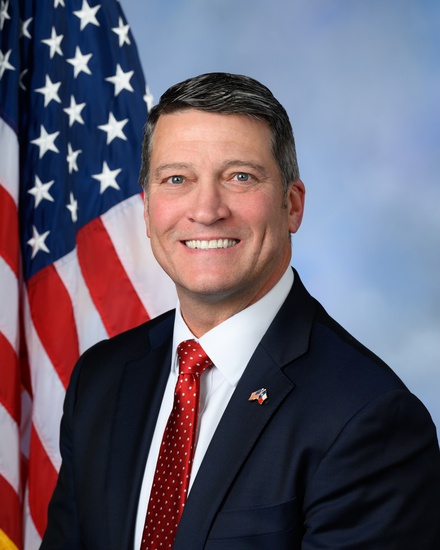
Rep. Ronny Jackson
Sponsored bills
Maddy summaryHRES 754 is a non-binding resolution expressing the House of Representatives' opposition to proposed "punitive natural gas taxes" on U.S. businesses, families, and workers. It cites claims that such taxes would raise average energy bills by 17%, reduce GDP by $9 billion, and eliminate 90,000 jobs, while disproportionately harming low-income households. The resolution argues that opposing these taxes supports U.S. energy security, national security, and continued leadership in reducing emissions through domestic natural gas production. As a procedural resolution, it does not create law but formally states the House's position against this policy approach.
Prohibiting Unrealized Capital Gains Taxation Act This bill prohibits the Department of the Treasury or any other federal official from imposing a tax on unrealized capital gains (i.e., not sold or otherwise disposed of).
This bill prohibits the use of federal funds to require a member of the Armed Forces to receive a COVID-19 vaccination. The bill also prohibits adverse action (e.g., punishment) being taken against a member of the Armed Forces because the member refuses to receive a COVID-19 vaccination.
COVID-19 Access to Testing and Support for Immune Response Research Act of 2021 This bill requires the Centers for Medicare & Medicaid Services to provide for coverage during the COVID-19 public health emergency of T-cell diagnostic laboratory tests for individuals with a current or prior COVID-19 infection. In addition, the Department of Health and Human Services must develop a national strategy to research the immune response to COVID-19 and may award research grants.
China Watcher Act This bill establishes the China Watcher Program within the Department of State. The program must (1) monitor and combat China's malign influence in foreign countries, (2) monitor China's military trends abroad and counter its activities and advancements in foreign nations that pose a threat to U.S. interests and the rules-based order, and (3) strengthen U.S. government capacity to engage with foreign countries and international organizations to counter China's malign influence. Under this program, the State Department must place officers in select U.S. diplomatic and consular posts to engage with Chinese and third-party nationals, as well as host governments and nongovernment entities, on the above-referenced matters.
State, Local, Tribal, and Territorial Fiscal Recovery, Infrastructure, and Disaster Relief Flexibility Act This bill allows states, tribes, territories, and localities to use certain COVID-19 relief funds for new categories of spending, including for natural disasters and infrastructure projects. It also makes changes to expenditure deadlines and other aspects of this funding. Specifically, recipients may use funds for emergency relief from natural disasters and associated negative economic impacts of natural disasters. In addition, recipients may use a portion of their COVID-19 relief funds for designated infrastructure projects, such as nationally significant freight and highway projects. Furthermore, the bill allows recipients to expend COVID-19 relief funds on these types of infrastructure projects until September 30, 2026. Under current law, recipients must expend the funds by December 31, 2024. Other changes in the bill include (1) modifying eligibility and allocation requirements for funding set aside for counties and Indian tribes that are near public lands, (2) allowing Indian tribes an additional year to expend their COVID-19 relief funds, and (3) establishing a process for government entities to decline COVID-19 relief funds and requiring any declined funds to be used to reduce the federal deficit.
Fire Fauci Act This bill reduces the annual rate of pay of the Director of the National Institute of Allergy and Infectious Diseases (NIAID) to $0. This reduction applies until there is a new director who is not Anthony Fauci, MD. In addition, the Government Accountability Office must audit digital correspondence, policy memoranda, and financial transactions of the Office of the Director of NIAID from October 1, 2019, through December 31, 2021.
Treatment Restoration for Emergency Antibody Therapeutics Act or the TREAT Act This bill prohibits the Department of Health and Human Services (HHS) from implementing any policy that restricts health care facilities from ordering and receiving COVID-19 monoclonal antibody therapies directly from manufacturers and distributors. In addition, the bill expressly nullifies a policy announced on September 13, 2021, under which HHS allocated supplies of these therapies through state or territorial governments.
Simon Crosier Act This bill requires hospitals and other health care providers, as a condition of Medicare and Medicaid participation, to have certain written policies and procedures in place that limit the implementation of do-not-resuscitate (DNR) orders for unemancipated minors in accordance with specified criteria. Among other provisions, such policies and procedures must (1) require the informed consent of at least one parent and a reasonable attempt to contact the other parent before instituting a DNR order, (2) allow either parent to refuse to consent to a DNR order, and (3) allow a parent to transfer a minor to another facility after being informed of an intent to institute a DNR order.