

Protect Communities from a Porous Border Act of 2021 This bill requires the Department of Homeland Security (DHS) to notify a state before placing an alien in that state and gives the state final authority to prohibit such a placement. At least 10 business days before placing (e.g., detaining or housing) such an individual in a state, DHS must provide certain information to that state, including (1) the individual's biographic and biometric information, including DNA; and (2) a certification that the biometric and biographic information has been checked in various law enforcement and counterterrorism databases. No federal court shall have jurisdiction to review (1) the requirements and procedures established under this bill, or (2) a decision by a state to prohibit the placement of such an individual in the state. The bill also prohibits any federal official from waiving any of the bill's requirements.
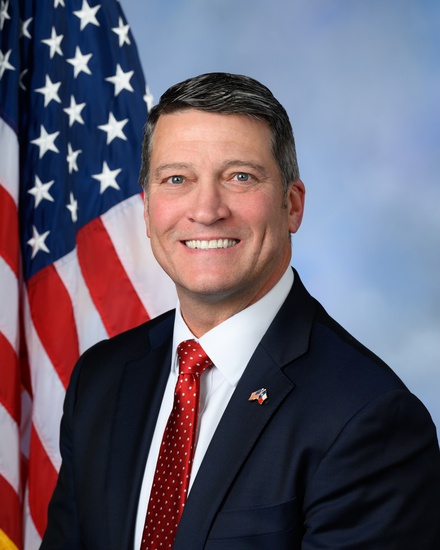
Rep. Ronny Jackson
Sponsored bills
Fentanyl Penalties Parity Act This bill modifies the drug quantity thresholds that trigger a mandatory minimum prison term for a defendant who manufactures, distributes, imports, exports, or possesses with intent to distribute fentanyl. Specifically, the bill reduces from 400 to 20 grams the fentanyl quantity and from 100 to 5 grams the fentanyl analogue quantity that trigger a mandatory minimum prison term for high-level first-time or repeat offenders. It also reduces from 40 to 2 grams the fentanyl quantity and from 10 to 0.5 grams the fentanyl analogue quantity that trigger a mandatory minimum prison term for low-level first-time or repeat offenders.
Teleabortion Prevention Act of 2021 This bill restricts the use of telehealth for chemical abortions (also known as medication abortions). Specifically, it requires a provider who dispenses or prescribes medication for a chemical abortion to physically examine the patient, be physically present at the location of the chemical abortion, and schedule a follow-up visit. The bill provides an exception for a chemical abortion that is necessary to save the life of a mother whose life is endangered by a physical disorder, illness, injury, or condition. The bill establishes criminal penalties—a fine, a prison term of up to two years, or both—for a provider who does not comply with the requirements. A patient who undergoes a chemical abortion may not be prosecuted.
Havana Syndrome Attacks Response Act This bill requires the President to sanction foreign persons and governments for carrying out clandestine attacks on U.S. personnel that have caused brain injury. Specifically, the President must impose visa- and asset-blocking sanctions on any foreign person that has directed or carried out such an attack. If the President determines a foreign government carried out such an attack, the President must notify Congress and sanction that country by terminating any foreign assistance (except for humanitarian aid or food or agricultural commodities or products) and arms transactions, restricting commercial exports, and denying access to U.S. credit or other financial assistance. The President must remove these sanctions after 12 months, provided that (1) the country's government gives reliable assurances that it will not conduct future attacks, and (2) the executive branch does not have persuasive information indicating an attack occurred in the preceding six months. The bill also requires a congressional briefing and report about suspected clandestine attacks on U.S. personnel that have caused brain injury, including hypotheses concerning the identity of the perpetrators and the technical methods used to carry out the attacks.
Border Wall Reimbursement Act of 2021 This bill requires the federal government to reimburse a border state for amounts that state has expended on the construction of a border security wall in support of federal efforts. To receive reimbursement, a state must submit within 180 days of the bill's enactment an accounting of the expenses incurred by the state and its municipalities and the total sum of such expenses. Certain funds made available to assist states and local governments during the COVID-19 public health emergency may also be made available to reimburse border states under this bill.
Cutting Unnecessary Regulatory Burdens Act This bill generally requires agencies to repeal at least two rules before promulgating a major rule (i.e., a rule with a significant economic impact, cost to consumers, or adverse effects on competition). Further, unless required by law, an agency may not issue a rule that exceeds the total cost of the rules to be repealed without approval by the Office of Management and Budget. These requirements do not apply to major rules related to agency procedures, the Armed Forces, national security, or foreign affairs.
Study To Observe and Prevent (STOP) Human Trafficking Act of 2021 This bill directs the Department of Justice, in coordination with the President's Interagency Task Force to Monitor and Combat Trafficking in Persons, to study and report on the prevalence and instances of human trafficking at adult entertainment clubs in the United States.
Fairness in Firearm Testing Act This bill establishes additional requirements for the Bureau of Alcohol, Tobacco, Firearms and Explosives (ATF). Specifically, the bill requires the ATF to make a video recording of its process for evaluating and testing an item to determine if it is a firearm or ammunition.
World Deserves To Know Act This bill requires sanctions on certain members of the Chinese Communist Party (CCP) and officials of Chinese health agencies. It also addresses related issues. The President must impose visa- and property-blocking sanctions on any foreign person who is a CCP official and who is knowingly responsible for or complicit in (1) the disappearances of whistleblowers and citizen journalists in China relating to COVID-19, or (2) limiting free speech and academic freedom in China relating to COVID-19. The President must also impose such sanctions on specified individuals who have leadership positions in China's Center for Disease Control and Prevention and China's National Health Commission (NHC). The authority to impose such sanctions shall end when the President certifies to Congress that an independent and unimpeded investigation into the potential origin of COVID-19 from the Wuhan Institute of Virology has taken place. The bill also bars federal funds and certain federal student assistance from going to institutions of higher education that enter into a contract with any element or China-based affiliate of the NHC. Federal funding to the National Academy of Sciences may not be used to enter into a contract with any element or China-based affiliate of the NHC. The Government Accountability Office must report to Congress a review of all funds that the National Institutes of Health have made available to the NHC since FY2010. This report must also be publicly available.
No Vaccine Passports for Americans Act This bill restricts collection and disclosure of an individual's vaccination status, including for COVID-19 vaccinations. It also makes it unlawful to discriminate based on COVID-19 vaccination status and to mandate vaccination in certain circumstances. Specifically, the bill prohibits the use of federal funds to establish or collaborate with federal, state, private, or international systems that track or monitor an individual's COVID-19 vaccination status. Additionally, federal agencies must destroy existing records that contain information about an individual's COVID-19 vaccination status within 30 days. Furthermore, agencies may not issue vaccine passports or similar standardized documentation of COVID-19 vaccination status. The bill also prohibits discrimination based on COVID-19 vaccination status or willingness to provide documentation of vaccination status in employment, public accommodations, and certain public programs and services. Remedies and enforcement mechanisms available under federal civil rights laws apply to violations under this bill. In addition, federal privacy standards for health information must prohibit the disclosure of non-anonymized information about the status of any vaccination without a patient's express consent. Moreover, the bill makes anyone who requests an individual's vaccination status subject to these standards. The bill temporarily bans (1) mandates for vaccines authorized for use under emergency procedures, and (2) administration of those vaccines to minors or individuals who lack capacity to consent to vaccinations without the consent of their parent or guardian. It also prohibits public disclosure of an individual's COVID-19 vaccination status without express, written consent. Violations of these prohibitions are subject to criminal and civil penalties.