

Maddy summaryThis bill requires all non-profit organizations receiving federal funds to certify they comply with anti-human trafficking, anti-smuggling, and fraud laws, and have no convictions under immigration law (8 U.S.C. 1324). Nonprofits must submit this certification within 60-120 days of the law's enactment; failure to certify or violation of the law results in repayment of funds and potential loss of tax-exempt status. The Department of Homeland Security must create compliance guides and publish violation data, while the GAO will report annually on non-compliance. The law applies to all nonprofits with federal contracts, grants, or agreements, aiming to prevent federal funds from supporting entities involved in trafficking or smuggling.
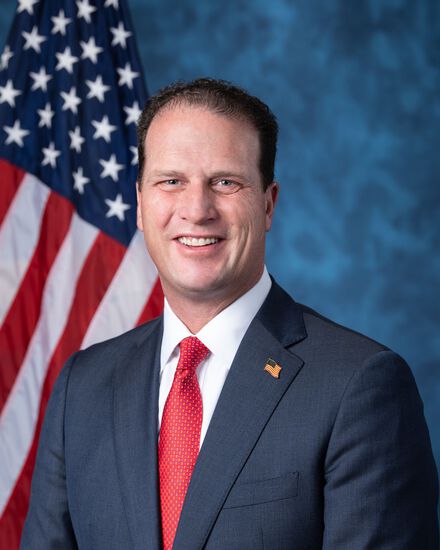
Rep. August Pfluger
Sponsored bills
Tribal Gaming Regulatory Compliance Act This bill allows the Ysleta del Sur Pueblo and Alabama-Coushatta tribes to conduct gaming activities on their land in Texas if certain conditions are met. Currently, the Ysleta del Sur Pueblo and Alabama-Coushatta Indian Tribes of Texas Restoration Act prohibits the tribes from conducting gaming activities on their land if those activities are prohibited by Texas law. The bill repeals those provisions and instead applies the Indian Gaming Regulatory Act (IGRA) to gaming activities on Indian lands of the tribes.
Maddy summaryThis bill requires that AM radio receivers be included as standard equipment in all new motor vehicles (such as cars and trucks) sold in the United States, with a rule to be issued by the Department of Transportation within one year. The rule must ensure AM radio is easily accessible on the dashboard and allows manufacturers to use digital AM radio technology instead of traditional AM. During the one-year period between the bill's enactment and the rule's effective date, manufacturers must clearly label vehicles without AM radio. The bill also directs a study to evaluate whether an alternative system could deliver emergency alerts as reliably as AM radio across the country, especially during crises.
Maddy summaryHR 3337, the Fuels Parity Act, removes a prohibition that previously excluded corn starch ethanol from being counted as "advanced biofuel" under the Clean Air Act. This change directly affects corn-based ethanol producers by allowing corn starch ethanol to qualify under renewable fuel standards. The bill also requires the EPA to update its methodology for calculating greenhouse gas emissions from corn-based ethanol and biomass-based diesel every five years, starting 90 days after enactment, with the first update mandating the use of the Argonne National Laboratory's GREET model. These provisions aim to standardize how emissions are assessed for these fuels under federal renewable fuel programs.
Maddy summaryHR 3455, the TSP Act, prohibits the Thrift Savings Fund (TSP) from investing in any "security of concern." This directly affects federal employees and retirees whose retirement savings are held in the TSP, as their accounts would no longer include certain investments tied to countries identified as national security threats. A "security of concern" includes stocks listed in a "country of concern" (per the Director of National Intelligence's annual report), companies incorporated in such countries, or firms generating over 50% of revenue there. The law bans all forms of these investments, including through mutual funds or synthetic instruments like equity swaps, without exception.
Maddy summaryHRES 363 is a resolution expressing support for recognizing National Police Week, an annual observance established by law to honor law enforcement officers who have died in the line of duty. The resolution acknowledges 556 officers killed in the line of duty during 2022 and calls for ensuring law enforcement officers have necessary equipment, training, and resources to protect both themselves and the public. It encourages the American public to observe National Police Week by honoring law enforcement personnel and recognizing their essential mission in serving communities across the United States. This resolution does not create new law but formally expresses congressional support for an existing observance.
Maddy summaryHR 3256, the Preventing Executive Climate Overreach Act, would eliminate the legal effect of Executive Order 14096. This order, issued by the President to advance environmental justice in federal programs, would no longer be enforceable. The bill's key provision directly states that the executive order "shall have no force or effect." As a result, the administration would be unable to implement environmental justice policies based on that order.
Maddy summaryHRES 396 is a non-binding House resolution recognizing motherhood on Mother's Day. It expresses support for the term "mother" and criticizes language alternatives like "pregnant people" or "birthing person," while stating mothers are defined as women. The resolution contains no policy changes or concrete effects - it is purely symbolic, affirming traditional definitions of motherhood without altering laws or impacting any programs. It was introduced by multiple House members and referred to the Education and Workforce Committee.
This bill prohibits the use of federal funds to seek U.S. membership in the World Health Organization (WHO), or to make contributions to the WHO, until the Department of State makes certain certifications to Congress. Specifically, these prohibitions shall apply until the State Department certifies that the WHO has met certain conditions, including that the WHO (1) has adopted reforms to ensure that humanitarian assistance is not politicized; (2) is not under the control of the Chinese Communist Party (CCP) and is not involved in a cover-up of the CCP's response to the COVID-19 pandemic; (3) has granted observer status to Taiwan; and (4) has ceased engagement on certain issues, such as climate change, access to abortion, and gender identity.
This resolution urges transatlantic unity on a robust deterrence policy to maintain peace and stability across the Taiwan Strait. The resolution also (1) encourages NATO allies to work with their partners in the Indo-Pacific to address shared global security challenges; and (2) commends the people of Taiwan for their commitment to democracy, civil liberties, and human rights.